Ravi and Chenab Rivers Likely to Reach Medium to High Flood Levels
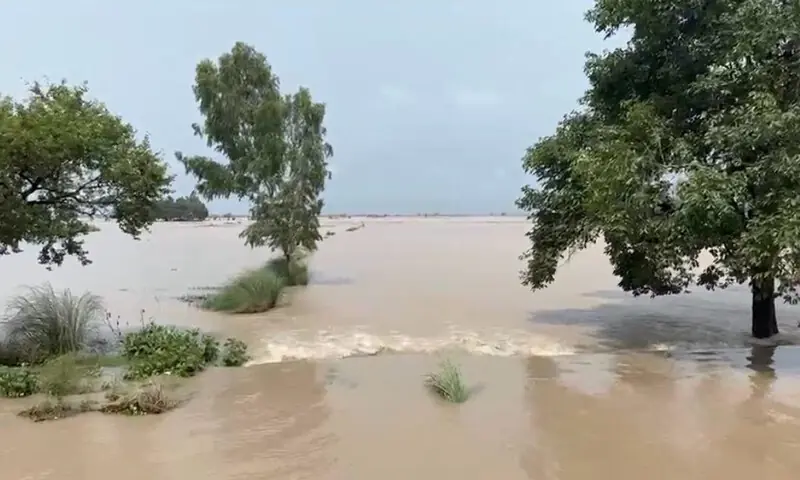
Torrential rains have caused extensive flooding across approximately 400 square kilometers of Punjab, Pakistan, submerging areas in Sheikhupura, Muridke, Gujranwala, Narowal, Sambrial, and Pasrur. The overflow of drains, carrying water beyond their designed capacity, has led to this critical situation, described by officials as resembling an "inland sea." The flooding has already inflicted significant damage on standing crops, livestock, and infrastructure. Authorities are responding by establishing relief camps and expediting flood-preparedness measures. The Pakistan Meteorological Department's Flood Forecasting Division reports that while the Chenab and Ravi rivers are currently at medium and low flood levels, respectively, they are projected to reach medium to high flood levels within the next 24 hours. Specifically, the Chenab is expected to remain at medium to high flood levels at Marala, Khanki, and Qadirabad, while the Ravi is anticipated to reach similar levels at Balloki and Sidhnai. The unusual increase in water flow in the Ravi River, with a surge from 22,000 cusecs at Shahdara to 87,000 cusecs at Balloki, is attributed to water entering through drains and rainfall. Officials estimate the situation may not normalize for three to four days, contingent on no further rainfall. Deputy commissioners across several districts, including Lahore, Gujranwala, and Khanewal, have been placed on high alert, with officials actively monitoring affected areas, reviewing drainage operations, and inspecting flood protection arrangements.
The extensive flooding in Punjab highlights critical infrastructure challenges in managing monsoon rainfall and riverine flows, particularly concerning the capacity of drainage systems and riverbanks. The unexpected increase in river flow downstream suggests potential issues with water management strategies, possibly involving upstream contributions or the effectiveness of flood control structures. As climate patterns intensify, Pakistan's vulnerability to such events underscores the need for proactive, long-term adaptation strategies. This includes investing in enhanced forecasting, upgrading drainage and embankment infrastructure to accommodate higher water volumes, and developing robust emergency response protocols that can be rapidly deployed to mitigate damage and protect affected populations. Future planning must integrate climate resilience into urban and agricultural development to reduce the recurring economic and social costs of these natural disasters.
AI-generated to prompt reflection — not editorial opinion, not advice, not a statement of fact. How this works.