Raw chili prices surge past 200 Taka per kilogram
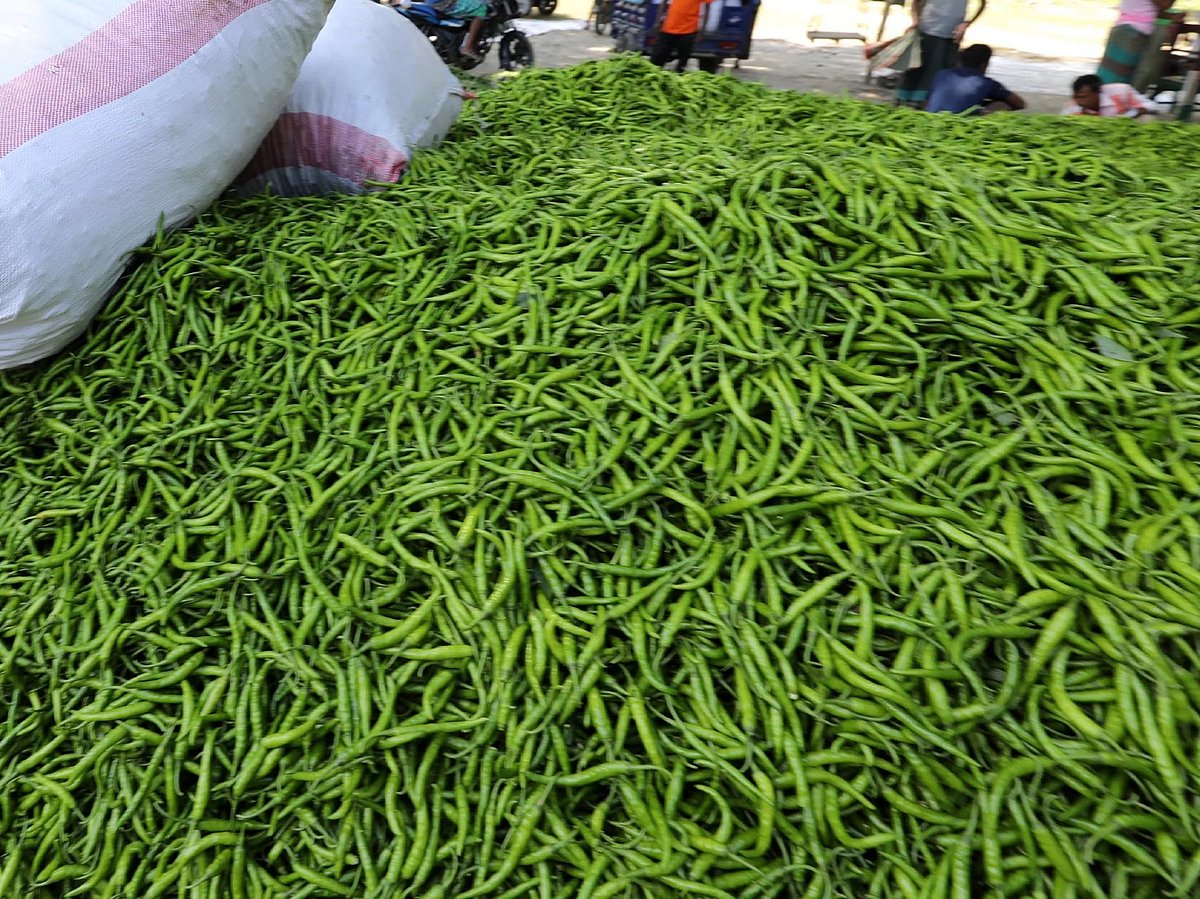
The price of raw chili in Bangladesh has exceeded 200 Taka per kilogram, driven primarily by recent heavy rainfall. This continuous downpour and subsequent flooding over the past week and a half significantly disrupted the supply chain for vegetables across the country. As a consequence, the cost of various vegetables, including raw chili, experienced an initial price hike. The current surge indicates a sustained impact on agricultural produce availability and pricing due to adverse weather conditions. This situation highlights the vulnerability of the agricultural sector to climate events and their direct effect on essential food commodities. Consumers are now facing increased costs for a staple ingredient in Bangladeshi cuisine. The market is experiencing a significant price fluctuation, directly linked to the weather's impact on crop yields and transportation. The extended period of rain has created a bottleneck in the supply, leading to the current elevated prices.
The sharp increase in raw chili prices, exceeding 200 Taka per kilogram, directly correlates with adverse weather events, specifically prolonged rainfall and flooding. This agricultural supply shock underscores the systemic vulnerability of food commodity markets to climate change impacts. Over-reliance on specific weather patterns for crop production, coupled with potential infrastructure limitations in transportation and storage, exacerbates price volatility. Future market resilience may require diversified sourcing, investment in climate-resilient agriculture, and improved supply chain logistics to mitigate the effects of predictable weather disruptions. This event serves as a case study for the economic consequences of environmental instability on basic necessities.
AI-generated to prompt reflection — not editorial opinion, not advice, not a statement of fact. How this works.