RCW 36: Massive Young Stars Illuminate Nebula in Vela
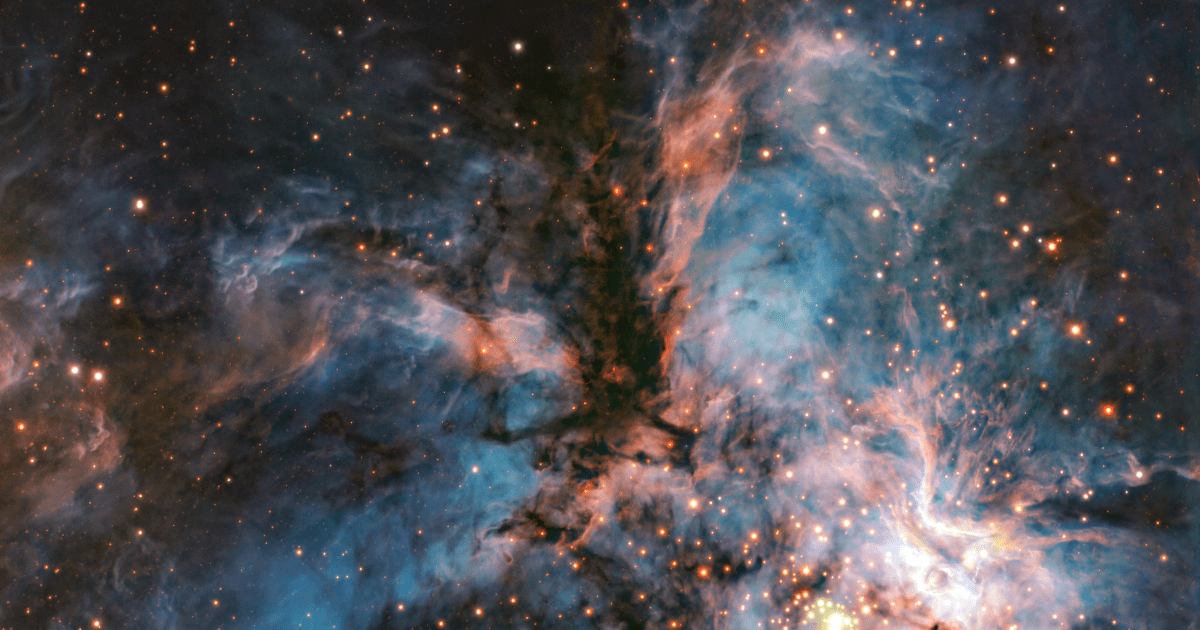
RCW 36, an emission nebula located 2,300 light-years away in the constellation Vela, was cataloged in the early 1960s by Alexander Rodgers, Colin Campbell, and John Whiteoak. This celestial object features a dense open cluster of massive, young stars at its core. These stars are enveloped by luminous clouds of gas and dust, which are energized by the stars' intense radiation. The nebula's structure and composition are indicative of ongoing star formation processes. Its proximity, in astronomical terms, makes it a significant target for studying stellar evolution and the dynamics of star-forming regions. The detailed cataloging of such objects provides a foundational dataset for astronomical research. RCW 36's visual appearance, often described metaphorically, highlights the dynamic and energetic nature of these stellar nurseries. Further study of RCW 36 can offer insights into the early stages of star and planetary system development.
The cataloging of emission nebulae like RCW 36, initiated in the mid-20th century, represents a foundational step in understanding stellar nurseries. The presence of massive young stars at the heart of RCW 36 signifies active star formation, a process critical for galactic evolution. Studying such regions allows astronomers to test theoretical models of star birth and the dispersal of interstellar material. The ongoing observation and analysis of these phenomena will continue to refine our understanding of the universe's structure and the lifecycle of stars, potentially informing future astrophysical research and space exploration initiatives.
AI-generated to prompt reflection — not editorial opinion, not advice, not a statement of fact. How this works.