Rebels Launch Coordinated Attacks Across Mali, Targeting Cities and Military Sites
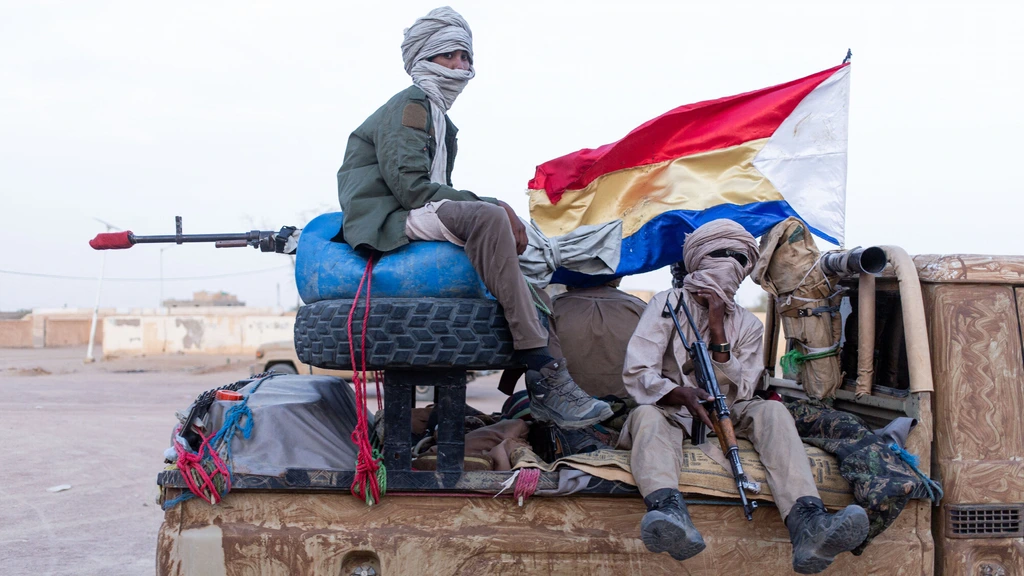
Rebels have carried out coordinated attacks on multiple cities throughout Mali, with fighting reported in Anefis, Adjelhoc, Gao, Sévaré, and Kéniéroba. Early morning reports from these locations indicated bombardments and explosions, though the extent of casualties remains unknown. While some areas experienced sporadic gunfire throughout the morning, others returned to calm. Tuareg rebels from the FLA have claimed responsibility for the attacks. This follows similar large-scale assaults in late April, where the FLA collaborated with JNIM, an Al-Qaeda-affiliated group, though their current involvement is unconfirmed. The specific targets of the recent attacks are unclear; in Gao, a military base is suspected, while in Kéniéroba, a prison holding opponents of the military junta was mentioned, though its status as a target is unverified. Mali has endured prolonged instability, with Tuareg separatists seeking an independent state in the north and jihadists aiming to establish an Islamic state. Despite a 2020 pledge by the military junta to end the violence, and a shift from European peacekeepers to Russian mercenaries, peace remains elusive. The April offensive, involving both jihadists and Tuaregs, saw attacks on major cities including the capital, Bamako. During that offensive, Defense Minister Camara was killed in a bombing, along with family members and mosque visitors. The rebels also recaptured the city of Kidal, a former stronghold, after which Russian mercenaries withdrew.
The recurring rebel offensives across Mali, involving both separatist and extremist groups, highlight the persistent governance challenges and the complex security landscape. The shift from international peacekeeping forces to Russian mercenaries suggests a strategic reorientation by the Malian junta, potentially seeking different security outcomes or geopolitical alignments. However, the continued violence and territorial gains by rebel factions indicate that these changes have not yet stabilized the country. The stated goals of the Tuareg separatists and jihadists remain in direct opposition, creating a volatile environment where military solutions may exacerbate underlying political grievances. Future stability will likely depend on addressing the root causes of these conflicts, including resource distribution, political representation, and the efficacy of security sector reforms, rather than solely on military interventions or mercenary deployments.
AI-generated to prompt reflection — not editorial opinion, not advice, not a statement of fact. How this works.