Recife Police Dismantle Criminal "Parallel State" on Ilha do Bananal
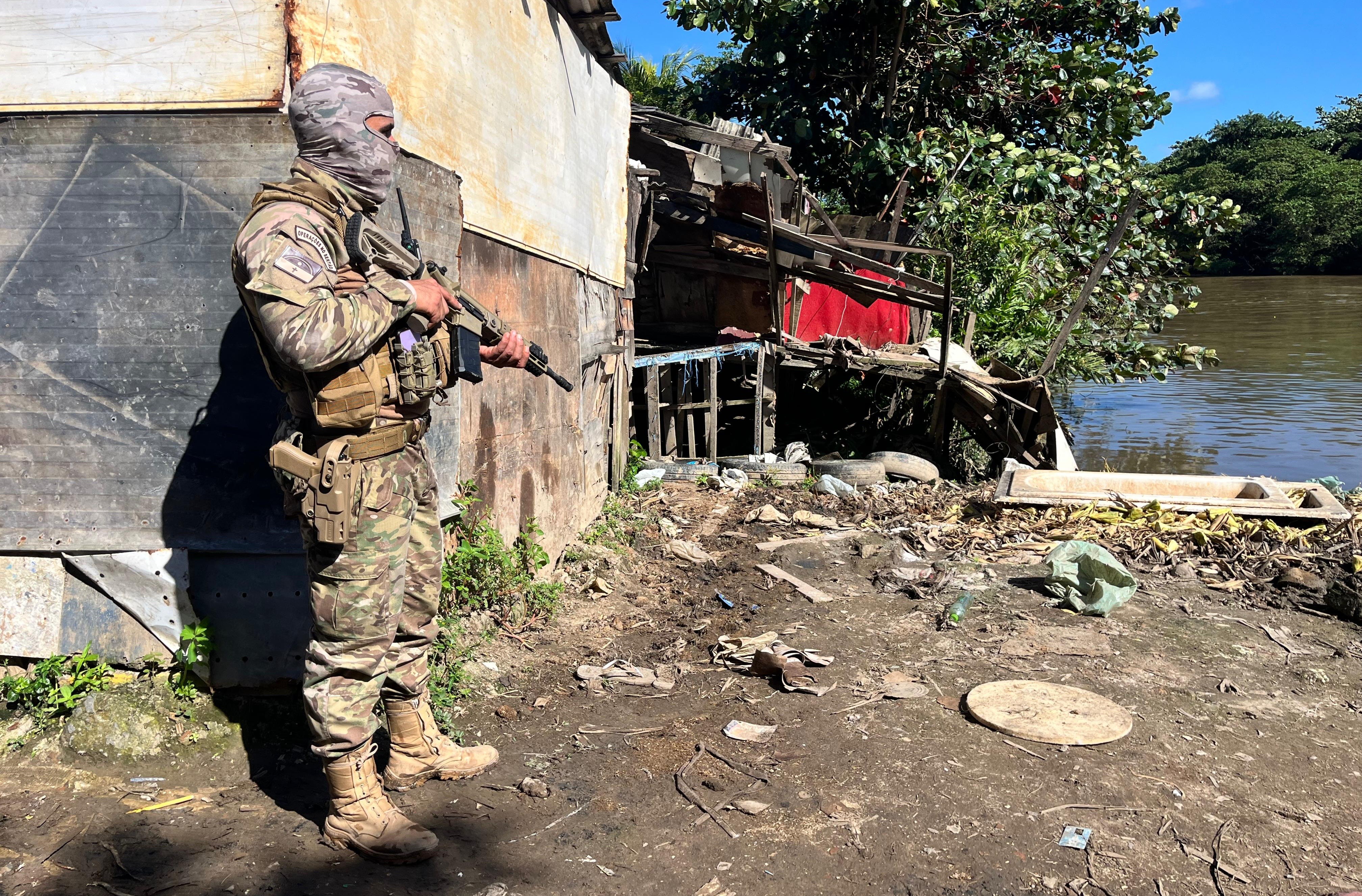
Police in Recife, Brazil, have disrupted a criminal organization's attempt to establish a "parallel state" on Ilha do Bananal, a strategically located island in the city's Western Zone. This island had been used as a logistical hub and "crime headquarters" for approximately one year. The recent "Cerco Estratégico" operation, a continuation of the earlier "Operação Iara," led to the arrest of three individuals on Thursday, October 2nd, and the execution of four search and seizure warrants. The operation targeted a criminal group involved in various illicit activities in the region.
According to Detective Ney Luiz, two women and one man were arrested. The male suspect, considered a leader of the gang, was already in custody since May after being apprehended in the state of Paraíba. The arrested women are alleged to have operated an internet company that coerced residents into subscribing to their services. Authorities are now focusing on dismantling the group's financial network and identifying those who received proceeds from drug trafficking. The "Cerco Estratégico" operation aims to re-establish control over the area, following the criminal group's attempt to impose its own governance.
The earlier "Operação Iara," conducted by the Military Police's Special Operations Battalion, had uncovered a significant arsenal on Ilha do Bananal, including eight homemade grenades, five vehicles, 17 firearms (such as rifles and submachine guns), and 3,770 rounds of ammunition. The island, characterized by dense Atlantic Forest vegetation and difficult access by boat, also served as a major drug storage and distribution point. Police seized substantial quantities of narcotics, including 4,627 kilograms and 1,758 crack rocks, 1,617 kilograms of cocaine, and 16,440 kilograms of cocaine. Evidence of the criminals' operational sophistication included seven balaclavas, two cell phones, precision scales for drug weighing, and Ghillie suits for camouflage.
The operation in Recife highlights the persistent challenge of organized crime establishing territorial control and quasi-governmental functions, such as coercive service provision. The "parallel state" concept implies a direct challenge to sovereign authority, leveraging geographical isolation and resource control to enforce its own rules. This event underscores the critical need for law enforcement to not only interdict criminal activities but also to dismantle the underlying economic structures and governance mechanisms that enable such territorial consolidation. Future strategies may need to incorporate more integrated approaches, combining security operations with social and economic development initiatives to prevent areas from becoming fertile ground for criminal governance and to restore legitimate state presence and services.
AI-generated to prompt reflection — not editorial opinion, not advice, not a statement of fact. How this works.