Recife's Patron Saint Gets New Robe Inspired by 775-Year-Old Tradition
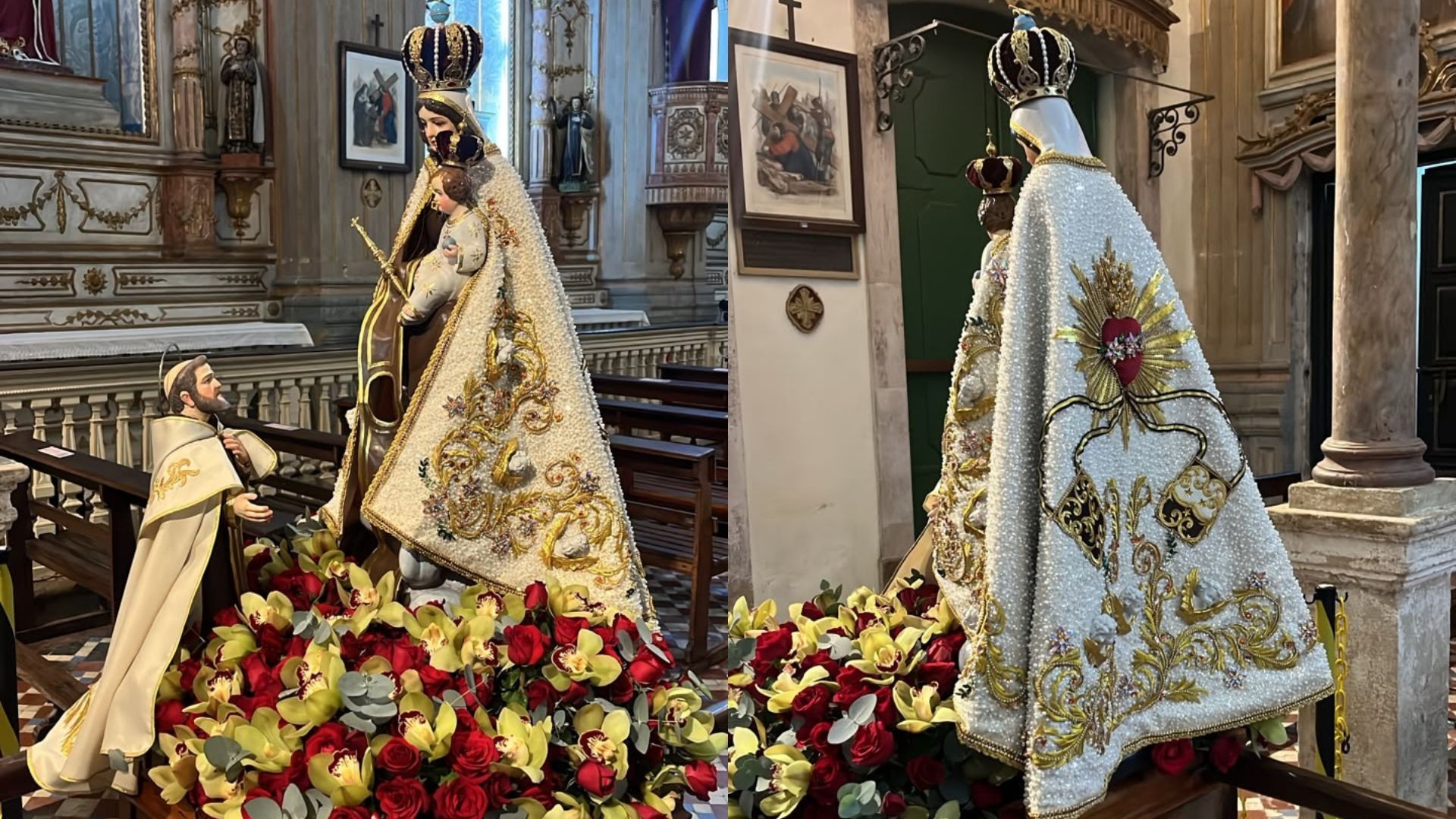
The patron saint of Recife, Nossa Senhora do Carmo, has received a new robe for her peregrine image, coinciding with the city's municipal holiday on July 16th. This year's traditional festival honoring the saint marks its 330th edition and features the unveiling of the new vestment. The robe's design is inspired by the 775th anniversary of the scapular's presentation to Saint Simon Stock, a key figure in Carmelite spirituality. The new mantle, a symbol of protection and devotion for the faithful, was presented on the evening of July 15th.
Crafted over approximately three months, the robe was designed by André Phillipe Ralph, a member of the Third Order of Mount Carmel in Recife, and meticulously embroidered by Fábio Ítalo, a specialist in liturgical vestments. The design incorporates references to Carmelite spirituality, biblical tradition, and the history of devotion, with a prominent depiction of the scapular. It also features a high-relief effect with numerous gemstones and rhinestones for added brilliance, along with nine angels adorning the garment. The Basilica of Mount Carmel houses 19 other such robes in its collection, with the oldest dating back to the 1980s.
The tradition of creating new mantles for the image began spontaneously among devotees, with the pieces evolving from simple designs to the current elaborate creations. The scapular itself, represented on the new robe, symbolizes the covenant between the Virgin Mary and believers. For laypeople, the scapular is typically worn as two small medals linked by a cord, one bearing the image of Nossa Senhora do Carmo and the other the Sacred Heart of Jesus, signifying Mary's maternal protection.
This event highlights the enduring power of religious tradition and its integration into civic life, as seen in Recife's annual festival. The creation of a new, symbolically rich mantle for the patron saint demonstrates a community's commitment to preserving and evolving its devotional practices. The detailed craftsmanship and historical references within the robe underscore the cultural and artistic value placed on religious artifacts. From a systems perspective, such traditions provide social cohesion and a shared identity for the community, while also supporting local artisans and cultural heritage. The evolution of the mantle design over time reflects changing artistic styles and devotional interpretations, illustrating how cultural practices adapt while maintaining core meaning. This continuity and adaptation are crucial for the long-term vitality of cultural and religious institutions in the face of societal shifts.
AI-generated to prompt reflection — not editorial opinion, not advice, not a statement of fact. How this works.