Record-Breaking T. Rex Skeleton 'Gus' Sells for Over $50 Million at Auction
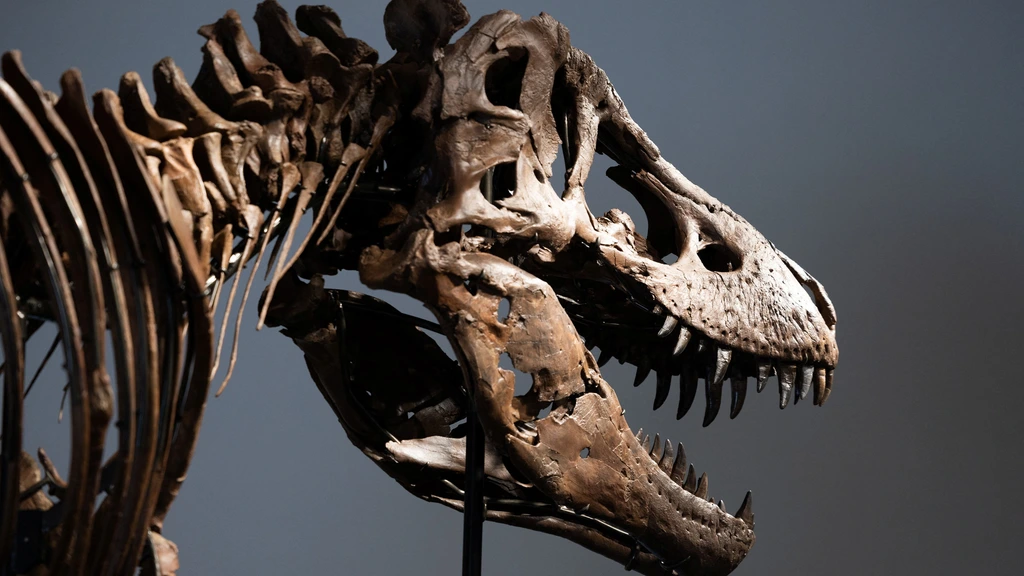
A remarkably complete Tyrannosaurus rex skeleton, nicknamed 'Gus,' has fetched a record-breaking price of over $50 million (approximately €44 million) at a New York auction. This sale significantly surpassed the pre-auction estimate of $20 to $30 million. The 67-million-year-old dinosaur measures 11.5 meters long and nearly 4 meters high, featuring a skull measuring almost 1.5 meters filled with formidable teeth. With 183 discovered bones, representing 61 percent of the skeleton, it is considered unusually complete for a T. rex fossil. Paleontologists typically celebrate finding over half the bones, making Gus's completeness exceptional. Sotheby's highlighted the rarity of the specimen, noting the intact furcula (wishbone) and the recovery of both legs, a feature found in only one other known T. rex. The skeleton was named Gus in honor of the landowner in South Dakota where it was unearthed, who passed away during the initial excavation. The careful excavation and preparation process took a total of six years, involving three years for digging and three for preservation and mounting. Sotheby's spokesperson Cassandra Hatton emphasized the critical need for expertise and time in fossil preparation to prevent damage. She clarified that fossils do not emerge intact and require specialists to meticulously distinguish between rock and bone. The previous record for a dinosaur sale was held by a Stegosaurus named Apex, purchased by billionaire Ken Griffin for $44.6 million in 2024 and loaned to the Museum of Natural History. The anonymous new owner of Gus has the potential to recoup some of their investment through copyright ownership. Unlike the T. rex 'Stan,' which has had its replica bones used to complete other skeletons, Gus is complete and contains no 'Stan' parts. This allows the new owner exclusive rights to create and sell replica bones, a market previously dominated by Stan's components. Hatton noted this is the first time a T. rex with full rights has been auctioned, making its impact on the sale price a significant development.
The sale of the T. rex skeleton 'Gus' for a record sum highlights the burgeoning market for significant paleontological finds, blurring the lines between scientific preservation and private acquisition. The auction's success, driven partly by the unique copyright ownership of the complete specimen, raises questions about the long-term accessibility and scientific study of such irreplaceable historical artifacts. While private ownership can fund extensive preparation and preservation, it also presents challenges for public access and collaborative research. The precedent set by this sale, particularly concerning the commercialization of replica bone rights, could influence future fossil auctions and the balance between scientific heritage and market value in the coming decade. This event underscores the need for evolving frameworks that ensure scientific integrity and public benefit alongside private investment in natural history.
AI-generated to prompt reflection — not editorial opinion, not advice, not a statement of fact. How this works.