Record Low Danube Water Levels Cause Fish Die-Off in Lower and Upper Austria
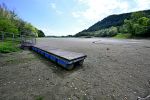
Record low water levels are currently being measured at various points along the Danube River, significantly impacting the environment. This severe drought condition is leading to a substantial fish die-off, particularly affecting young fish. The situation is critical in both Lower and Upper Austria, regions heavily reliant on the Danube for ecological and economic stability. The extreme low water levels are a direct consequence of prolonged dry weather and high temperatures, which have depleted water resources across the region. Environmental agencies are monitoring the situation closely, but options for intervention are limited given the scale of the natural disaster. The long-term implications for the Danube's ecosystem and biodiversity are a growing concern for scientists and conservationists.
The current record low water levels in the Danube River highlight the increasing vulnerability of European waterways to climate change-induced droughts. This ecological crisis, manifesting as a significant fish die-off, underscores the need for adaptive water management strategies. As hydrological systems face unprecedented stress, the imperative for robust infrastructure and policy interventions becomes clearer. Future planning must account for more frequent and severe extreme weather events, considering their cascading impacts on biodiversity, agriculture, and energy production. This situation serves as a stark reminder of the interconnectedness of environmental health and human systems, prompting a re-evaluation of resource management in the face of a changing climate.
AI-generated to prompt reflection — not editorial opinion, not advice, not a statement of fact. How this works.