Remembering Pablo Neruda: Poet, Politician, and Enduring Voice
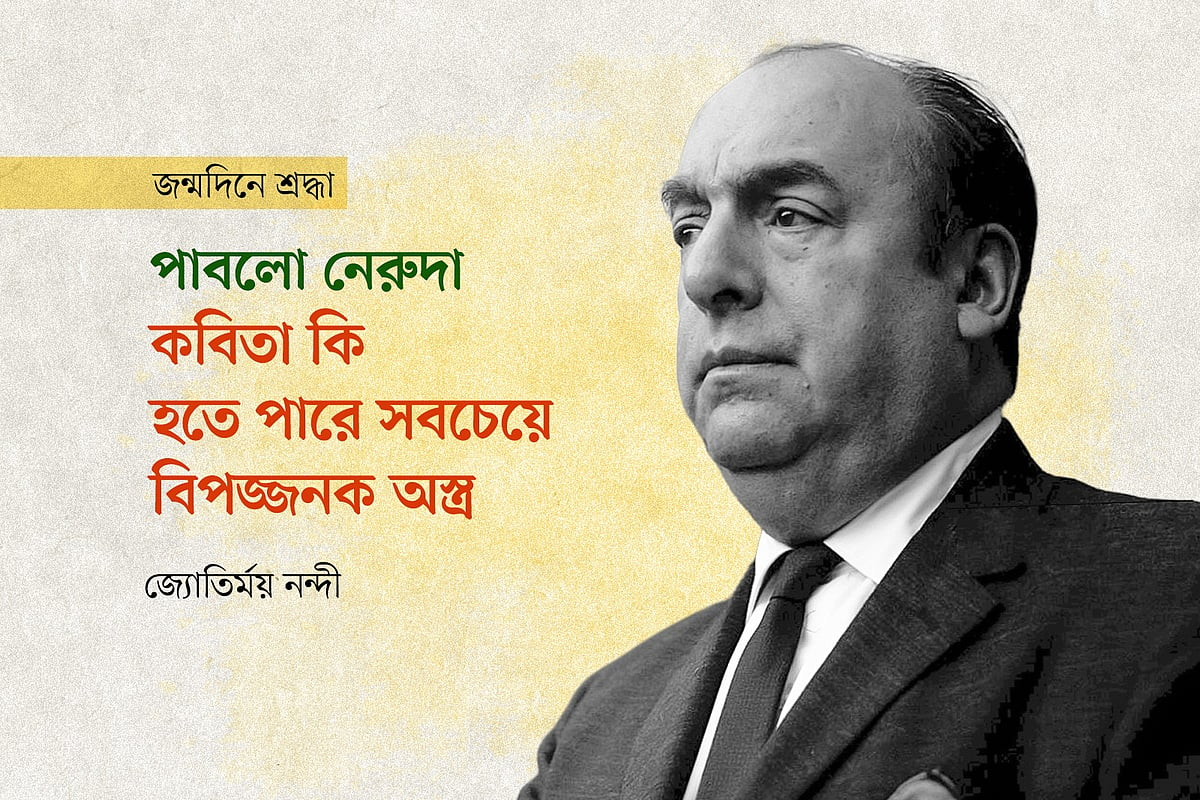
The world commemorates the 122nd birth anniversary of Pablo Neruda, a Nobel laureate poet whose literary legacy continues to resonate globally. Born in 1904 in Parral, Chile, under uncertain circumstances, Neruda, originally Ricardo Eliécer Neftalí Reyes Basoalto, left behind a rich body of work that captured universal human emotions, vivid imagery, and a steadfast commitment to social justice. His poetry, often described as both timeless and a sharp political tool, was written with green ink, the color he associated with hope. Neruda's life was marked by a deep love for nature and rural life, yet he also embraced the vibrancy of cityscapes. Despite facing political persecution in Chile, he remained dedicated to his people. His literary output extended beyond poetry to include essays, speeches, a novel, a play, and an autobiography. His home became a sanctuary for numerous artists of the 20th century, including Octavio Paz, Federico García Lorca, Nazim Hikmet, Diego Rivera, and Pablo Picasso. Neruda's accessible language evolved from early 'pure poetry' to embracing the 'impure' and everyday, as seen in his famous lines about poetry being 'worn out by acid in the labor of hands, / soaked in sweat and smoke, / mixed with the smell of lilies and urine, / splashed by the variety of our legal or illegal tasks.' His early life in the rugged, beautiful coastal mountain environment of Chile, marked by class distinctions, influenced his worldview. After his mother's early death and his father's remarriage, he was raised by his stepmother, to whom he dedicated his first poem. His father, a railway conductor, did not initially support his artistic aspirations. Finding solace in libraries, he became an avid reader of authors like Victor Hugo and Walt Whitman, eventually adopting the pseudonym 'Pablo Neruda' to assert independence from his father's influence.
The life and work of Pablo Neruda exemplify the complex interplay between artistic expression and political engagement. His journey from a solitary youth finding solace in literature to a globally recognized poet and diplomat highlights the power of words to transcend borders and influence societal discourse. Neruda's embrace of accessible language and themes of social justice resonated with a broad audience, demonstrating that profound artistic statements can also be widely understood and embraced. His political activism, particularly his commitment to leftist causes and his eventual election to the Chilean Senate, underscores the potential for artists to actively participate in shaping their societies. However, this path also reveals inherent tensions: the struggle to balance personal artistic integrity with political allegiances, and the challenges of navigating the often-turbulent landscape of state power and ideology. In the context of the evolving digital age, where information and influence are rapidly disseminated, Neruda's legacy prompts reflection on how contemporary artists can leverage their platforms for social impact without compromising their creative vision or becoming entangled in partisan dogma.
AI-generated to prompt reflection — not editorial opinion, not advice, not a statement of fact. How this works.