Remote Island School Ignites Education and Dreams Amidst Adversity
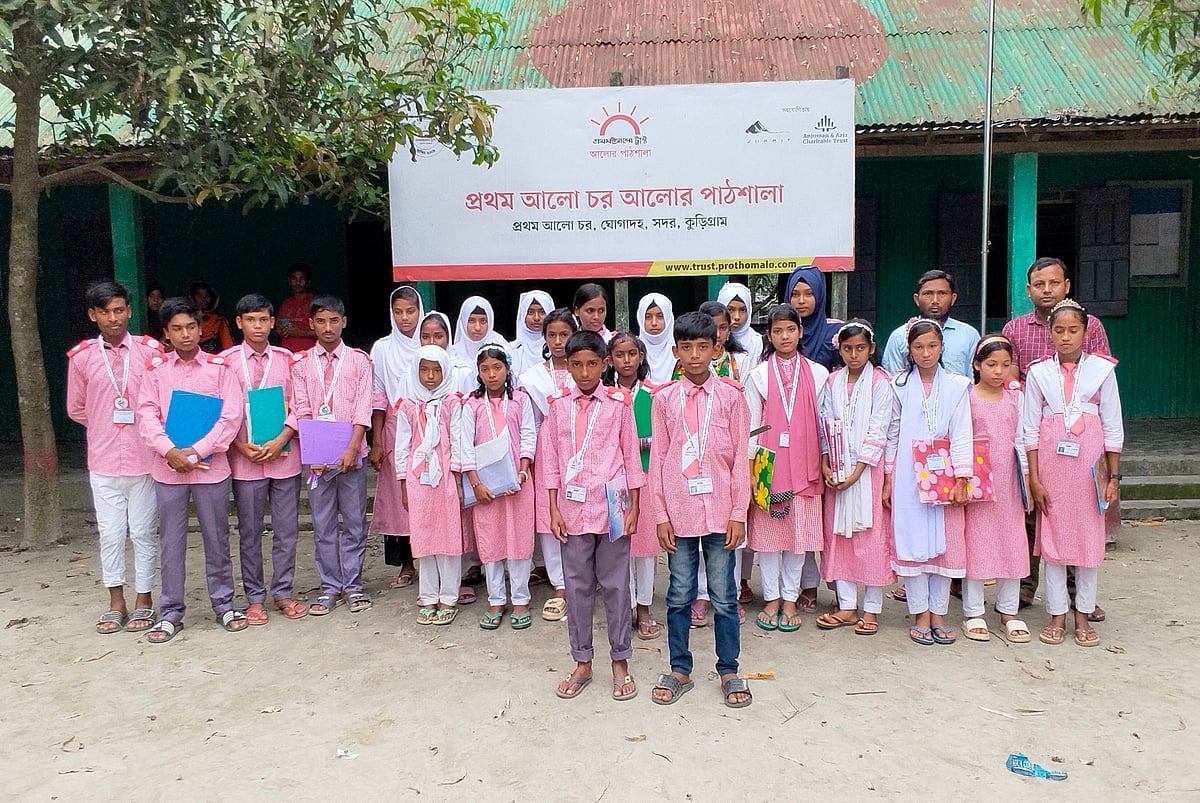
In the remote, river-erosion-prone islands of Kurigram, Bangladesh, the 'Prothom Alo Char Alor Pathshala' (First Light Island School) has become a beacon of education since its establishment in 2005. Previously, poverty and lack of access made education a distant dream for the islanders, with children often engaged in fishing or herding instead of attending school, perpetuating widespread illiteracy. The school was founded by journalist Sobi Khan with support from the Prothom Alo Trust to combat this darkness. Initially, classes were held in basic structures with tin walls and thatched roofs, facing challenges like monsoon floods and winter winds. Educators persevered, conducting home visits and community meetings to convince parents of the importance of education, especially for girls. Today, the situation has transformed, with children eagerly attending the school and aspiring to become doctors, teachers, and engineers. Many former students are now pursuing higher education in reputable colleges. The assistant head teacher, Md. A. Quader, notes the significant shift, stating that parents now actively seek admission for their children, which is the school's greatest achievement. The school demonstrates that determination can overcome geographical barriers, poverty, and ignorance, illuminating a generation and bringing hope for a brighter future for the entire island.
This initiative highlights the critical role of accessible education in fostering socio-economic mobility, particularly in geographically isolated and impoverished regions. The 'Prothom Alo Char Alor Pathshala' demonstrates a community-driven approach that successfully navigated parental skepticism and infrastructural challenges. Moving forward, scaling such models requires sustainable funding, robust teacher training programs, and integration with broader educational policies to ensure long-term impact. The success underscores the potential for localized educational interventions to empower marginalized communities, offering a replicable framework for development efforts in similar contexts globally, thereby contributing to human capital development in the face of environmental and economic vulnerabilities.
AI-generated to prompt reflection — not editorial opinion, not advice, not a statement of fact. How this works.