Renan Santos Officially Launches Presidential Bid with Missão Party
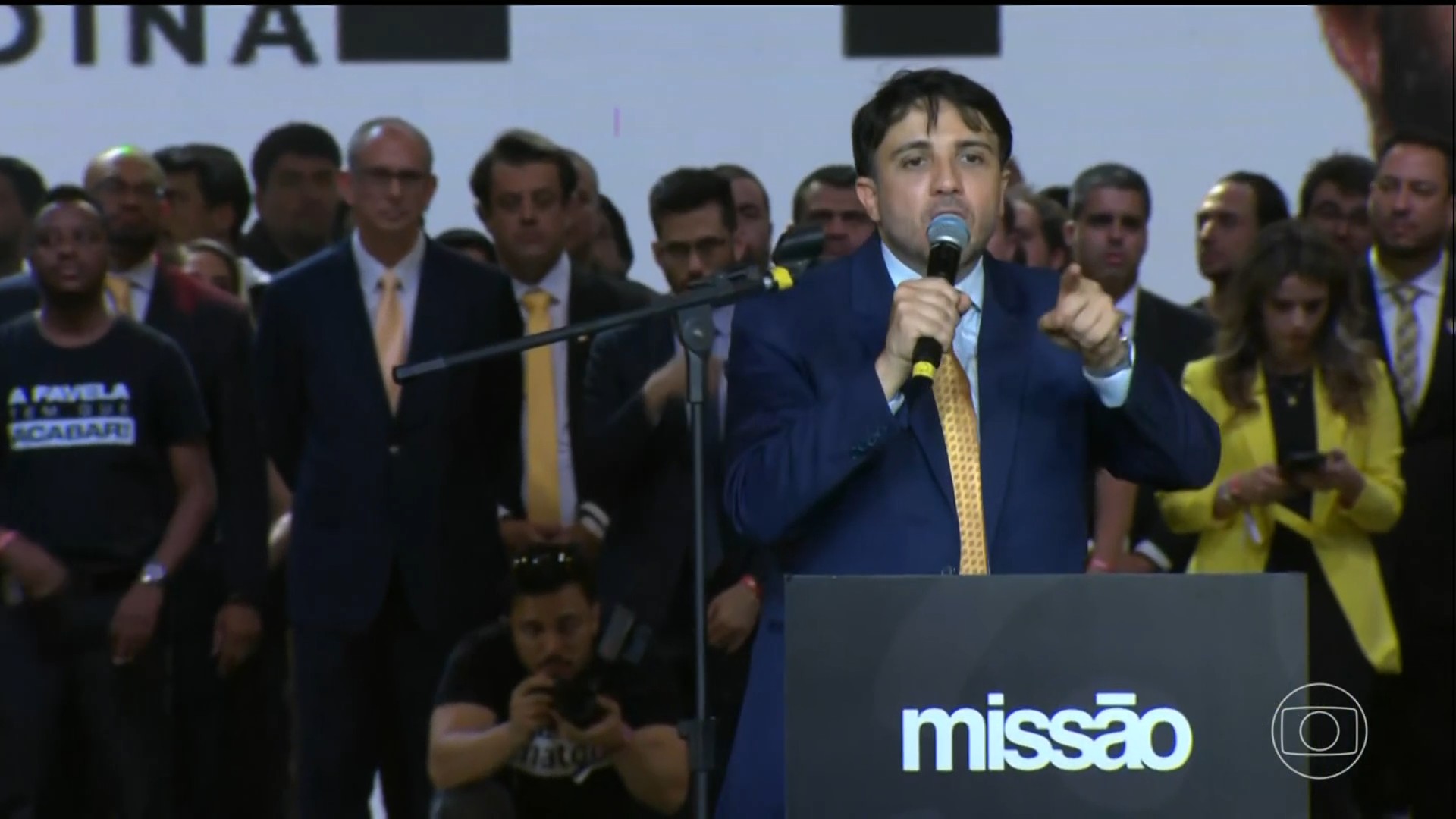
The Missão party officially nominated Renan Santos as its presidential candidate on Saturday, August 1st, in São Paulo. The launch event, held at an event venue in the city's East Zone, saw politicians and activists purchase tickets to attend. Federal Deputy Kim Kataguiri spoke about Santos's dedication, highlighting his past willingness to support others' initiatives rather than seeking personal office. The event also served as the debut for the "Yellow Book," a six-part document outlining the party's governmental platform on key issues like the economy, education, public safety, and infrastructure, which will guide Santos's campaign.
Renan Santos, 42, a São Paulo native, began law studies at USP in 2003 but left to join his father's business. He was a participant in the 2013 street protests and co-founded the MBL (Free Brazil Movement), an opposition group known for its online presence and street activism during the push for then-President Dilma Rousseff's impeachment. The Missão party, established in 2025 and presided over by Santos, identifies as right-wing but positions itself as an alternative to Bolsonaroism. This marks Santos's first electoral contest.
During his over hour-long speech, Santos criticized President Lula and candidate Flávio Bolsonaro. He pledged to "destroy organized crime," improve the economy, create jobs, and ensure housing, framing these as foundational steps to elevate Brazil. He also promised significant government spending cuts to stimulate economic growth, emphasizing investment in infrastructure for agriculture and industrialization, including hydroelectric and nuclear power development, and the self-sufficient exploitation of national resources. The party also formalized its state governor candidates, with retired military officer Aroldo Medina as Santos's running mate.
The official launch of Renan Santos's presidential campaign by the Missão party signifies a new entrant into Brazil's political landscape, presenting itself as a distinct right-wing alternative. The party's platform, detailed in its "Yellow Book," addresses core policy areas, aiming to resonate with voters seeking economic reform and security. The campaign's messaging, including the sale of merchandise referencing controversial slogans, suggests a strategy focused on mobilizing a specific base through provocative themes. As the Missão party navigates its inaugural election, its success will depend on its ability to translate grassroots activism and online presence into broader electoral support, differentiating itself from established political forces and addressing the complex governance challenges facing Brazil in the coming decade.
AI-generated to prompt reflection — not editorial opinion, not advice, not a statement of fact. How this works.