Renowned playwright Mamunur Rashid shares life, art, and literary inspirations
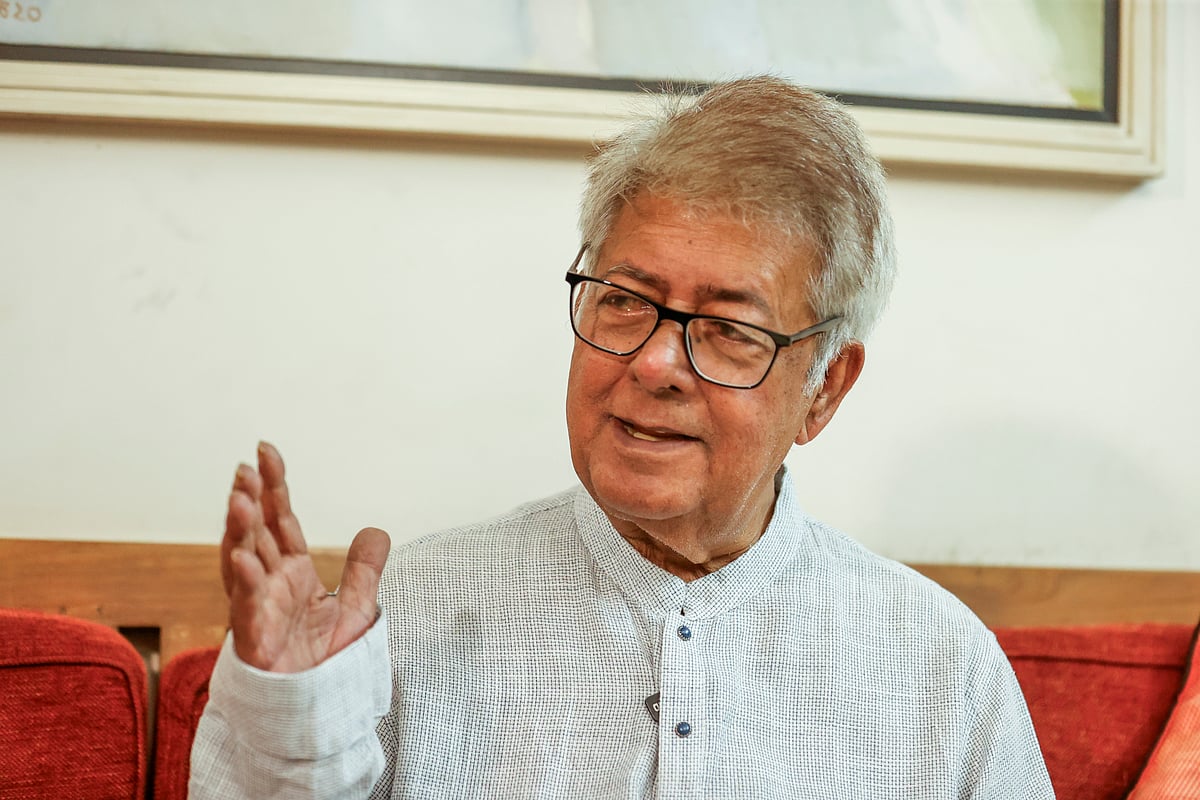
In an interview with writer and journalist Anisul Hoque for the "Crown Cement Experiences of Light" program, prominent playwright, actor, and director Mamunur Rashid discussed his life, from his childhood and upbringing to his memories of the Liberation War and his lifelong dedication to theater. Rashid, a leading figure in Bangladesh's theater movement, revealed his early passion for football, stemming from his admiration for Che Guevara and subsequently Maradona and Messi, noting how football fandom often aligns with supporting the oppressed. He also expressed admiration for Pelé and showed solidarity with the Iranian football team, highlighting how public support rallies behind those facing adversity.
Rashid recounted his birth in 1948 in Talla village, Tangail, though he clarified his birthplace was his maternal home in Paikra. His father, Harunur Rashid Khan, a postmaster, influenced his early education in Phulpur, Mymensingh. He also spoke about his mother, Rokeya Khanam, whose name, given in the 1930s, reflected the significant influence of Begum Rokeya on middle-class society and the burgeoning movement for women's education and freedom. Rashid emphasized Begum Rokeya's enduring legacy for students of the 1960s and her pioneering role in women's emancipation.
The conversation shifted to literary influences, with Rashid expressing his admiration for Bengali literary giants like Manik Bandopadhyay, Bibhutibhushan Bandyopadhyay, and Tarashankar Bandyopadhyay. He suggested that if their works had been translated earlier, they might have received Nobel Prizes, noting Tarashankar's shortlisting in the early 1970s. Rashid also reflected on his early fascination with 'Jatra' (folk theater), which made him perceive actors as omnipotent figures capable of evoking deep emotions and belief in audiences. This realization, coupled with an understanding of the playwright's role, fueled his own journey into theater.
This interview offers a rich tapestry of personal history interwoven with cultural and literary reflections. Mamunur Rashid's narrative highlights the profound impact of historical figures like Che Guevara and Begum Rokeya, demonstrating how political and social ideals can shape personal allegiances and inspire movements for emancipation. His appreciation for literary titans such as Manik Bandopadhyay underscores a persistent theme in global arts: the potential for universal recognition through broader translation and dissemination. The discussion on 'Jatra' and the perceived power of actors and writers reveals a fundamental aspect of dramatic art—its capacity to construct shared realities and influence collective consciousness. This perspective is crucial in understanding how cultural narratives are formed and how they, in turn, shape societal values and aspirations. The interview implicitly questions the systemic barriers that may have limited the global reach of significant literary contributions, prompting consideration of cultural exchange mechanisms and their future evolution.
AI-generated to prompt reflection — not editorial opinion, not advice, not a statement of fact. How this works.