Repairing a 3dfx Voodoo Graphics Card's Overly Bright Display
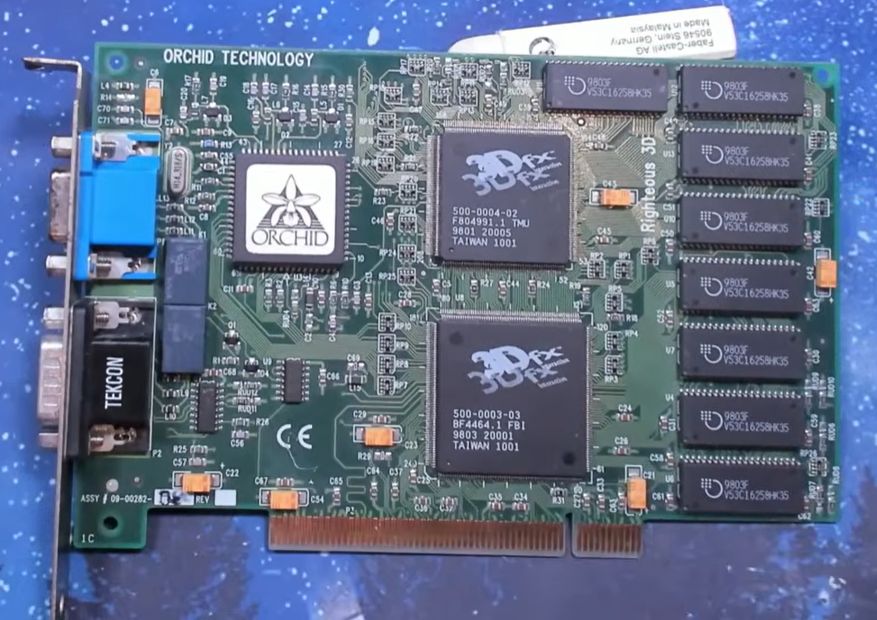
A technical fix has been developed to address an overly bright picture issue on a 3dfx Voodoo graphics card. The problem stemmed from a faulty internal Vref within the RAMDAC, the component responsible for the card's analog video output. Previously, a temporary solution involved adding a simple resistor to one of the RAMDAC's pins to correct this voltage reference. This new information suggests a refined or alternative method for achieving the same correction, aiming to restore the intended visual output for users of this vintage hardware. The Voodoo line of graphics cards, popular in the late 1990s and early 2000s, is known for its significant impact on 3D gaming performance during that era. Issues like overly bright displays were not uncommon with aging electronic components. This repair highlights the ongoing efforts within retro computing communities to maintain and restore classic hardware to full functionality. The precise details of the 'fix for the fix' are not elaborated upon in the provided snippet.
This technical repair addresses a specific hardware anomaly in vintage 3dfx Voodoo graphics cards, demonstrating the enduring value placed on legacy computing components. The persistent need for such fixes underscores the inherent complexities of analog signal processing and the long-term reliability challenges of electronic components. As the technology landscape rapidly advances, the retro computing community's dedication to preserving and restoring older hardware highlights a broader societal interest in technological history and the tangible artifacts of past innovations. This effort also implicitly raises questions about planned obsolescence and the environmental impact of electronic waste, as enthusiasts strive to extend the lifespan of existing devices rather than solely pursuing newer models.
AI-generated to prompt reflection — not editorial opinion, not advice, not a statement of fact. How this works.