Repeated Job Postings Extend Wait Times for Bangladeshi Government Applicants
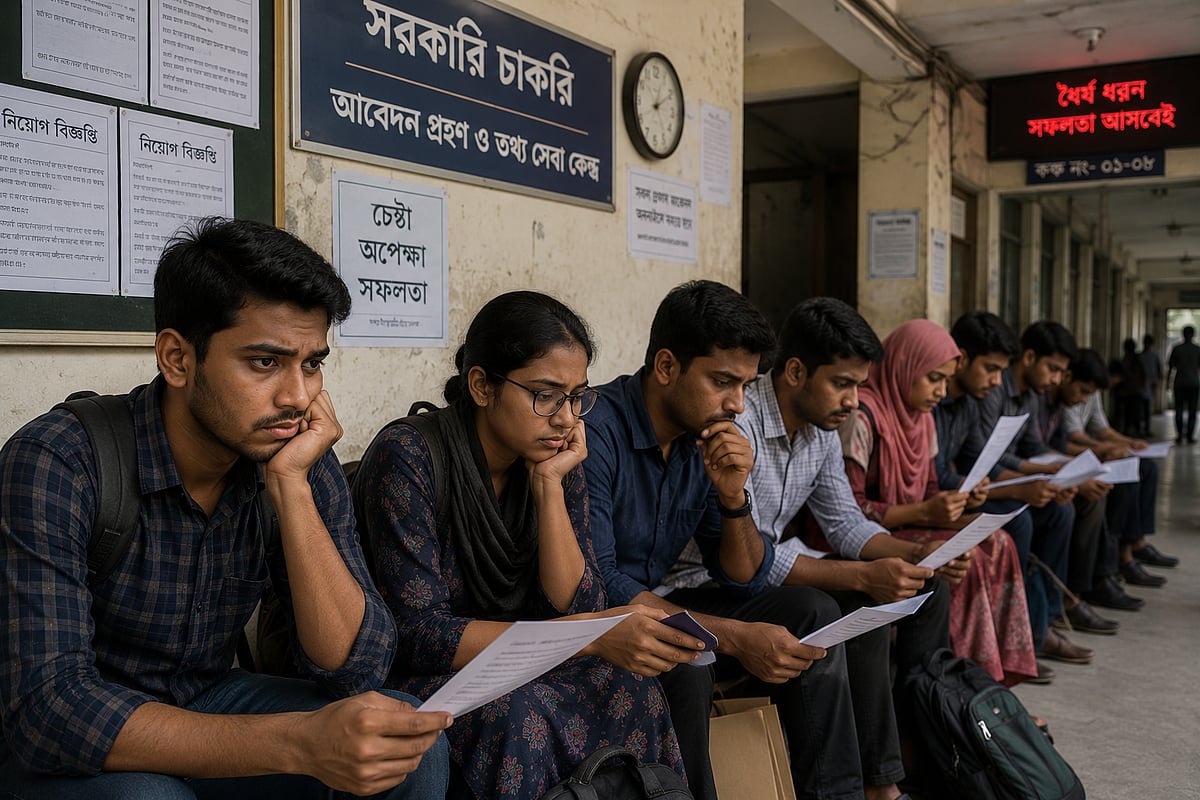
Job seekers in Bangladesh are facing extended waiting periods due to repeated recruitment notices from various government institutions. Several departments, including the Department of Printing and Publications, the Department of Social Services, and the Department of Youth Development, have reissued their vacancy announcements after a gap of two and a half years. This recurring practice of re-advertising positions is causing significant delays in the hiring process. The prolonged wait is a source of frustration for many aspiring candidates who are eager to secure government employment. The repeated notifications suggest potential inefficiencies or administrative hurdles within these government bodies. The extended timelines raise questions about the effectiveness and timeliness of public sector recruitment processes in the country. Applicants are left in a state of uncertainty as they navigate these protracted application cycles.
The repeated issuance of recruitment notices for the same government positions in Bangladesh, particularly after lengthy intervals of two and a half years, indicates potential systemic inefficiencies within public sector administration. This practice prolongs the job search for qualified candidates and may reflect challenges in initial recruitment planning, candidate pool management, or inter-departmental coordination. From a public administration perspective, optimizing recruitment cycles is crucial for ensuring timely access to talent, which in turn affects the operational capacity of government services. Exploring streamlined digital application systems, standardized recruitment timelines, and robust candidate pre-qualification processes could mitigate these delays. Such improvements would not only benefit job seekers by reducing uncertainty but also enhance the government's ability to fill critical roles efficiently, aligning with the demands of a modern, responsive public service.
AI-generated to prompt reflection — not editorial opinion, not advice, not a statement of fact. How this works.