Report Examines Integrated Modeling Framework for Liquid Electrolyte Design
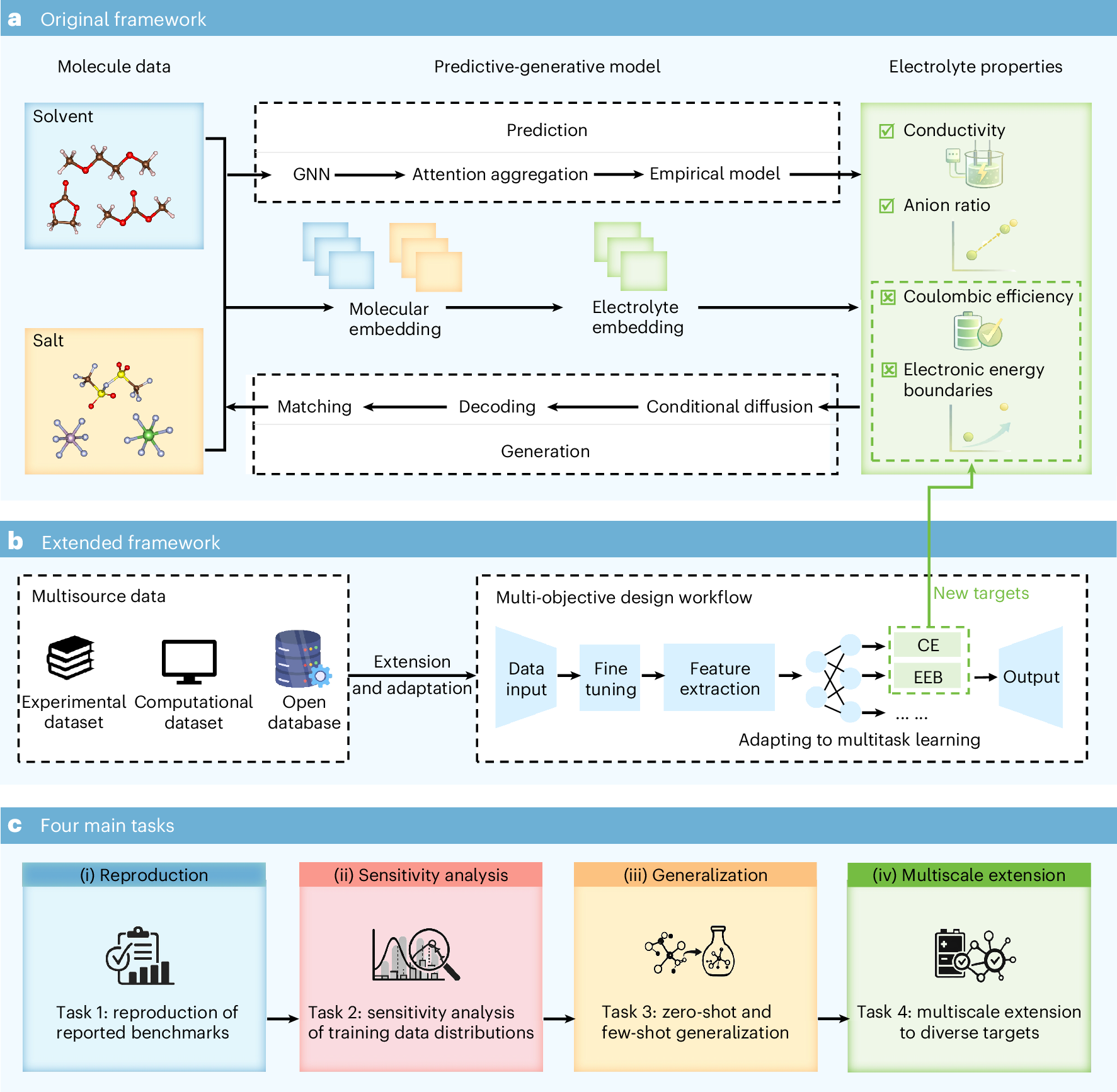
This report delves into the utility and extensibility of an integrated modeling framework specifically designed for the creation of liquid electrolytes. The research explores how this framework can be effectively utilized and expanded upon for future applications in electrolyte design. The focus is on understanding the practical benefits and the potential for growth in its capabilities. The document aims to provide a comprehensive overview of the framework's current state and its future prospects within the field of materials science and electrochemical energy storage. It highlights the importance of such integrated approaches in accelerating the discovery and optimization of new electrolyte materials. The report likely details specific case studies or simulations demonstrating the framework's performance. Furthermore, it may discuss the challenges and opportunities associated with its implementation and further development. The extensibility aspect suggests an examination of how the framework can adapt to new data, algorithms, or material systems. Ultimately, the report seeks to inform researchers and developers about the value and potential of this integrated modeling approach.
This report addresses the critical need for efficient and adaptable computational tools in materials science, particularly for energy storage solutions like liquid electrolytes. The focus on an integrated modeling framework suggests a move towards more holistic design processes, potentially reducing the empirical trial-and-error common in materials discovery. By examining utility and extensibility, the research implicitly highlights the long-term economic and scientific incentives for developing robust, reusable digital infrastructure in R&D. The framework's ability to scale and integrate new knowledge will be a key determinant of its impact on accelerating innovation in battery technology and other electrochemical applications over the next decade, especially as AI-driven discovery becomes more prevalent.
AI-generated to prompt reflection — not editorial opinion, not advice, not a statement of fact. How this works.