Report: Russia Systematically Indoctrinates 1.6 Million Ukrainian Children
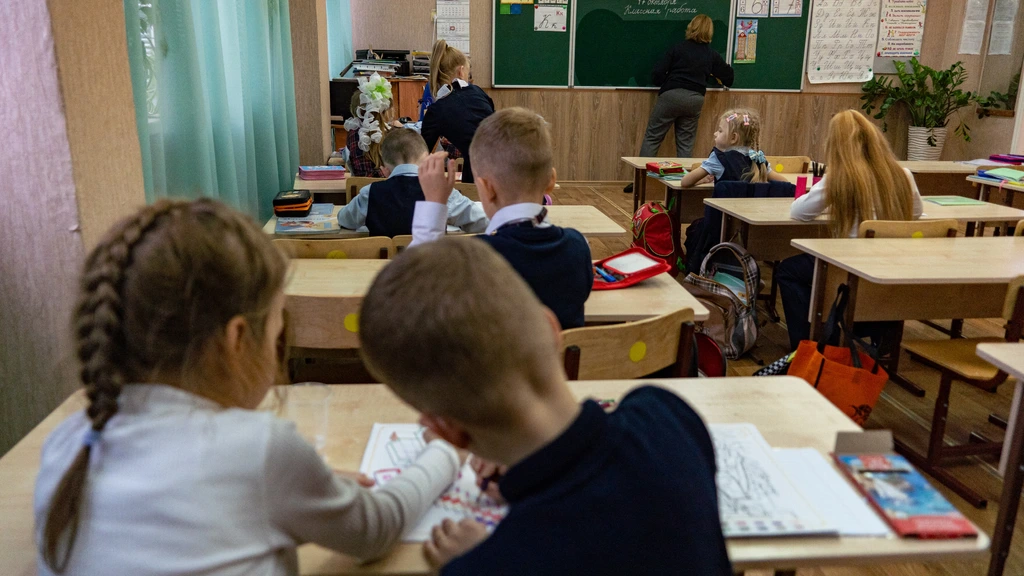
A new report commissioned by the Organization for Security and Co-operation in Europe (OSCE) alleges that approximately 1.6 million children in occupied Ukrainian territories are subjected to systematic Russian indoctrination and militarization. Researchers assert that Russia has implemented a coordinated policy aimed at erasing the identity of these Ukrainian children. The report suggests this policy, involving indoctrination and militarization, could potentially constitute a crime against humanity. Indoctrination is reportedly integrated into all levels of the school system in occupied areas, with programs like 'Conversations about Important Things' starting in kindergarten and heavily focusing on the war. Militarization extends beyond classrooms through state-sponsored military-patriotic youth organizations and re-education camps. The researchers believe this system prepares children for potential future service in the Russian army, either as conscripts or volunteers. The findings are based partly on testimonies from young adults who experienced this indoctrination as children, some of whom left their families to evade conscription. The OSCE report corroborates earlier concerns raised by the EU and the United Nations. A UN commission previously concluded in March that Russia committed crimes against humanity by relocating Ukrainian children to Russia, with thousands deported from occupied Ukrainian territories and most not yet returned.
This report details a systematic effort by Russia to indoctrinate and militarize Ukrainian children in occupied territories, potentially constituting a crime against humanity. The described programs, integrated from early education through youth organizations and re-education camps, aim to reshape children's identities and prepare them for military service. This approach raises significant concerns regarding international humanitarian law and the long-term psychological and societal impact on a generation. From a geopolitical perspective, such actions could be interpreted as an attempt to secure future loyalty and influence in contested regions. The international community, including bodies like the UN and OSCE, is monitoring these developments, highlighting the critical need for accountability and the protection of vulnerable populations during conflict. The long-term consequences for Ukrainian national identity and the children's future autonomy warrant careful consideration as the conflict evolves.
AI-generated to prompt reflection — not editorial opinion, not advice, not a statement of fact. How this works.