Rescued Dwarf Sperm Whale Shows Improvement in Rehabilitation Center
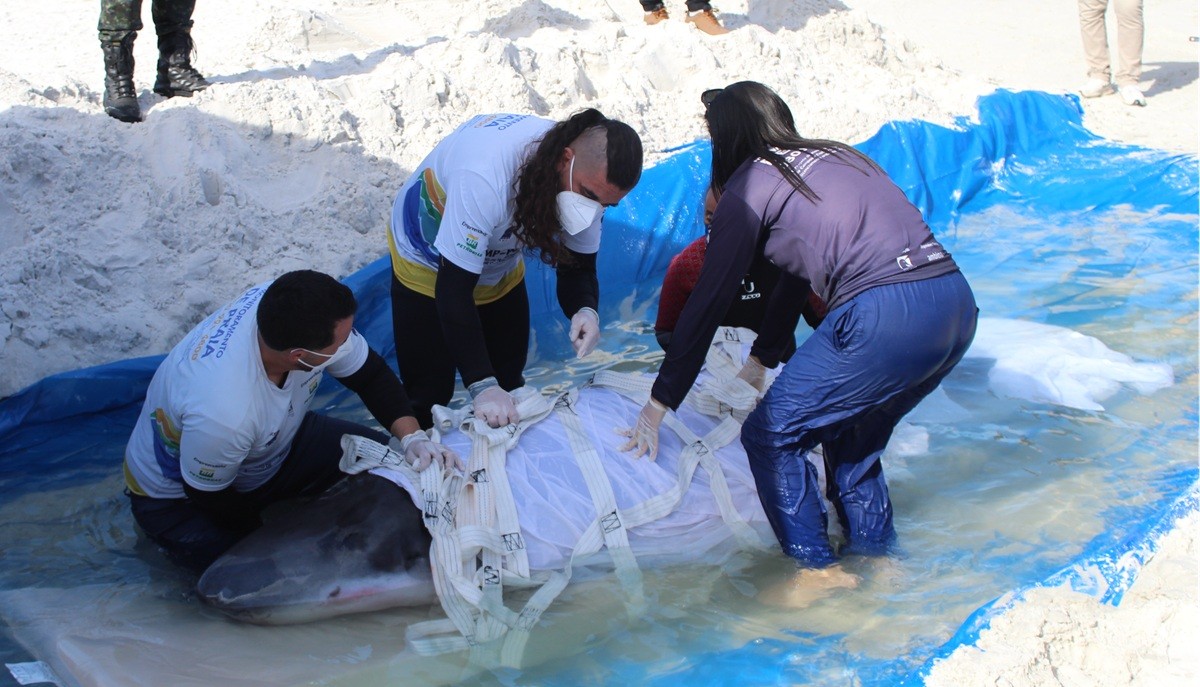
A female adult dwarf sperm whale, rescued on Wednesday, February 22nd, from Praia do Forte in Cabo Frio, Rio de Janeiro state, is showing signs of improvement at the Albatroz Institute's Rehabilitation and De-oiling Center (CRD) in Araruama. Veterinarian Daphne Goldberg reported the whale remained clinically stable overnight, with stabilized respiration and responsiveness to external stimuli. The whale, measuring approximately three meters and weighing around 350 kilograms, was found with low blood sugar, shark bites, and abrasions on its belly from the sand. Biologist Bruno Comelli noted the whale had beached itself twice on Tuesday, February 21st. Initial attempts to return it to the sea were unsuccessful, even after correcting its hypoglycemia. Consequently, the decision was made to stabilize the whale on the beach and transport it to the CRD for rehabilitation. The rescue operation involved teams from GEMM-Lagos and the Albatroz Institute, under the Beach Monitoring Project for the Campos and Espírito Santo Basins (PMP-BC/ES), with support from the Cabo Frio City Hall and the Fire Department. The whale was moved to a specialized truck and is now in a 100,000-liter saltwater tank under the care of veterinarians from GEMM-Lagos, Albatroz, ORCA, and Baleia Jubarte institutes. This rehabilitation effort is part of the Southeast Aquatic Mammal Stranding Network (Remase). The PMP-BC/ES, executed by the Albatroz Institute, is funded by Petrobras as part of federal environmental licensing conditions for oil and gas activities.
This incident highlights the complex interplay between marine wildlife and human industrial activities, particularly in offshore oil and gas operations. The PMP-BC/ES project, funded by Petrobras, demonstrates a mechanism for addressing negative externalities of resource extraction, such as marine mammal strandings. However, the repeated beaching and the presence of shark bites and abrasions suggest underlying stressors that warrant continued investigation. Future efforts should focus on understanding the root causes of these strandings, potentially linked to acoustic disturbances, changes in prey availability, or habitat degradation influenced by industrial activities. Proactive monitoring and adaptive management strategies, informed by ongoing research, are crucial to mitigating impacts and ensuring the long-term health of marine ecosystems in these vital energy-producing regions.
AI-generated to prompt reflection — not editorial opinion, not advice, not a statement of fact. How this works.