Researchers Achieve Error Correction for a Logical Qubit in a Single Atomic Ion
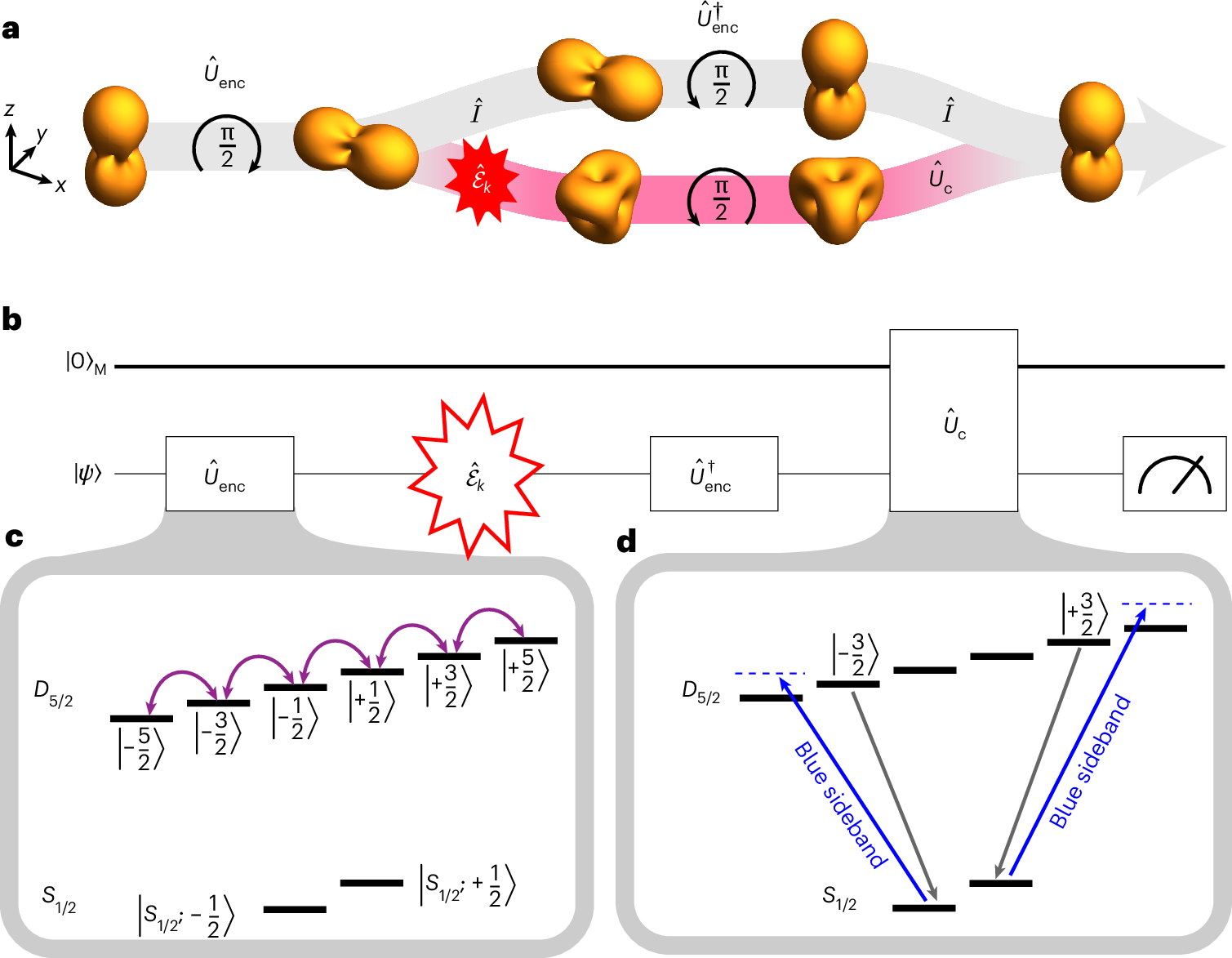
Scientists have successfully demonstrated error correction for a logical qubit encoded within a single atomic ion. This breakthrough represents a significant step forward in the field of quantum computing, addressing a fundamental challenge in building stable and reliable quantum systems. The research focuses on protecting quantum information from environmental noise and operational errors, which are major hurdles in scaling up quantum computers. By encoding a logical qubit into a single ion, the team aimed to create a more robust unit of quantum information. The successful implementation of error correction techniques on this single-ion system validates the approach and paves the way for more complex quantum computations. This development could accelerate the timeline for practical quantum computing applications, potentially impacting fields such as drug discovery, materials science, and cryptography. The ability to correct errors is crucial for maintaining the integrity of quantum states over extended periods, a prerequisite for running sophisticated quantum algorithms. This work highlights the ongoing progress in harnessing the power of individual atoms for advanced computing.
This advancement in single-atom logical qubit error correction addresses a core scalability challenge in quantum computing. By demonstrating error correction at this fundamental level, researchers are building a more resilient foundation for future quantum processors. The success suggests that the path towards fault-tolerant quantum computation may involve intricate control over individual quantum systems, rather than solely relying on increasing qubit numbers. Future research will likely focus on extending these error correction capabilities to multi-qubit systems and exploring the trade-offs between qubit fidelity, error rates, and the overhead required for correction. This work contributes to the broader understanding of quantum information theory and its practical implementation, potentially accelerating the development of quantum technologies over the next decade.
AI-generated to prompt reflection — not editorial opinion, not advice, not a statement of fact. How this works.