Researchers Develop Advanced Method for Teaching Robots to Navigate Difficult Terrain
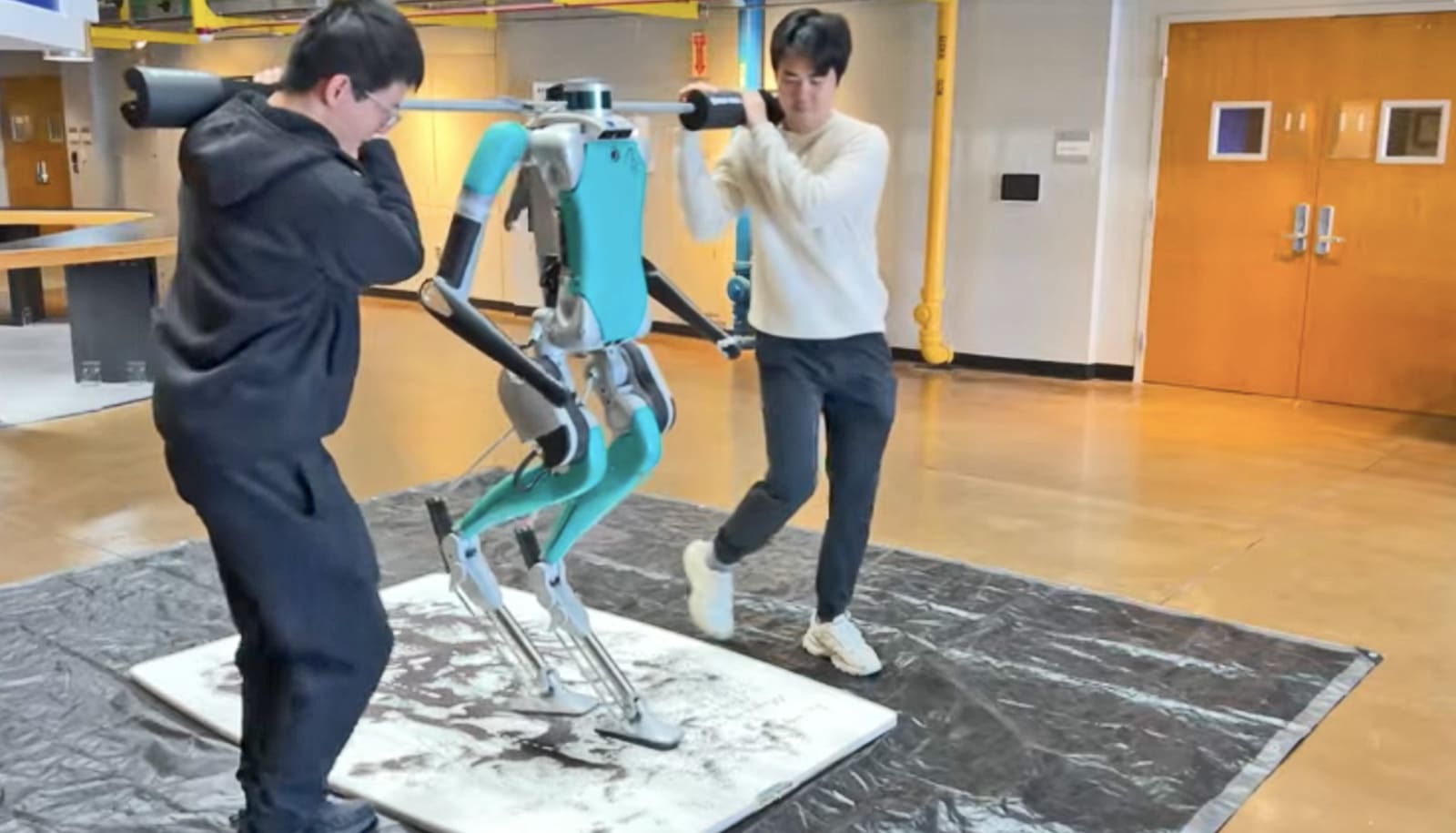
A team of researchers has developed an innovative method for training robots to walk effectively across a variety of challenging landscapes. The new approach allows robots to learn and adapt to diverse surfaces, including gravel, grass, and uneven hills. A video demonstration showcases the robot's progress as it navigates these complex environments. This advancement is crucial for enabling robots to operate more autonomously and reliably in real-world conditions, which often present unpredictable obstacles. The development signifies a step forward in robotic locomotion, moving beyond controlled laboratory settings to practical application in varied outdoor terrains. The improved teaching technique aims to enhance the robot's balance, stability, and overall maneuverability. This could have significant implications for fields such as search and rescue, exploration, and logistics, where robots may need to traverse difficult ground. The researchers' work focuses on creating more robust and adaptable robotic systems capable of handling the complexities of natural environments. The goal is to equip robots with the skills necessary to perform tasks in settings previously deemed too difficult for automated systems.
This development addresses a core challenge in robotics: achieving robust locomotion across unstructured environments. By improving the training methodology, researchers are enhancing the adaptability and resilience of robotic systems. The focus on diverse terrains suggests a strategic move towards practical deployment, acknowledging that real-world applications demand more than flat, predictable surfaces. Future iterations will likely explore more sophisticated sensor integration and reinforcement learning algorithms to further refine these capabilities, potentially unlocking new operational domains for autonomous agents in the coming decade.
AI-generated to prompt reflection — not editorial opinion, not advice, not a statement of fact. How this works.