Researchers Develop Drone Echolocation Inspired by Bats
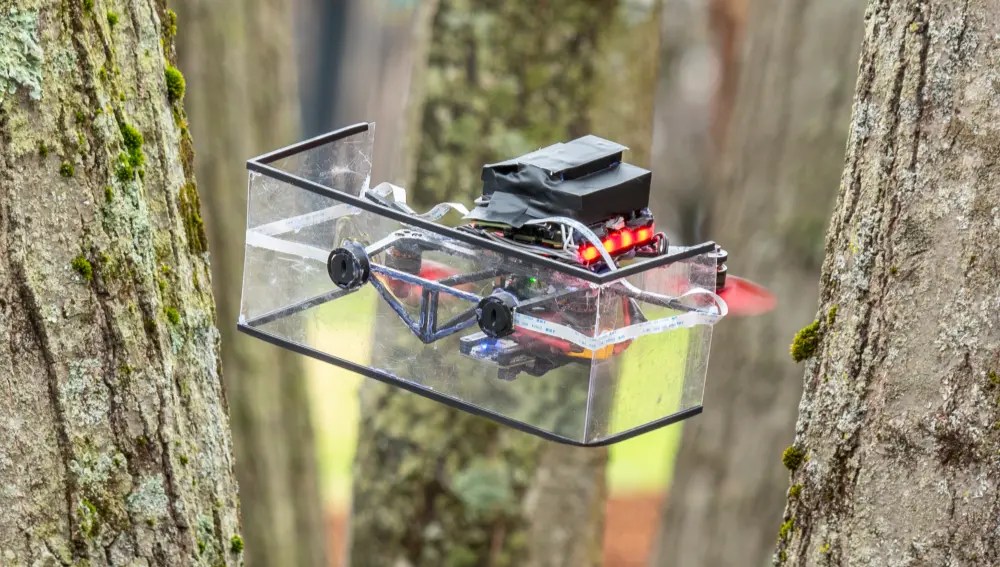
Researchers at Worcester Polytechnic Institute (WPI) are developing an echolocation system for drones, drawing inspiration from the natural abilities of bats. Bats can navigate and hunt in complete darkness or confined spaces using sound waves, a capability the WPI team aims to replicate for unmanned aerial vehicles (UAVs). This technology could enable drones to "see" their surroundings using sound, allowing them to operate effectively in environments where visual sensors are limited or non-functional. Such environments include nighttime operations, dense fog, or indoor spaces like warehouses and disaster sites. The system would emit sound pulses and analyze the returning echoes to create a sonic map of the surroundings. This would grant drones enhanced autonomy and safety, reducing the risk of collisions with obstacles. The potential applications are vast, ranging from search and rescue missions in challenging conditions to industrial inspections in complex structures. The development signifies a significant step towards more versatile and robust drone technology.
This advancement in drone navigation, inspired by biological echolocation, addresses a critical limitation in current UAV capabilities: reliable operation in visually obstructed environments. By mimicking bats' acoustic sensing, researchers aim to enhance drone autonomy and safety, particularly for applications in search and rescue or industrial inspection where GPS and visual data may be compromised. The development highlights a broader trend of biomimicry in engineering, seeking efficient and robust solutions from natural systems. Future iterations could explore adaptive learning algorithms to refine echo interpretation, further increasing operational effectiveness and potentially reducing reliance on external infrastructure, a key consideration for resilient autonomous systems in the next decade.
AI-generated to prompt reflection — not editorial opinion, not advice, not a statement of fact. How this works.