Researchers Develop Novel Method for Oxetane to Azetidine Skeletal Transformation
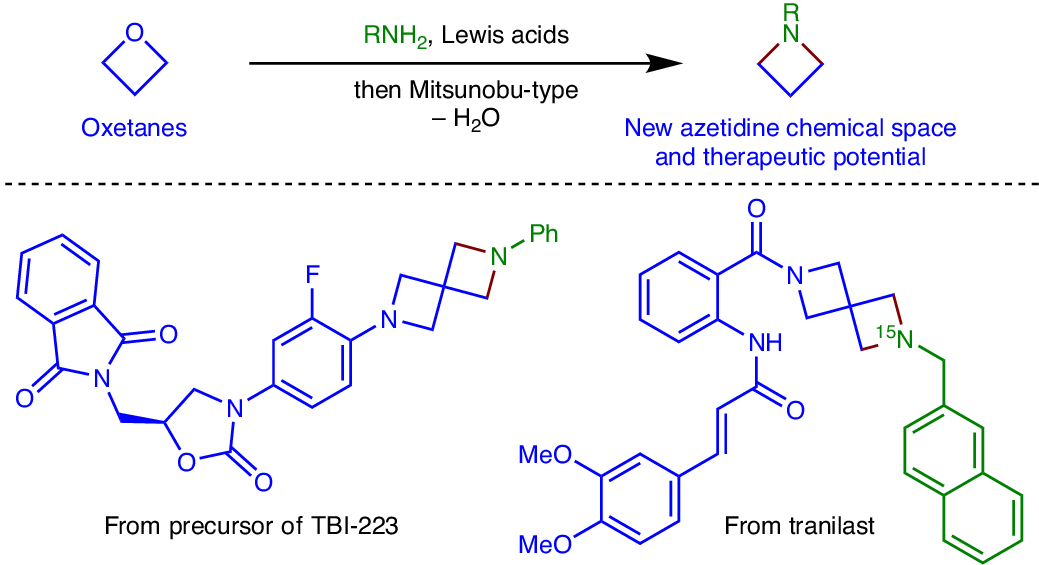
Scientists have introduced a groundbreaking method for transforming oxetane into azetidine, a significant advancement in skeletal editing. This novel approach allows for the direct conversion of the oxetane ring structure into the azetidine ring. The research focuses on the precise manipulation of chemical bonds to achieve this specific skeletal rearrangement. This development is expected to have considerable implications for organic synthesis and medicinal chemistry. The ability to efficiently convert oxetanes to azetidines provides a new pathway for accessing valuable chemical scaffolds. These scaffolds are often found in biologically active molecules and pharmaceuticals. The methodology offers a potentially more streamlined route compared to existing multi-step processes. Further research will explore the scope and limitations of this new skeletal editing technique. The potential applications range from the development of new drug candidates to the synthesis of advanced materials. This work represents a notable step forward in the field of synthetic organic chemistry.
This chemical synthesis breakthrough offers a new tool for molecular construction, potentially accelerating drug discovery and materials science by providing a more direct route to azetidine-containing compounds. The efficiency and scalability of this oxetane-to-azetidine transformation will be critical in determining its long-term impact. Future research should focus on understanding the reaction's mechanistic underpinnings and exploring its compatibility with a wider range of functional groups, which will be key for its adoption in complex synthetic pathways. This advancement aligns with the growing demand for precise and efficient synthetic methodologies in the era of advanced molecular design.
AI-generated to prompt reflection — not editorial opinion, not advice, not a statement of fact. How this works.