Researchers Explore How Large Language Models Learn Different Reasoning Effort Levels
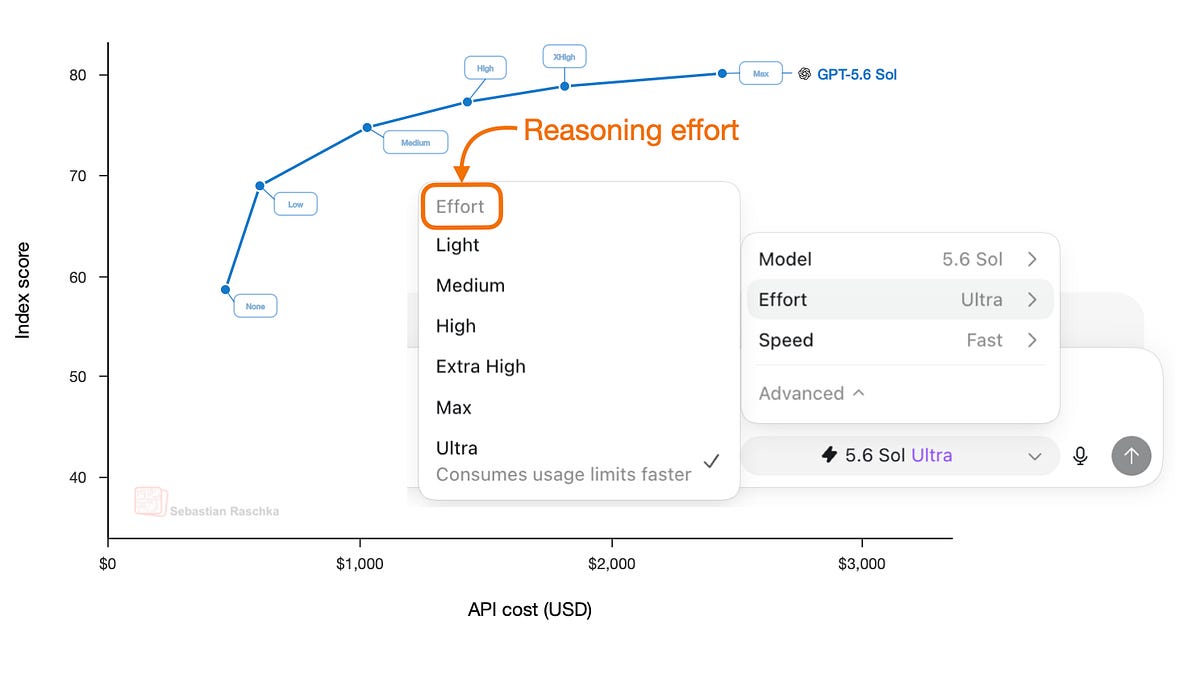
A recent study delves into the mechanisms by which Large Language Models (LLMs) acquire the ability to perform reasoning tasks at varying levels of cognitive effort. The research identifies distinct modes that LLMs can adopt, categorized as low-, medium-, and high-effort reasoning. These modes suggest that LLMs do not possess a single, uniform approach to problem-solving but rather can adapt their computational strategies based on the complexity of the task. Understanding these different reasoning modes is crucial for developing more efficient and effective AI systems. It allows for better control over the resources an LLM expends, potentially leading to faster responses for simpler queries and more robust analysis for complex problems. The findings could inform future LLM architectures and training methodologies, aiming to optimize performance and resource utilization across a wide spectrum of applications. This research contributes to the ongoing effort to make AI reasoning more transparent and controllable.
This research into LLM reasoning modes highlights a critical area for future AI development: optimizing computational resource allocation. By understanding how LLMs can switch between low-, medium-, and high-effort reasoning, developers can design systems that are not only more efficient but also more predictable in their performance. This capability could lead to significant advancements in applications where real-time processing and cost-effectiveness are paramount. The challenge lies in developing robust methods to accurately detect and control these reasoning modes, ensuring that the LLM selects the appropriate level of effort without compromising the quality or accuracy of its output. Future work will likely focus on creating adaptive algorithms that can dynamically adjust reasoning effort based on task requirements and user feedback, paving the way for more sophisticated and user-centric AI interactions.
AI-generated to prompt reflection — not editorial opinion, not advice, not a statement of fact. How this works.