Restoring a 19th Century Leclanché Battery Cell
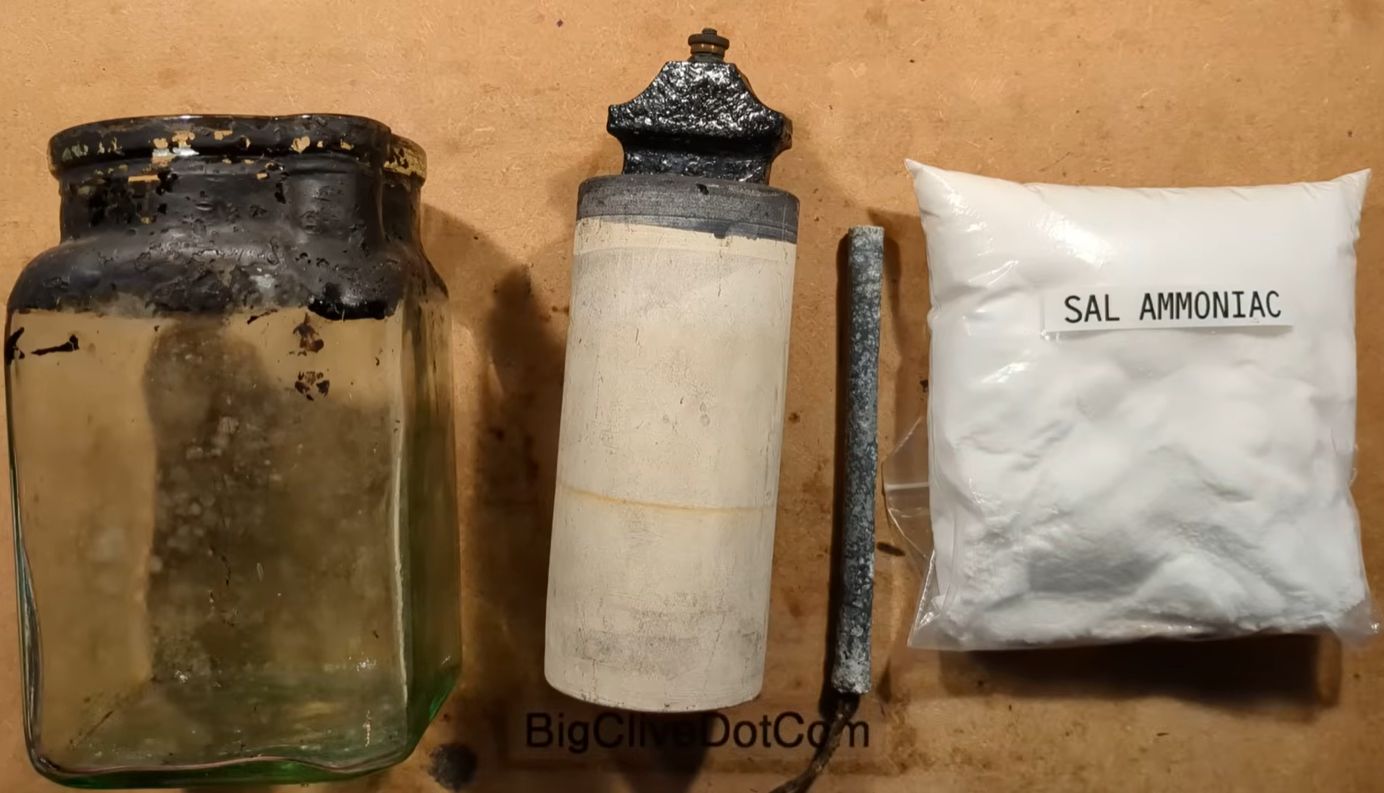
This article details the process of rebuilding an 1800s Victorian Leclanché cell, a significant early battery technology. The 19th century was a pivotal time for electrical innovation, building upon centuries of knowledge about electricity. The Leclanché cell, invented by French inventor Georges Leclanché in 1866, was a crucial development in portable power. It utilized a zinc anode and a carbon cathode, with an electrolyte typically made of ammonium chloride. The cathode was surrounded by a porous material, often manganese dioxide, which acted as a depolarizer to prevent the buildup of hydrogen gas. This design allowed for a more stable and longer-lasting current compared to earlier voltaic pile batteries. The rebuilding process involves carefully disassembling the old cell, cleaning the components, and replacing any degraded parts. This often includes sourcing or fabricating new electrodes and ensuring the integrity of the container and sealing. The restored cell can then be used for educational purposes or as a functional demonstration of early electrical science. The article highlights the historical significance of such devices in the development of modern electrical systems.
The restoration of historical electrical devices like the Leclanché cell offers a tangible link to the foundational stages of the electrical revolution. By understanding the materials, design principles, and limitations of these early batteries, we gain insight into the engineering challenges and ingenuity of the 19th century. This process not only preserves a piece of scientific heritage but also serves as an educational tool, illustrating the evolution of energy storage technologies. Examining such historical systems can prompt reflection on the trajectory of innovation, highlighting how fundamental principles, once mastered, paved the way for the complex energy solutions of today and the future, particularly in the context of increasing demands for sustainable and efficient power.
AI-generated to prompt reflection — not editorial opinion, not advice, not a statement of fact. How this works.