Restoring a Vacuum Tube Flip-Flop Module from the 1948 IBM 604 Calculator
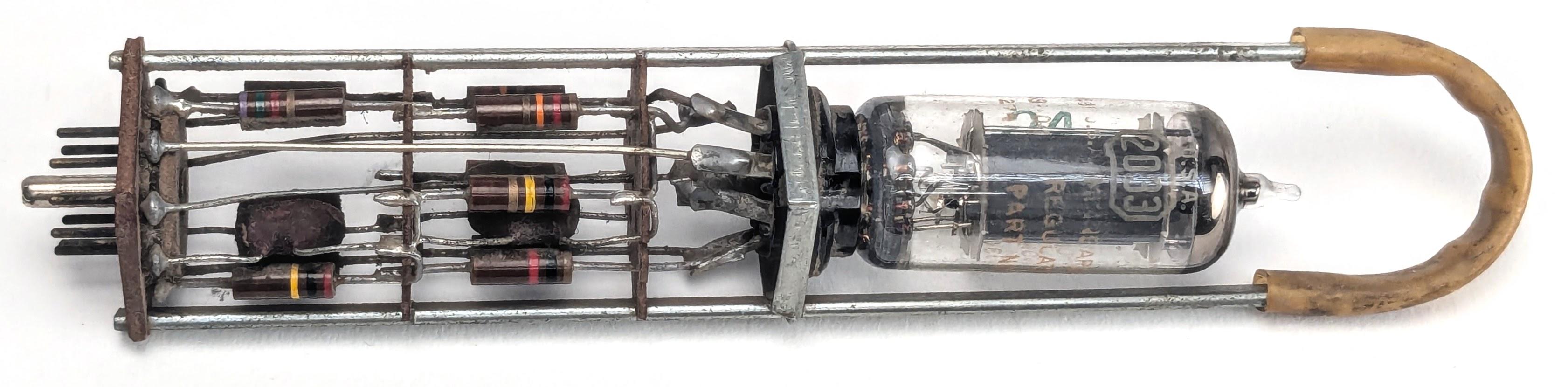
Ken Shirriff has undertaken the restoration of a pluggable module from the IBM 604 Electronic Calculator, a machine dating back to 1948. This project contrasts with current trends of examining microscopic features in modern semiconductor processors, instead focusing on the larger, macroscopic components of vintage computing hardware. The IBM 604 was a significant machine in its time, utilizing vacuum tubes for its computational processes. Shirriff's work involves understanding and reactivating the functionality of these older technologies. The module in question is a flip-flop, a fundamental building block in digital electronics responsible for storing binary information. By bringing this historical component back to life, Shirriff offers a tangible connection to the early days of electronic computing. This endeavor highlights the engineering principles and design choices prevalent in the mid-20th century. The restoration process likely involves meticulous cleaning, component testing, and careful reassembly to ensure the module operates as intended. It serves as an educational tool, demonstrating how early computers performed calculations using technology vastly different from today's silicon-based chips.
This restoration project offers a valuable perspective on the evolution of computing hardware. By examining the macroscopic, vacuum-tube-based flip-flop module of the 1948 IBM 604, one can appreciate the significant advancements in miniaturization and efficiency achieved with modern semiconductor technology. The contrast underscores the ongoing drive in the tech industry towards smaller, faster, and more power-efficient components. Understanding the foundational principles of these early systems, even with their inherent limitations like heat generation and reliability issues, provides context for current innovations. This work prompts reflection on the trade-offs between complexity, accessibility, and performance across different technological eras, highlighting how engineering challenges are met with the available materials and knowledge of the time.
AI-generated to prompt reflection — not editorial opinion, not advice, not a statement of fact. How this works.
