Retired Firefighter Arrested for Stalking Ex-Wife Using Pix Transfer Descriptions
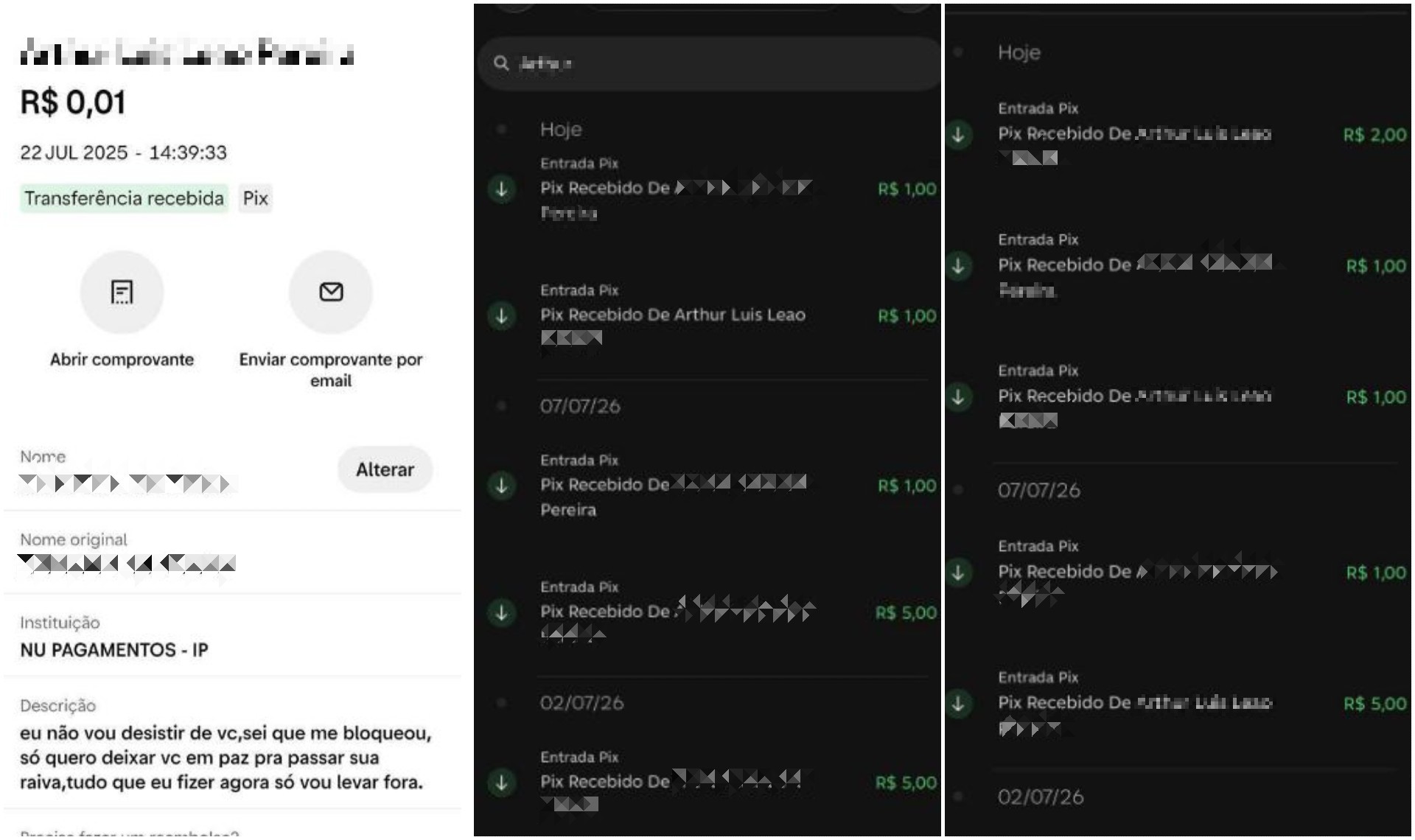
A 46-year-old retired firefighter has been arrested in Boa Vista, Roraima, for stalking, threatening, and attempting to rape his ex-wife. The suspect allegedly used the description field of at least 14 Pix money transfers to send harassing messages to the victim between November 2024 and July 2026. These messages, sent even after he was blocked on communication apps, included threats, accusations of infidelity, demands, and intimidations. Some messages stated he would not give up on her and that he knew she had blocked him, with one ominously noting he still lived nearby and could "arrive at any time." The transfers involved small amounts, such as R$0.01, R$1, R$2, and R$5, with the description field used to circumvent communication blocks. The investigation, led by the Civil Police, also revealed that the suspect monitored the victim's routine, inquired about her activities with acquaintances, and appeared in places she frequented. He is being investigated for stalking, psychological violence, threats, and attempted rape. The arrest was part of an operation by the Civil Police's Special Operations Department (Dopes) and the Tactical Response Group (GRT), in conjunction with a Ministry of Justice and Public Security program.
This case highlights the evolving tactics of harassment, where digital payment systems are weaponized to circumvent communication blocks and exert control. The perpetrator's use of Pix transfer descriptions demonstrates a calculated effort to maintain contact and exert psychological pressure despite explicit attempts by the victim to cease communication. This incident underscores the need for financial institutions and law enforcement to develop more robust protocols for identifying and addressing patterns of abuse embedded within transaction data. Furthermore, it raises questions about the broader societal implications of digital tools being exploited for malicious purposes, necessitating a multi-faceted approach involving technological safeguards, legal frameworks, and public awareness campaigns to protect individuals from such pervasive forms of digital stalking and harassment in the coming years.
AI-generated to prompt reflection — not editorial opinion, not advice, not a statement of fact. How this works.
