Rhone Glacier Melts Dramatically Amid European Heatwave
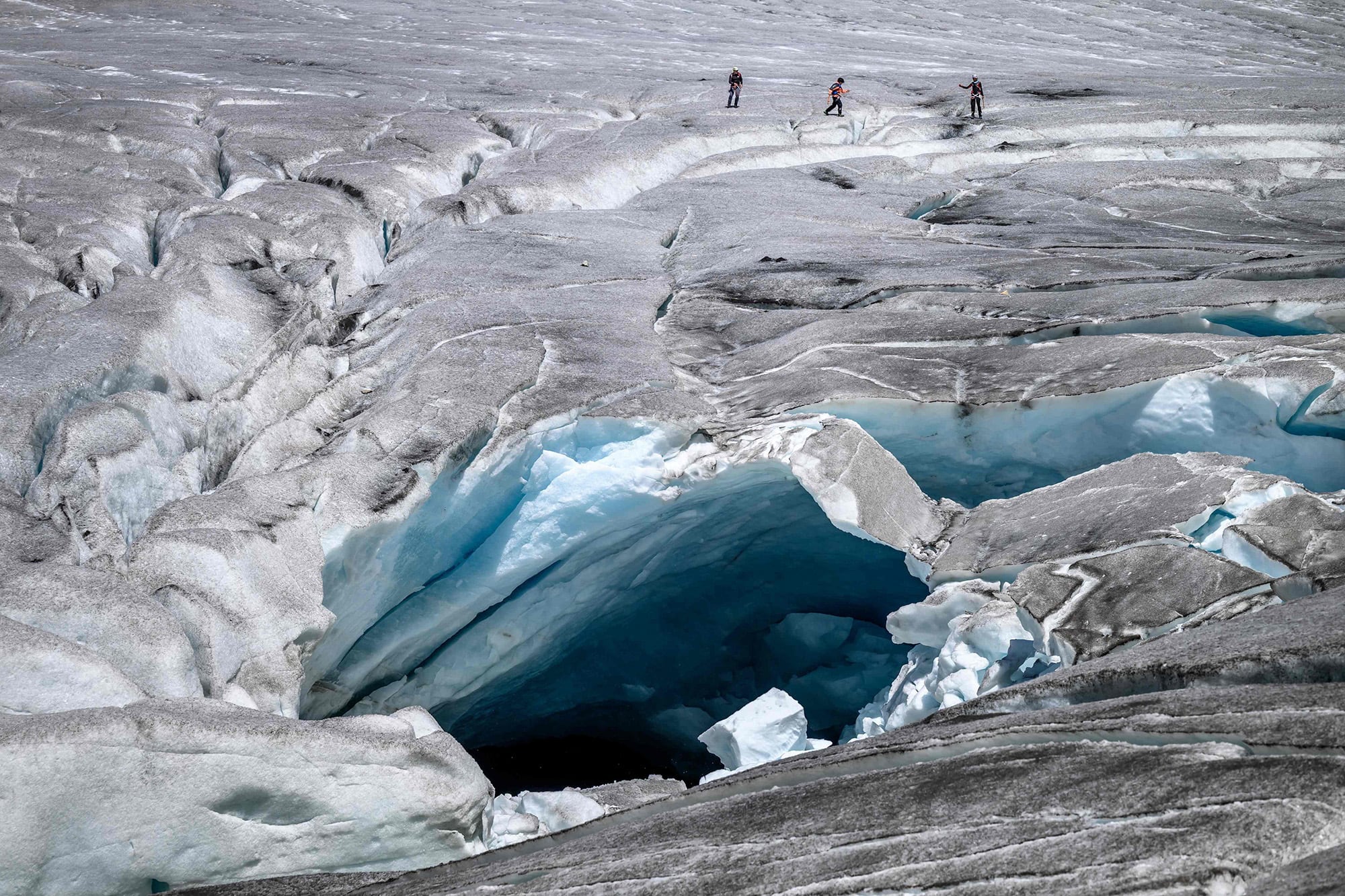
The Rhone Glacier in the Swiss Alps is showing significant signs of melting due to high temperatures affecting Europe. Three hikers observed the glacier appearing "exhausted," with a melt hole visible as a stark indicator of the severity of the situation. Matthias Huss, director of the Swiss body monitoring glaciers, stated that the Rhone has lost over four meters of ice in just one month. French glaciologist Heïdi Sevestre warned that the perception of eternal snows is no longer accurate and that an urgent alarm must be sounded. This event occurs during a boreal summer marked by massive, simultaneous melting in various parts of the globe. The focus is shifting from preserving existing ice to preparing for an accelerating change.
The rapid melting of the Rhone Glacier, as reported, highlights the tangible impacts of rising global temperatures on natural landscapes. This phenomenon underscores the critical need for adaptive strategies in regions heavily reliant on glacial resources or susceptible to their decline. The observed rate of ice loss suggests that current climate mitigation efforts may be insufficient to halt or significantly slow such processes. Future planning must account for the accelerated pace of environmental change, considering potential consequences for water availability, infrastructure, and ecosystems. The situation prompts a reevaluation of long-term sustainability goals in light of evolving climatic realities and the imperative to build resilience against widespread environmental shifts.
AI-generated to prompt reflection — not editorial opinion, not advice, not a statement of fact. How this works.
