Rio de Janeiro Launches 'Zero Tolerance' Plan Against Organized Crime's Public Space Occupation
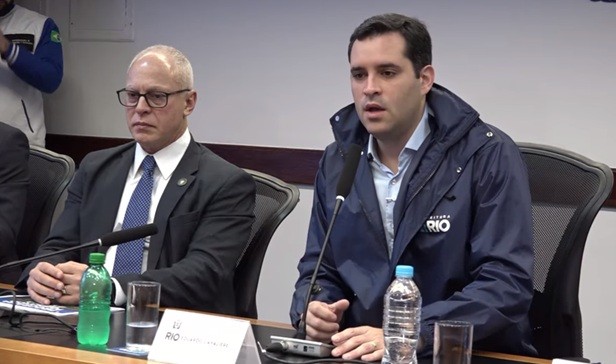
The Municipality of Rio de Janeiro, in partnership with the State Government, has launched the 'Zero Tolerance' program to combat the illegal occupation of public spaces by organized crime. Announced on Tuesday, May 7th, at the Rio Operations Center, the initiative aims to coordinate efforts between governmental powers to disrupt the distribution, structure, and sale of illegal products. Mayor Eduardo Cavaliere highlighted that the exploitation of public spaces, a long-standing issue in Rio, has evolved with increased volume, scale, standardization, and distribution points, becoming intrinsically linked to organized crime.
Initial actions include the publication of two decrees establishing a zero-tolerance perimeter for public space exploitation along the boardwalks of Leme, Copacabana, Ipanema, and Leblon. Authorities will establish approximately 70 strategic points, identified through mapping by the Municipal Secretariat of Public Order, to prevent the misuse of these areas. Intelligence operations have already uncovered 22 illegal storage facilities. The illegal operation, which includes illicit charging for sales points, exploitation of street vendors, clandestine sales and rentals of spots, and goods with unverified origins, is estimated to generate around R$ 100 million annually in revenue from rentals and equipment. An estimated one thousand illegal sales points exist across the four neighborhoods, with approximately 20% of illegal street vendors being foreign nationals. Criminal factions reportedly charge daily fees ranging from R$ 200 to R$ 300 for these prime locations.
The 'Zero Tolerance' program addresses the systemic issue of organized crime leveraging public spaces for illicit activities, a phenomenon that has become increasingly sophisticated and profitable. By focusing on coordination between municipal and state authorities, the initiative seeks to dismantle the infrastructure supporting these operations, from illegal storage to daily revenue collection. The program's emphasis on establishing defined perimeters and strategic points, coupled with intelligence-led identification of illegal depots, represents a direct challenge to the established economic model of criminal groups. Future effectiveness will depend on sustained enforcement, the ability to adapt to evolving criminal tactics, and addressing the underlying factors that contribute to the exploitation of street vendors and the demand for illicit goods and services. The program's success could serve as a model for other urban centers facing similar challenges in reclaiming public spaces from criminal influence.
AI-generated to prompt reflection — not editorial opinion, not advice, not a statement of fact. How this works.