Rio de Janeiro motorcycle taxi driver robbed for 5th time in two years
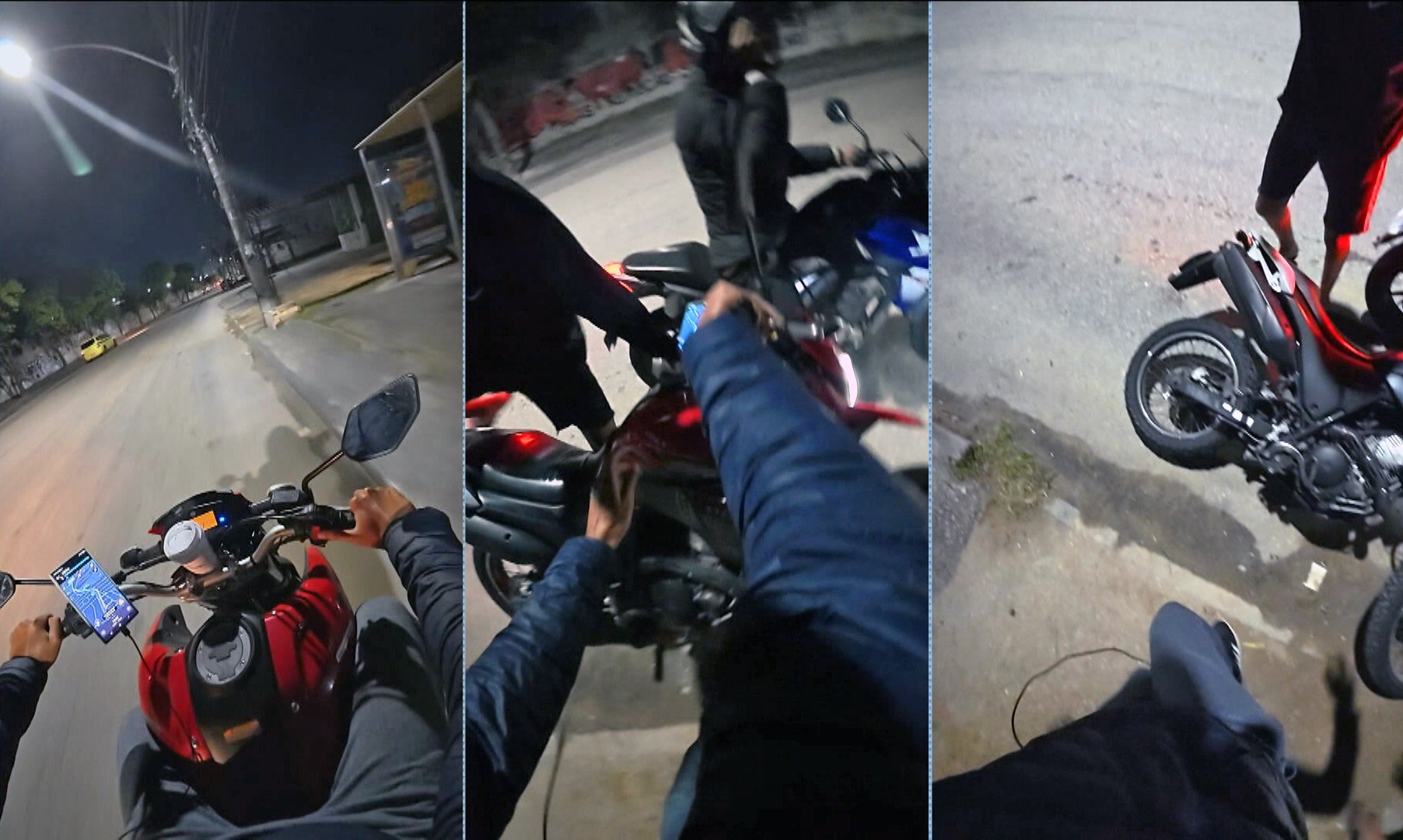
A motorcycle taxi driver in Rio de Janeiro's North Zone was robbed for the second time in four months, and the fifth time in two years of working in the profession. The most recent incident occurred on Tuesday, May 14th, on Avenida Pastor Martin Luther King Jr. in Irajá. The robbery was captured on a camera attached to the driver's helmet, identified as Eduardo. He had just picked up a passenger from Shopping Nova América in Del Castilho when criminals on a motorcycle approached him. The video shows one assailant shouting orders to stop and threatening to shoot. Eduardo and his passenger complied, handing over their belongings. After the assailants fled with the motorcycle, Eduardo attempted to get help from passing drivers, eventually requesting a ride to the Coelho Neto metro station. Eduardo reported that his motorcycle was found abandoned hours later. In March of the same year, he experienced another robbery, also recorded by his helmet camera, where two armed individuals approached him in Madureira. In that instance, he described handing over the motorcycle and his phone, then running to seek assistance. The stolen items from that incident were tracked in the Honório Gurgel and Rocha Miranda areas, with the vehicle recovered the following day. The Military Police stated that the 9th BPM (Rocha Miranda) had no record of being alerted to the most recent incident and affirmed that policing in the area remains reinforced.
The repeated victimisation of this motorcycle taxi driver highlights significant public safety challenges in Rio de Janeiro's North Zone. The incident underscores the persistent threat of violent crime against gig economy workers, who often operate with limited protective measures. While police acknowledge reinforced patrols, the frequency of these attacks suggests a potential gap in effective crime prevention strategies or enforcement. Future policy considerations could explore enhanced surveillance, community policing initiatives tailored to high-risk routes, or technological solutions to better protect vulnerable transport workers and deter criminal activity in these urban areas.
AI-generated to prompt reflection — not editorial opinion, not advice, not a statement of fact. How this works.