Rio de Janeiro Orders Recount of Restricted-Use Firearms Issued to Agencies
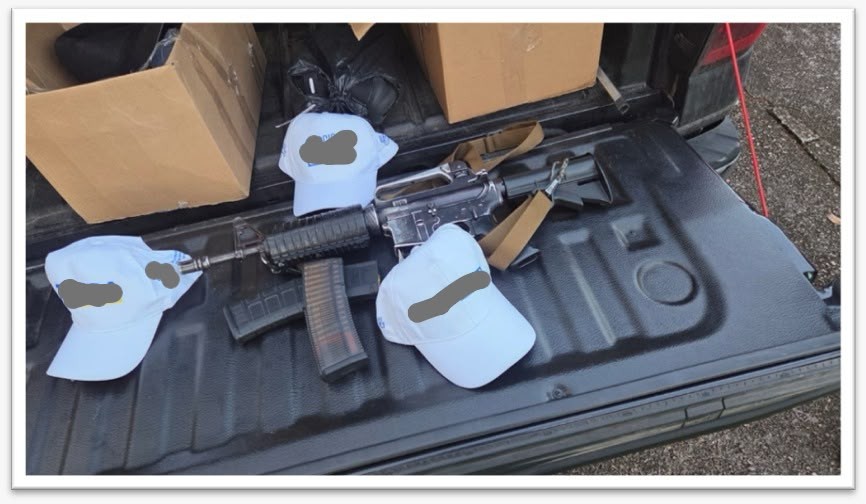
The Government of Rio de Janeiro has mandated an extraordinary and compulsory re-registration of restricted-use firearms, including rifles, carbines, and submachine guns. These weapons have been loaned to public agencies or entrusted to individuals and legal entities. The primary goal, as stated by the government and published on Monday, November 27th, is to enhance governance and oversight of firearms originating from the Military and Civil Police forces. The re-registration process is also intended to facilitate updated information sharing between state control bodies, such as the Public Prosecutor's Office, and the police departments. This directive comes just 20 days after the arrest of former Belford Roxo mayor Márcio Canella, who was found with a rifle in his car during a Federal Police operation in Rio de Janeiro. The weapon was discovered during a search and seizure operation related to the "Unha e Carne" operation, with agents finding a .556 caliber rifle inside Canella's vehicle. Canella claimed the firearm belonged to the military police officer providing his security. He was detained for four days before his release on the 11th. The decree requires law enforcement agencies to submit a report to the governor within 30 days. This report must detail the number of re-registered and collected rifles, carbines, and submachine guns, any identified irregularities, and the actions taken. Furthermore, the agencies are tasked with proposing a plan for periodic re-registration of such armaments to maintain updated records, strengthen internal controls, and mitigate risks associated with institutional weapon management.
The Rio de Janeiro government's decision to re-register restricted-use firearms reflects a response to a specific security incident involving a former public official. This measure aims to improve accountability and control over potentially dangerous weaponry held by various entities. Such initiatives are crucial for maintaining public trust and preventing the diversion of arms. However, the effectiveness of this re-registration will depend on the thoroughness of the process and the subsequent implementation of regular checks. The challenge lies in ensuring that these controls are not merely a bureaucratic exercise but a robust system that adapts to evolving security threats and technological advancements in weapon management over the next decade. Future governance models may need to integrate digital tracking and real-time monitoring to preemptively address risks.
AI-generated to prompt reflection — not editorial opinion, not advice, not a statement of fact. How this works.