Rio de Janeiro's Motorcycle Fleet Surges 65% in a Decade, Reshaping Urban Mobility
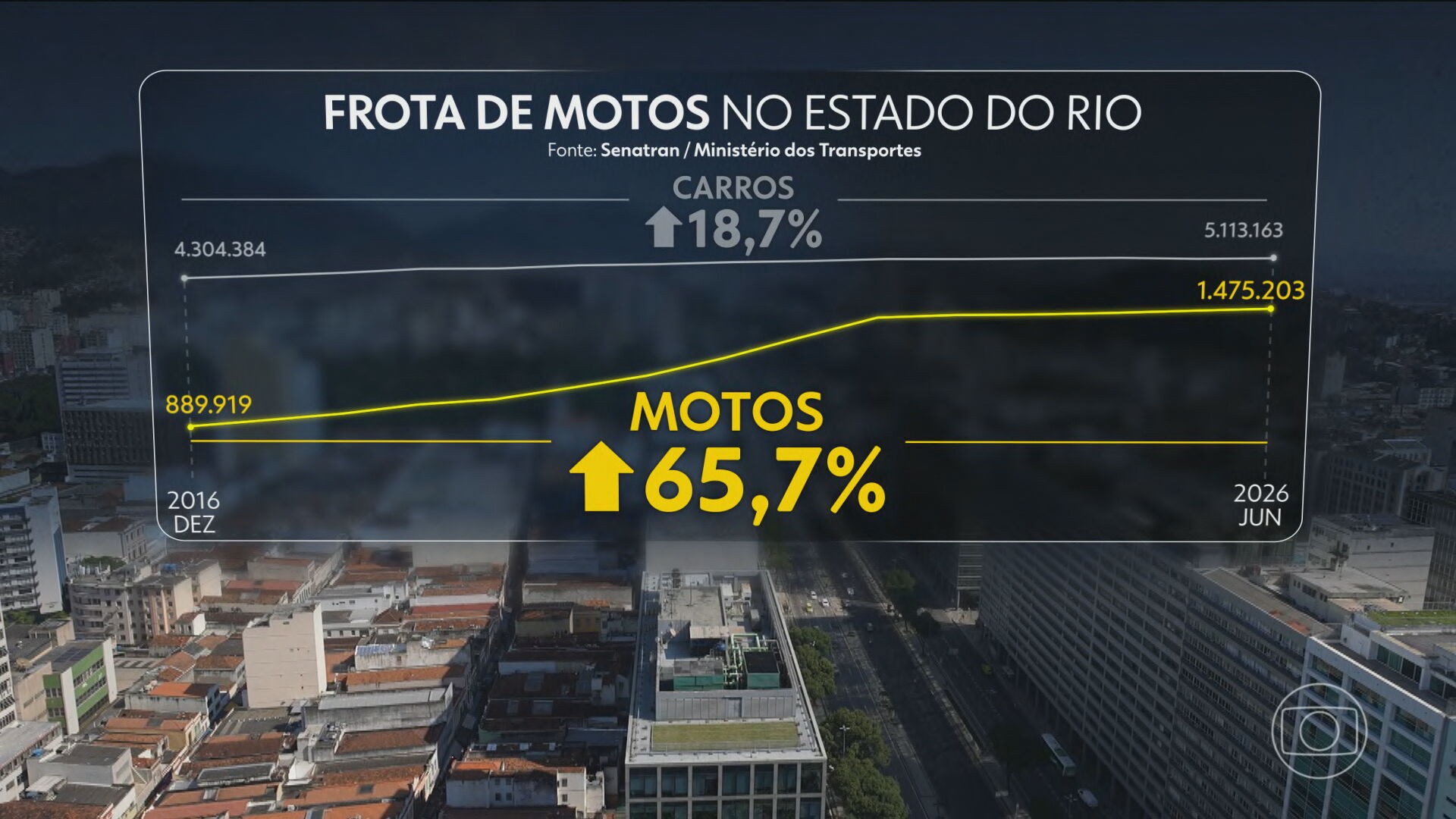
The number of motorcycles in Rio de Janeiro has surged by 65.7% over the past decade, significantly transforming the city's mobility landscape. This dramatic increase, from approximately 890,000 to 1.46 million registered motorcycles between 2016 and April of the current year, outpaces the 18.4% growth in car ownership during the same period. This phenomenon is largely attributed to the perceived inefficiencies of public transportation and persistent traffic congestion in the city. Many residents, like kitchen assistant Priscila Mariana Pereira, now opt for motorcycles for shorter, cheaper trips, finding it more economical than waiting for buses. Waitress Rafaela Natanael also cited speed and safety concerns, including avoiding harassment on other transport modes, as reasons for choosing motorcycles. Initially, motorcycles primarily served the 'first and last mile' connection to public transport hubs. However, with the rise of ride-sharing apps, they have increasingly become a door-to-door alternative, offering a solution to a public transport system perceived as expensive, unsafe, and unpredictable. Data from major motorcycle ride-sharing platforms indicate that key pick-up and drop-off points are often bus, train, and metro terminals, with peak demand coinciding with commuting hours. For many, like former truck driver Rômulo Moraes, who now earns around R$6,000 monthly before expenses, motorcycle work provides a vital income source, despite the inherent risks. Researchers highlight that this shift to motorcycle transport is a stark reflection of Brazil's social inequality, with low-income, Black, and peripheral populations disproportionately relying on and being most at risk from this mode of transport.
The rapid expansion of motorcycle use in Rio de Janeiro, driven by economic pressures and perceived inefficiencies in public transit, highlights systemic challenges in urban planning and social equity. The reliance on motorcycles as a primary mode of transport for a significant segment of the population, particularly those with lower incomes, underscores a critical gap in accessible, reliable, and safe mobility options. While offering a solution for individual time and cost savings, this trend exacerbates road safety concerns and places a greater burden on public health infrastructure due to increased accident rates. Future urban development strategies must address the root causes of this shift by investing in public transportation improvements and exploring integrated mobility solutions that balance individual needs with collective safety and sustainability goals. This situation presents an opportunity to re-evaluate urban resource allocation and policy to foster more equitable and secure transit environments for all residents.
AI-generated to prompt reflection — not editorial opinion, not advice, not a statement of fact. How this works.