Rio de Janeiro Traffic Disrupted Sunday by "Desafio da Ponte 2026" Race
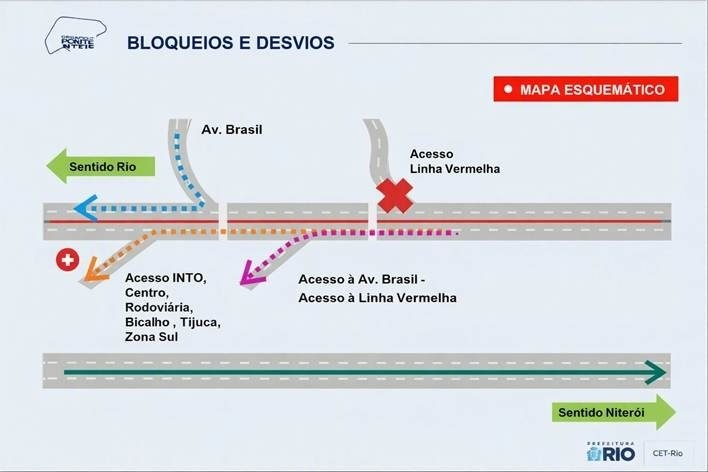
Rio de Janeiro residents and commuters should anticipate significant traffic changes on Sunday, June 2nd, due to the "Desafio da Ponte 2026" 21-kilometer race. The event, which starts in Niterói and finishes at Praça Mauá in Rio, will necessitate a special traffic operation implemented by the Rio de Janeiro City Hall. Alterations commence Saturday, June 1st, at 10 PM, with some road closures extending until 1 PM on Sunday. Full traffic normalization is expected by noon on Sunday, following the race's conclusion and the dismantling of event structures. The race begins at 6:30 AM in Niterói, with runners crossing the Rio-Niterói Bridge towards Rio de Janeiro before proceeding to Praça Mauá. Several key access points from the Rio-Niterói Bridge into Rio will be closed between midnight and 1 PM on Sunday, including access to Linha Vermelha, Avenida Francisco Bicalho, Avenida Rodrigues Alves, and the Marcello Alencar Tunnel. Alternative routes are provided by CET-Rio: for Linha Vermelha, drivers should use Avenida Brasil towards the West Zone, using the needle near Passarela 3. Those heading to the Rodoviária, Centro, Tijuca, or Zona Sul should use the Elevado do Gasômetro, then the ramp to INTO, follow Via B4 towards Praça Mauá, and continue on Professor Arlindo Rodrigues and Equador streets. Specific routes for Centro include Via B4 and Via Binário do Porto. For Tijuca, use Avenida Professor Pereira Reis, Viaduto 31 de Março, and Avenida Presidente Vargas. For Zona Sul, use Avenida Professor Pereira Reis, Viaduto 31 de Março, and the Santa Bárbara Tunnel. The operation involves 50 traffic agents, municipal guards, and support staff, with real-time monitoring via 161 cameras and two drones at COR-Rio. Variable message signs will provide traffic updates. Sixty municipal guards will be deployed from 4 AM, and Comlurb will deploy 30 cleaners with specialized equipment. The City Hall advises avoiding the affected area and using public transport, while pedestrians should cross only at designated points.
The "Desafio da Ponte 2026" race, while promoting athletic participation and showcasing the city's infrastructure, imposes substantial temporary disruptions on Rio de Janeiro's transportation network. The event highlights a recurring tension between public events and urban mobility, requiring extensive logistical planning and public communication to mitigate negative impacts. The deployment of numerous personnel and advanced monitoring technologies underscores the complexity of managing large-scale events in densely populated urban environments. Future urban planning could explore decentralized event locations or staggered timing to minimize such widespread traffic impedance, thereby balancing civic engagement with the daily needs of millions of residents and commuters. The reliance on public transport and alternative routes, while necessary, also points to the ongoing need for robust and adaptable public transit systems capable of absorbing such surges in demand.
AI-generated to prompt reflection — not editorial opinion, not advice, not a statement of fact. How this works.