Rio Grande do Sul Faces Flood Risk as Five Rivers Threaten and Intense Storms Forecast
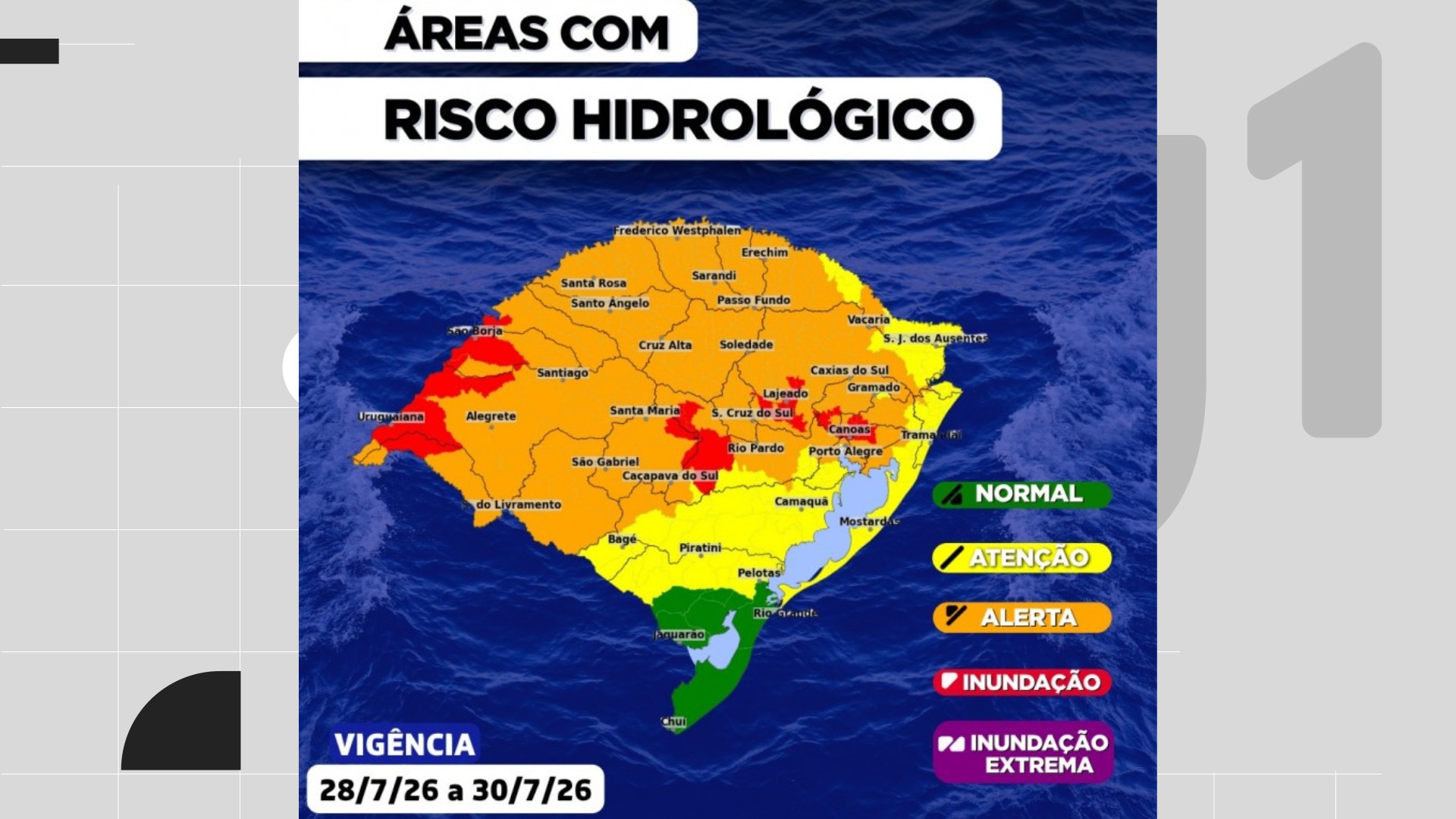
Rio Grande do Sul, Brazil, is under a heightened flood alert as five major rivers are at risk of overflowing in the coming days. The State Civil Defense's Center for Monitoring (CMDEC) issued an update on Tuesday, July 28th, warning that moderate to heavy rainfall combined with current river levels increases the likelihood of overflows, stream flooding, and urban inundation. The Uruguai River near São Borja and Uruguaiana, and the Sinos River in São Leopoldo, have already surpassed flood levels at monitoring stations. Municipalities along the Jacuí, Taquari, Caí, Sinos, and Gravataí rivers are specifically identified as being at risk of temporary inundation. The alert also extends to unmonitored streams and urban flash floods. Wednesday, July 29th, is expected to bring continued rain and thunderstorms, particularly in the northern, northwestern, northeastern, Serra, Vales, and Litoral Norte regions, with potential for intense downpours, hail, and winds exceeding 90 km/h. While instability is predicted to lessen in western and southern areas, the Metropolitan Region may experience isolated storms, mainly in the morning. Thursday, July 30th, anticipates drier weather with stable conditions across most of the state due to a dry air mass, though lingering impacts from previous rains will still be monitored. A new cold front approaching from Argentina and Uruguay on Friday, July 31st, is forecast to bring isolated showers to western and central regions, with instability expected to intensify by Friday night and Saturday, potentially causing significant rainfall and renewed flood risks in southern and southwestern areas.
The recurring pattern of severe weather events in Rio Grande do Sul highlights the critical need for robust, forward-looking infrastructure and emergency preparedness strategies. As climate models increasingly predict more extreme precipitation events, the state's vulnerability to flooding underscores a broader challenge in adapting to a changing climate. This situation necessitates a multi-faceted approach, integrating advanced hydrological monitoring with urban planning that accounts for increased water runoff and riverine expansion. Furthermore, fostering community resilience through clear communication channels and accessible evacuation plans is paramount. Examining the long-term efficacy of current flood control measures against the backdrop of escalating climate impacts will be crucial for safeguarding populations and economic stability in the region over the next decade.
AI-generated to prompt reflection — not editorial opinion, not advice, not a statement of fact. How this works.