Rio Innovation Week to Feature Immersive Experiences Blending Art, Science, and Technology
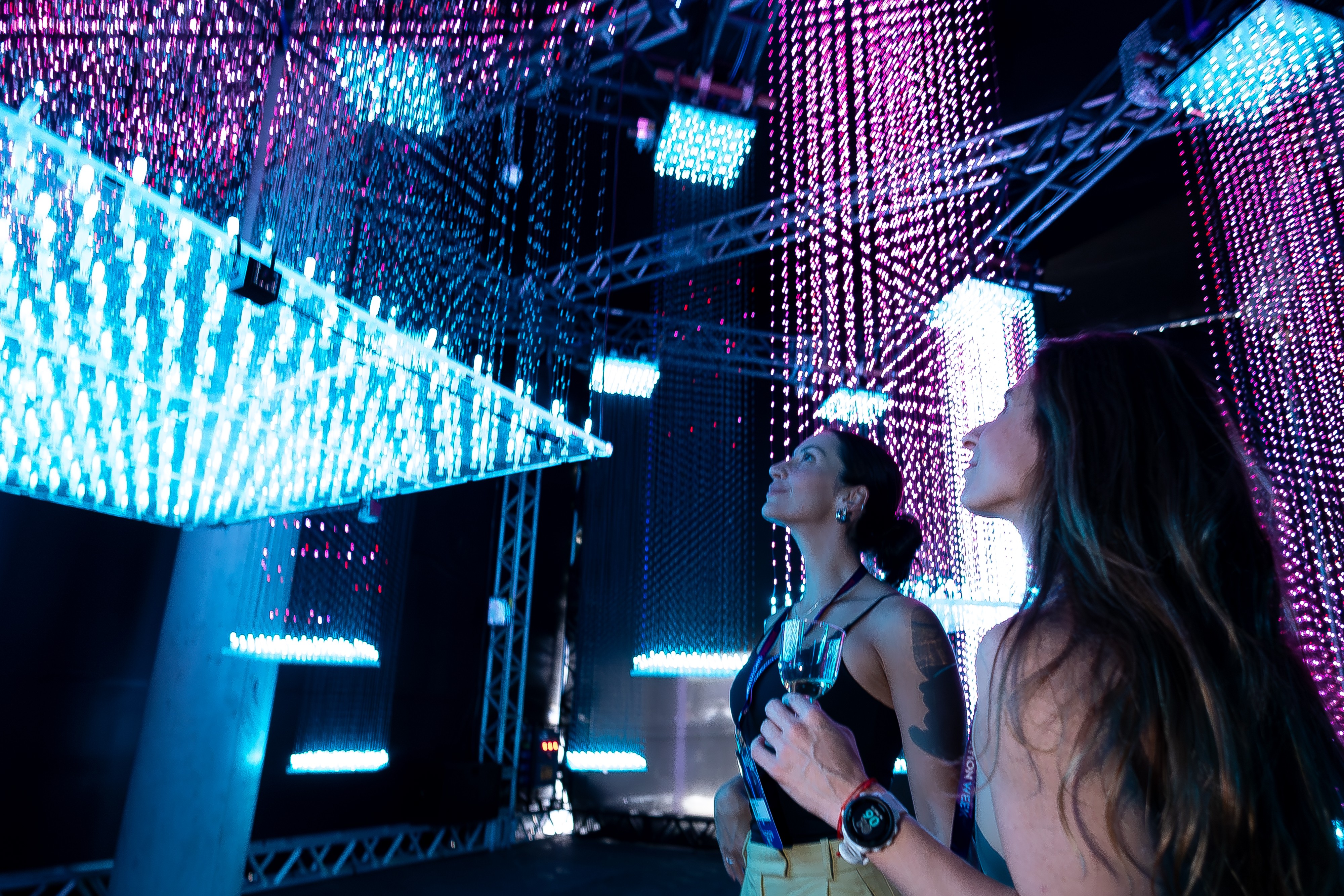
The sixth edition of Rio Innovation Week (RIW), a global technology and innovation conference, will take place from August 4-7, 2026, at Píer Mauá in Rio de Janeiro. Under the theme "Symbiosis: The Future Doesn't Happen in Isolation," the event aims to demonstrate that technological advancements arise from collaboration across diverse knowledge areas. Jerônimo Vargas, co-founder and general director of RIW, stated that innovation and technology are no longer confined to corporate settings but are central to culture, entertainment, and daily life. By connecting art, science, music, and technology through accessible experiences, the event highlights collaborative future-building. Complex concepts will be made understandable via sensory installations, technological demonstrations, and art-science-innovation fusions. Some activities will be hosted aboard the NAM Atlântico, the Brazilian Navy's largest helicopter carrier. Featured immersive attractions include the HU-MACHINE by LedPulse art installation with 156,000 LEDs reacting to audience movement, and the Mega Dome, a 10-meter-high structure by Ferdi Alici projecting data visually. Marlus Araújo's ELEMENTAIS will use AI to transform visitor gestures into nature-inspired visual art. The Digital Art and NFTs Gallery will showcase 25 digital screens, while the Symbiose_MOX Tunnel will feature 25 meters of LED displays and live dance performances. The Monumenta exhibition will present over 100 linear meters of illuminated panels displaying AI-generated art. Visitors can also experience the Rio Sense Lab's Neural Measurement cube, using a neural reading helmet to gauge emotions and engagement with content about Rio. The event will also host the Museum of Video Games, showcasing consoles from Atari to PlayStation 5, and the Game Station for esports competitions. The Coppe/UFRJ-developed humanoid robot Zequinha will interact with visitors, and an Industrial Crane 3D Simulator will offer virtual operation experiences. A demonstration of the MagLev-Cobra, Latin America's first magnetic levitation vehicle, will show how supercooled magnets enable it to float. Finally, a 12-meter-high Brazilian Micro-launcher Rocket (MLBR), developed for satellite launches, will be exhibited, marking a significant step in Brazil's space autonomy.
Rio Innovation Week's emphasis on "symbiosis" and immersive, collaborative experiences reflects a broader trend in technology events. By integrating art, science, and entertainment, the conference seeks to democratize complex technological concepts, moving them beyond specialized discourse into public consciousness. This approach leverages sensory engagement to foster understanding and potentially inspire future innovation. The inclusion of diverse exhibits, from AI art to industrial simulators and space technology, aims to showcase the multifaceted nature of progress. Such events can serve as crucial platforms for public-private dialogue and skill development, aligning societal engagement with technological trajectories over the next decade.
AI-generated to prompt reflection — not editorial opinion, not advice, not a statement of fact. How this works.