Rio Lawyer Found Dead in São Paulo After Disappearing
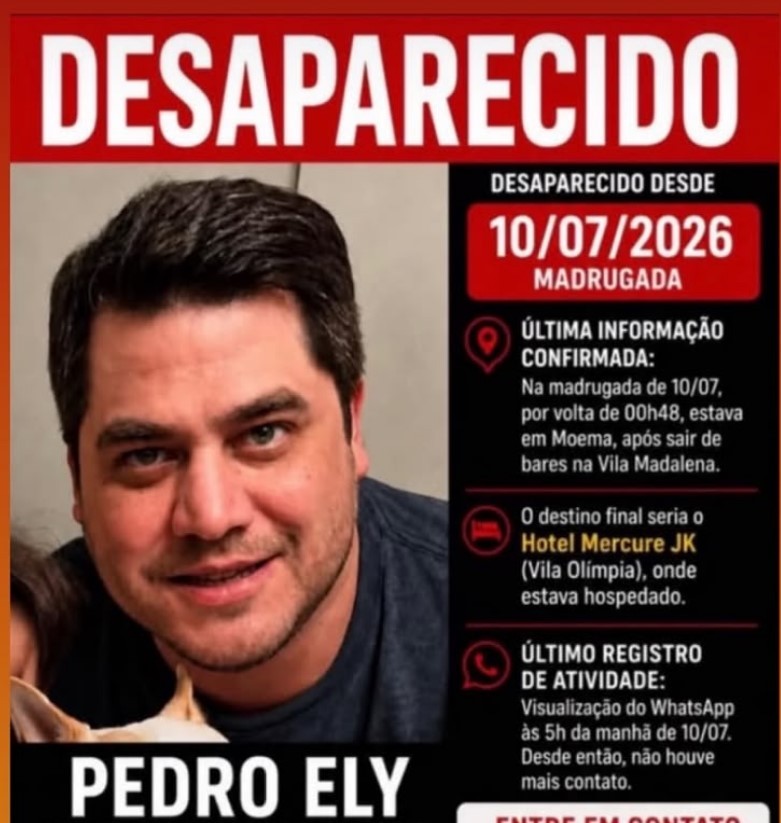
Pedro Ely Cordeiro dos Santos, a 43-year-old lawyer from Rio de Janeiro, was found dead on Tuesday, July 14th, four days after he disappeared in São Paulo. His brother confirmed the death, stating that Pedro was found at the Institute of Legal Medicine (IML) without identification. The family is unsure if his documents were stolen or if he lost them, but he was taken to the IML after being found deceased. Pedro had been missing since the early morning of Friday, July 10th. According to his family, his last confirmed location was in Moema around 12:48 AM, after leaving bars in Vila Madalena. He was reportedly heading to the Hotel Mercure JK in Vila Olímpia, where he was staying. His last recorded activity was viewing WhatsApp at 5:00 AM that day, and he never returned to his hotel. The disappearance was officially reported on Monday, July 13th. The police report indicated that Pedro worked from home on July 10th and stopped responding to messages and calls after work, also failing to show up for work in the following days, which was deemed unusual behavior. The hotel reported that his room remained organized and showed no signs of use after his disappearance. His brother mentioned that the circumstances surrounding Pedro Ely Cordeiro dos Santos's death are still under investigation, and they are awaiting further information to understand what happened. The Secretariat of Public Security (SSP) was contacted for comment but had not responded by the time of the report.
The discovery of Pedro Ely Cordeiro dos Santos's body under unidentified circumstances highlights critical gaps in urban safety and personal identification protocols. The timeline suggests a potential vulnerability window between his last known activity and his discovery, raising questions about the effectiveness of immediate missing person alerts and inter-agency coordination. The lack of identification at the IML points to systemic issues that could impede timely notification of next of kin and efficient investigation, particularly in large metropolitan areas. Future public safety frameworks might consider enhanced digital identity verification and more robust protocols for individuals found deceased without immediate means of identification to ensure dignity and expedite resolution for grieving families.
AI-generated to prompt reflection — not editorial opinion, not advice, not a statement of fact. How this works.