Rio's Candelária Church Stained Glass Undergoing Restoration After Decades of Damage
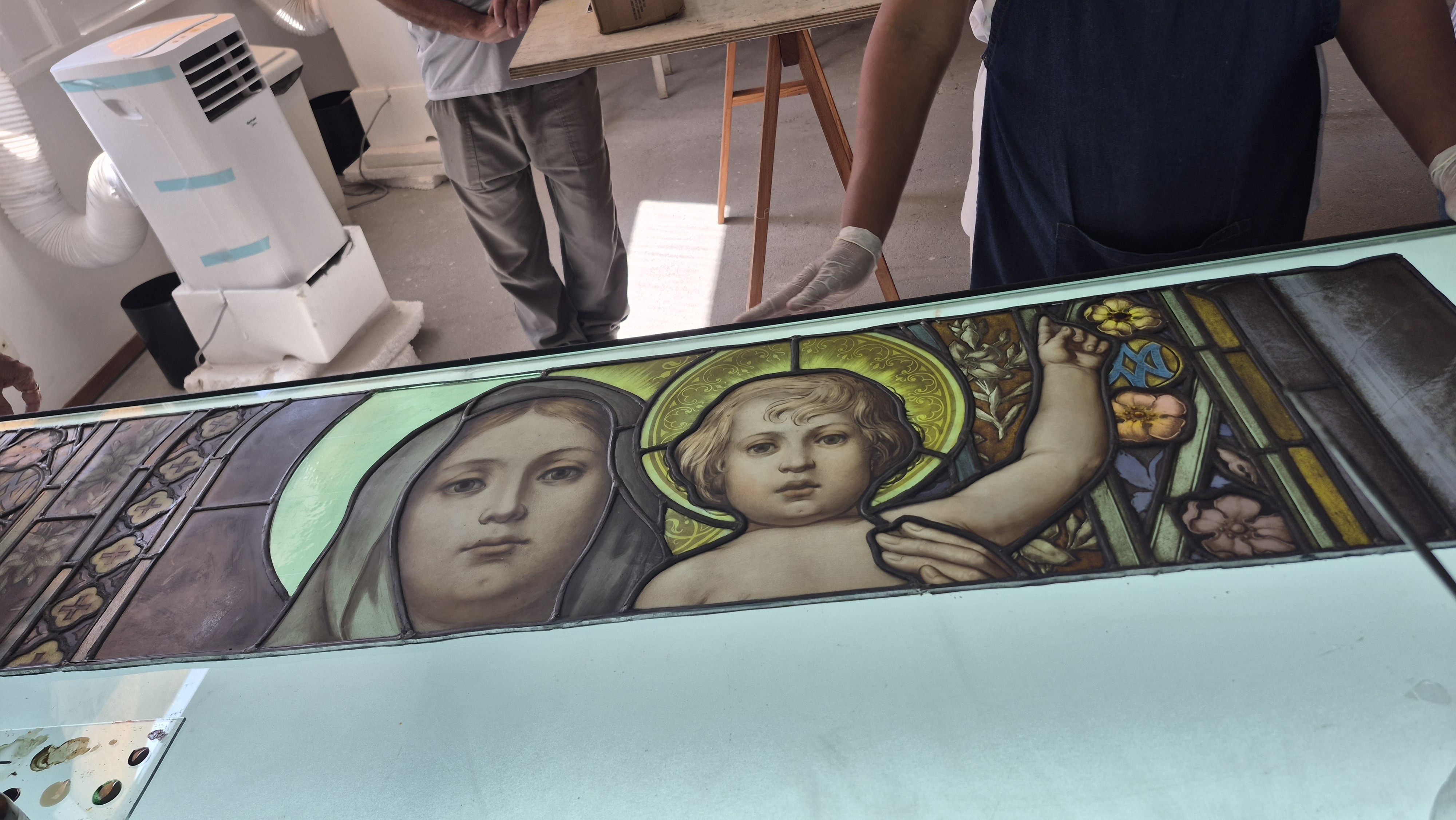
The historic stained-glass windows of the Church of Our Lady of Candelária in Rio de Janeiro's city center are undergoing a significant restoration process. Three centuries-old stained-glass pieces, part of the "Invocation of Saint Cecilia" artwork, have suffered extensive damage over the years due to pollution, the natural passage of time, and harsh weather conditions. For decades, these windows, particularly a panel from 1898 located in the choir area depicting the Virgin Mary with the Child Jesus, were also subjected to vandalism, including damage from thrown stones. The restoration project, which has reached 70% completion with the stained-glass work nearing its end, aims to preserve the original characteristics of these artistic and religious treasures for future generations. Originally conceived in the late 19th century by artists João Zeferino da Costa and Henrique Bernardelli, the stained glass was crafted in 1898 by the renowned F. X. Zettler workshop in Munich, Germany. The restoration initiative was launched after the Brotherhood of the Most Holy Sacrament of Candelária approached the Rio Heritage Institute (IRPH) to address the urgent need for repair. The project received crucial support from the Gerda Henkel Foundation and the German consulate, recognizing the windows as a shared Brazilian-German heritage. The restoration involves meticulous cleaning and consolidation of fragile painted areas, such as the eyes of the saint and the Child Jesus, which had become opaque. Specialized companies, Luidi e Luiza Vitrais and Jequitibá Restauro, are undertaking the work. Where holes were created by vandalism, new glass has been imported from Germany and painted to match the original, then fired to integrate seamlessly. The primary objective is to maintain as much originality as possible, as Eliana Leandro Gonçalves Lemos of Luidi e Luiza Vitrais Ltda. emphasized that replacing too much glass diminishes the piece's historical value. To prevent future vandalism, protective glazing with an isothermal ventilation system and metal screens, a common solution in Europe, will be installed. To further discuss and disseminate knowledge on historical stained-glass conservation, an International Seminar will be held from August 3rd to 5th, 2026, at the Windsor Guanabara hotel, bringing together Brazilian and European specialists. This event, supporting the restoration project, will cover methodologies, share experiences, and include training for young restorers. Laura Di Blasi, president of IRPH, highlighted the seminar's role in presenting the project's procedures and discussing best practices for safeguarding such heritage, noting that the Candelária Church is a national heritage site protected by Iphan. Additionally, an exhibition of winning photographs from the "Olhos de Ver 2026" contest, showcasing the city's stained glass, will be inaugurated at the same venue.
The restoration of the Candelária Church's stained glass highlights the complex interplay between cultural preservation, historical integrity, and public access. While the project prioritizes retaining original materials, the necessity of importing German glass and employing advanced European conservation techniques underscores a globalized approach to heritage management. The inclusion of protective measures against vandalism and environmental degradation reflects a forward-looking strategy, acknowledging that historical sites require ongoing adaptation to contemporary threats. The accompanying international seminar and photographic exhibition serve to elevate public awareness and foster a broader community of practice in heritage conservation, potentially influencing future preservation efforts across similar institutions. This initiative demonstrates a commitment to safeguarding cultural assets, balancing the intrinsic value of historical artifacts with the practical challenges of their long-term survival in an urban environment.
AI-generated to prompt reflection — not editorial opinion, not advice, not a statement of fact. How this works.