Rio's "Lei Seca" Operation Arrests Fugitive, Tackles Drunk Driving
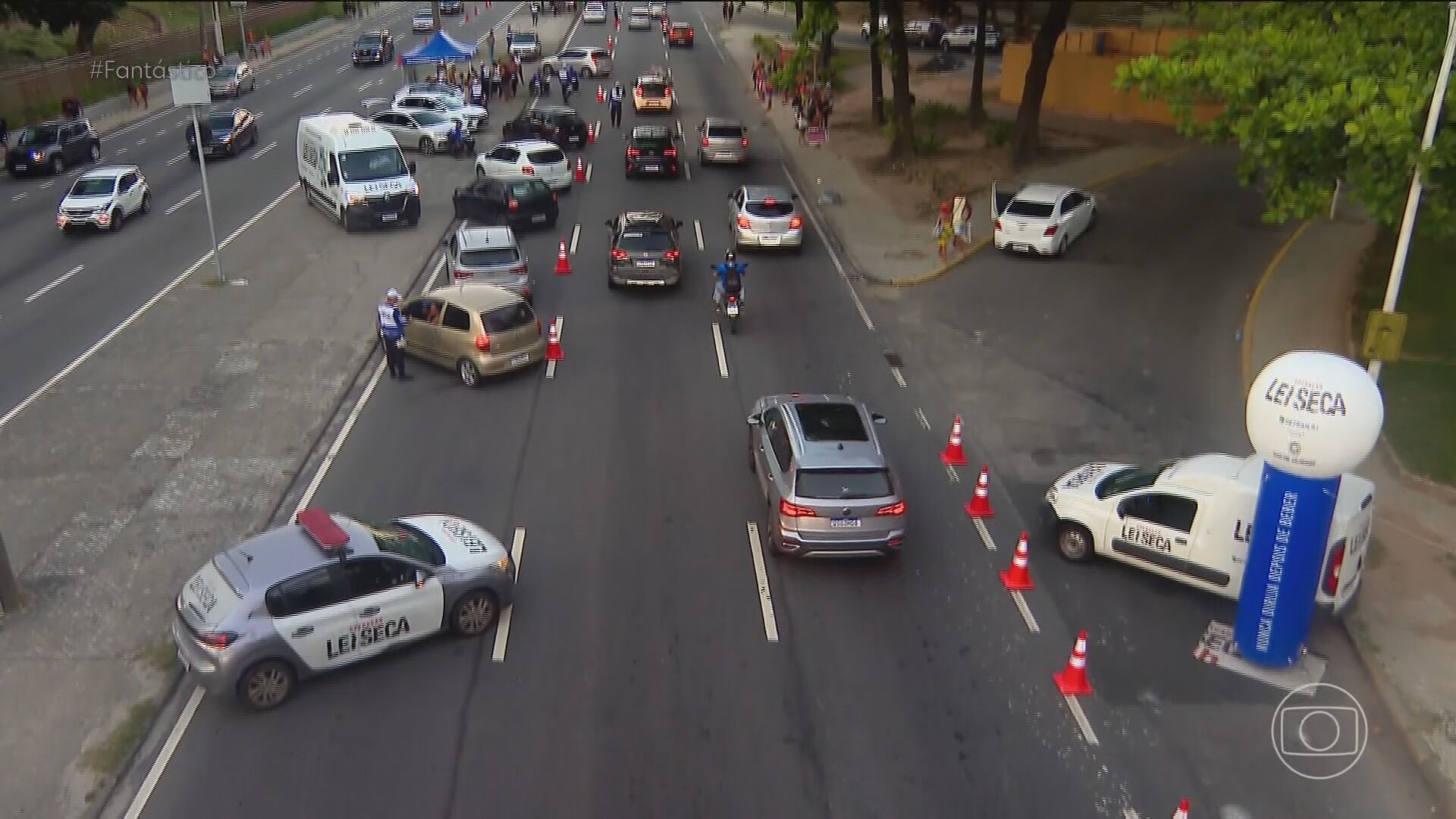
During traffic enforcement operations conducted from Friday, November 11th, to Sunday, November 12th, in the state of Rio de Janeiro, Brazil, the "Lei Seca" (Dry Law) operation apprehended a fugitive from justice and a driver for operating a vehicle under the influence of alcohol. These incidents occurred in the Barra da Tijuca and Riachuelo neighborhoods of the capital city. Over the weekend, the "Lei Seca" teams conducted 3,853 traffic stops, identifying 1,334 violations. Alcohol-related offenses accounted for 9.2% of these violations. In Barra da Tijuca, a driver initially tested negative for alcohol but exhibited nervous behavior, leading officers to check security systems. This revealed an active arrest warrant for crimes including criminal association, vehicle theft, criminal organization, and drug trafficking. The individual was taken to the 16th Police District (Barra da Tijuca) for processing. In Riachuelo, another driver was arrested for driving while intoxicated, with a breathalyzer test registering 0.57 milligrams of alcohol per liter of exhaled air, exceeding the legal limit for a traffic offense. This driver also faced administrative penalties for drunk driving and having an expired vehicle registration. The vehicle was released after a licensed driver took possession. The interior of the state also saw significant alcohol-related violations, with Miguel Pereira reporting the highest percentage of drivers with alcohol in their system at 17% of 200 stops. Araruama followed with 15.1% (44 out of 292 drivers), and Arraial do Cabo with 13.9% (among 418 drivers checked). Cordeiro recorded 39 alcohol-related cases from 302 traffic stops.
The "Lei Seca" operation in Rio de Janeiro demonstrates a multi-pronged approach to traffic safety, combining routine enforcement with advanced technology like drones and system checks to identify individuals with outstanding legal issues. The high percentage of alcohol-related offenses, particularly in interior cities, highlights persistent challenges in public awareness and compliance with drunk driving laws. While the operation successfully apprehended a fugitive and impaired drivers, the underlying issue of alcohol consumption and driving requires sustained public education campaigns and potentially stricter penalties to alter behavior. The data suggests a need to investigate the specific socio-economic or cultural factors contributing to higher rates of non-compliance in certain regions of the state, informing more targeted interventions for future enforcement efforts.
AI-generated to prompt reflection — not editorial opinion, not advice, not a statement of fact. How this works.