Rio Taquari Floods Streets in Lajeado, RS; Over 200 Displaced Statewide
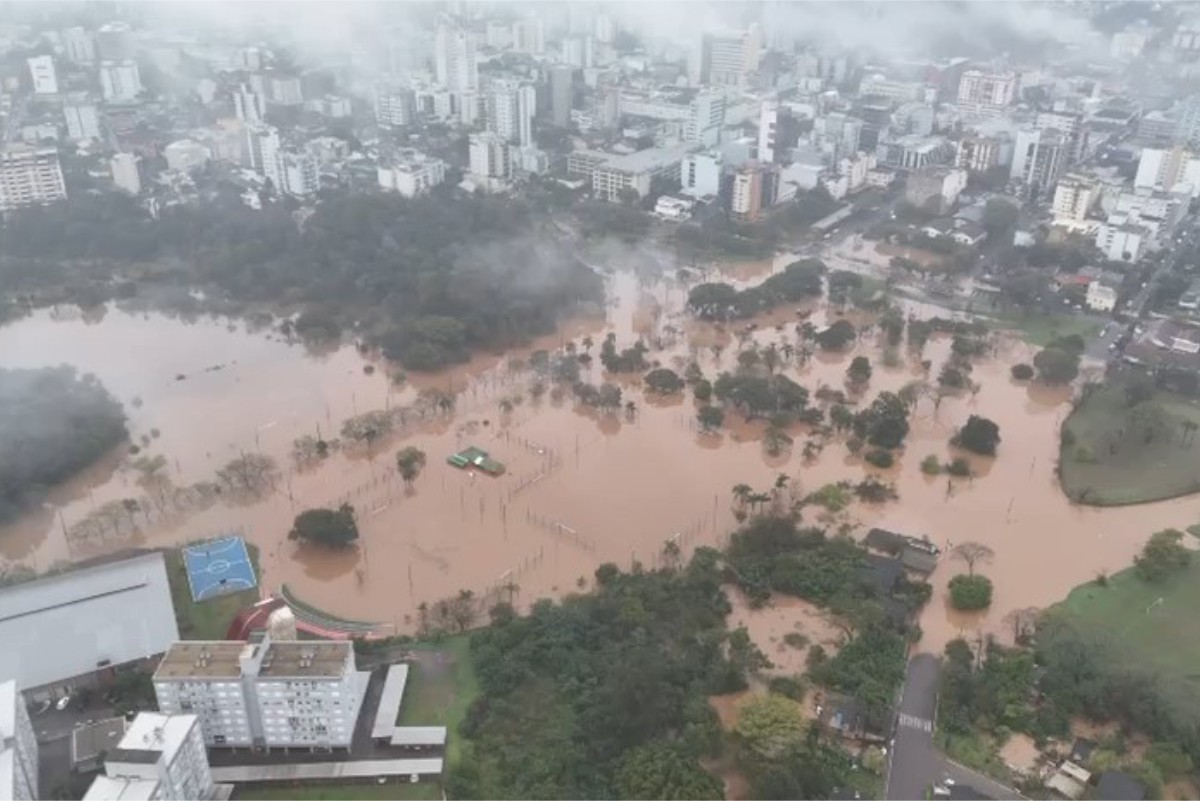
The Taquari River in Rio Grande do Sul (RS), Brazil, has surpassed its flood stage, with drone footage capturing water inundating streets in Lajeado, located in the Vales Region. In Encantado, the river reached flood levels around 4 AM, while in Lajeado, it rose over 3 meters above the flood stage by morning. The Taquari River reached 16.20 meters in Roca Sales at 8 AM, though its flood stage is 18 meters. The Caí River also experienced significant rises, reaching 11.01 meters in São Sebastião do Caí, exceeding its flood stage of 10.50 meters. In Montenegro, the river reached 5.77 meters, just below its 6-meter flood stage. Statewide, 143 municipalities are affected by intense rains, strong winds, hail, landslides, and floods, according to the state's Civil Defense. Over 200 people are displaced, with 155 being temporarily housed elsewhere and 51 having lost their homes entirely. One person has been injured. Heavy rainfall has been recorded, with Marcelino Ramos receiving 138 mm in 12 hours and Paraí accumulating over 200 mm in 24 hours. The Civil Defense has issued high hydrological risk warnings, particularly for the Taquari and Caí valleys, which are designated as high-risk areas. Separately, seven municipalities had their state of emergency recognized by the federal government due to losses from heavy rains in May and early July.
The recurring severe weather events in Rio Grande do Sul highlight the increasing vulnerability of communities to hydrological risks, exacerbated by climate change. The displacement of over 200 people and the declaration of states of emergency underscore the need for robust, long-term infrastructure planning and disaster preparedness strategies. While immediate relief efforts are crucial, a forward-looking approach must integrate climate resilience into urban development and land-use policies to mitigate future impacts. The state's response, including contingency plans and risk warnings, demonstrates an evolving capacity to manage such crises, yet the scale of displacement suggests that current protective measures may be outpaced by the intensity and frequency of extreme weather phenomena in the coming decade.
AI-generated to prompt reflection — not editorial opinion, not advice, not a statement of fact. How this works.