Risk in Split-Phase Traffic Signals Highlighted by Mitoma's Accident
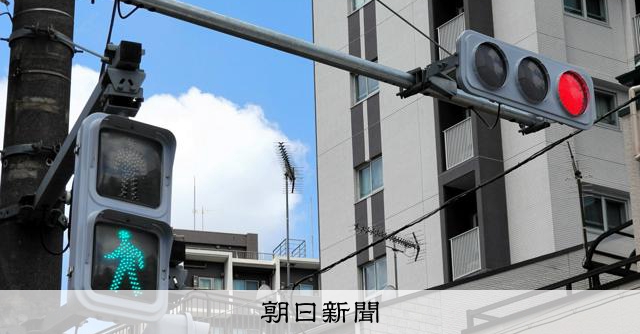
A recent accident involving professional soccer player Kaoru Mitoma has brought to light potential risks associated with split-phase traffic signals. These signals, designed to separate vehicle and pedestrian traffic phases, appear to have inherent dangers that were not immediately apparent. The incident involving Mitoma underscores the need for a thorough review of such traffic control systems. While intended to enhance safety by creating distinct crossing times, the specific configuration of these signals may be contributing to unforeseen hazards. Further investigation into the mechanics and real-world application of split-phase signals is warranted. The accident serves as a critical case study for urban planners and traffic engineers. Understanding the precise failure points in the system is crucial for preventing future incidents. This situation calls for a re-evaluation of traffic signal design principles to ensure comprehensive safety for all road users.
The incident involving Kaoru Mitoma and the subsequent focus on split-phase traffic signals highlight a critical tension in urban infrastructure design: the trade-off between perceived safety enhancements and emergent risks. While separating vehicle and pedestrian phases aims to reduce conflict, the specific implementation of such systems can create new vulnerabilities. This situation prompts a systems-thinking approach, urging a review of signal timing logic, pedestrian behavior assumptions, and the physical intersection layout. The analysis should extend beyond this single event to consider the broader implications for traffic management strategies in an era of increasing urbanization and diverse mobility patterns. Understanding how technological solutions can inadvertently introduce new failure modes is essential for future-proofing urban environments.
AI-generated to prompt reflection — not editorial opinion, not advice, not a statement of fact. How this works.