Risks of LNG Tanker Explosion Heightened After Omani Strait Attack
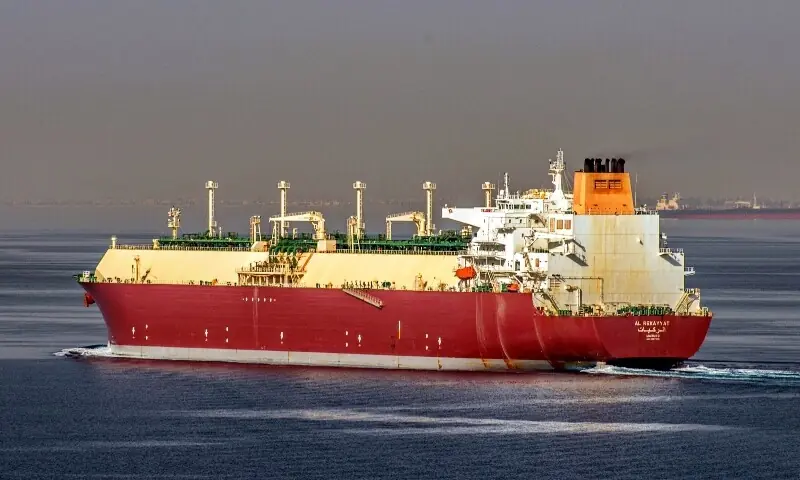
A Qatari liquefied natural gas (LNG) tanker, the Al Rekayyat, was reportedly at risk of exploding following significant damage sustained in an attack on the Omani side of the Strait of Hormuz on Tuesday. While the LNG industry has seen few accidents at onshore facilities, a catastrophic LNG cargo-tank explosion on a commercial carrier at sea has never occurred. However, recent attacks on energy shipping vessels in conflicts involving Ukraine and Iran have raised concerns. This incident marks the second time this year an LNG vessel has been caught in a war-related attack, following the Russian LNG tanker Arctic Metagaz which caught fire in the Mediterranean in March after being struck by Ukrainian naval drones. LNG is natural gas cooled to approximately -162 degrees Celsius, reducing its volume by about 600 times for economical transport by ship in heavily insulated cryogenic tanks. Risks arise if LNG leaks, warms into a gas, mixes with air, and finds an ignition source. Modern LNG carriers are equipped with multiple safety features, including double hulls, containment barriers, gas detection, pressure relief, emergency shutdown systems, firefighting equipment, and rigorous operating procedures. Although the Al Rekayyat reported a fire in its engine room, there was no indication its LNG tanks were breached, and the crew was safely evacuated. Industry experts suggest that an engine room fire does not automatically imply an explosion risk, which would only increase if the fire spread to cargo systems or caused a significant LNG leak. One source indicated that without further attacks, the tanker was unlikely to explode.
The incident involving the Qatari LNG tanker Al Rekayyat highlights the escalating risks to global energy supply chains amidst geopolitical tensions. While the inherent safety design of modern LNG carriers is robust, the potential for catastrophic failure increases when vessels are subjected to direct attacks, particularly in critical maritime chokepoints like the Strait of Hormuz. The industry's historical safety record at sea, contrasted with recent attacks, suggests a shift in risk profiles. Future resilience will depend on a complex interplay of enhanced security measures, international maritime law enforcement, and the strategic decisions of belligerents regarding civilian infrastructure. The economic implications of such disruptions, coupled with the environmental consequences of potential LNG releases, warrant a comprehensive reassessment of risk mitigation strategies in volatile regions.
AI-generated to prompt reflection — not editorial opinion, not advice, not a statement of fact. How this works.