RMM Law Firm Marks 65 Years, Adapting Legal Services to Brazil's Evolving Logistics Landscape
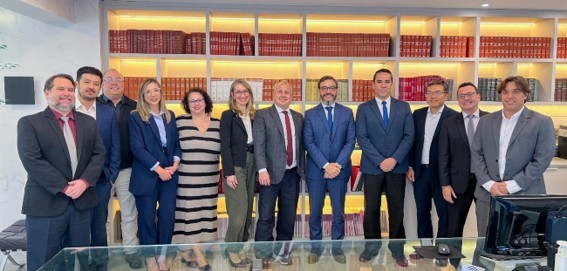
RMM, a Brazilian law firm specializing in maritime and port law, is celebrating its 65th anniversary, reflecting on its evolution alongside the significant transformations in Brazil's logistics sector. Founded in Santos in 1961 as Advocacia Ruy de Mello Miller, the firm initially focused on maritime law when the Port of Santos was already crucial for the national economy, operating under a vastly different logic than today.
A pivotal moment arrived in 1993 with the Port Modernization Law, which opened the door for private investment, altered port operational models, and laid the groundwork for expanding national logistics infrastructure. This legislative change redefined the sector and the role of specialized legal practices. According to Thiago Testini de Mello Miller, managing partner at RMM, the contrast between 1993 and the present is immense, with subsequent economic growth largely enabled by port and logistics infrastructure investments.
Consequently, RMM shifted its legal focus from merely handling disputes to actively structuring investments, shaping regulations, and facilitating new business ventures. This expansion accelerated through the 2000s and gained further momentum in 2013 with legislative amendments allowing for early lease renewals and greater flexibility in exploring Terminais de Uso Privado (TUPs), spurring new private capital in ports and logistics. The firm broadened its scope, becoming a full-service infrastructure-focused practice with expertise in regulation, foreign trade, environmental law, labor relations, taxation, and corporate governance.
As RMM expanded nationally, its connection to the Baixada Santista region remained central, allowing it to engage in key discussions on port modernization, labor relations, workforce organization, and terminal management evolution. The firm has also participated in significant negotiations involving port operators, representative entities, and unions, advocating for dialogue-based solutions. In 2025, RMM launched a "Collective Bargaining" unit, led by Thiago Robles, to further enhance its dispute resolution capabilities.
The firm is also looking towards the future, particularly the emerging logistical frontier of the Arco Norte region, which is seeing strategic export corridors and new investments in waterway infrastructure. In 2023, RMM established an operation in Belém, led by Samara Gualberto, to tap into this growing market. RMM acknowledges that Brazil's infrastructure development still lags behind its agricultural sector's growth, presenting significant opportunities for investors in ports, back-offices, shipping, and logistics, evidenced by increasing international investor participation.
At 65 years, RMM integrates its accumulated experience with contemporary issues like digitalization, AI, governance, diversity, energy transition, and sustainability. The firm has formalized diversity and equity policies, expanded pro bono initiatives, and is engaged in ESG agendas, recognizing that climate change directly impacts logistics and infrastructure, making it a present reality rather than a future concern.
The evolution of RMM law firm mirrors the broader trend of legal services adapting to complex, capital-intensive infrastructure sectors. Historically focused on maritime law, RMM's strategic pivot towards full-service support for infrastructure development, particularly in ports and logistics, reflects a response to regulatory shifts like Brazil's 1993 Port Modernization Law and subsequent market liberalization. This adaptation demonstrates how legal expertise can become a critical enabler of economic growth by facilitating private investment, navigating regulatory frameworks, and structuring complex deals. The firm's expansion into areas like the Arco Norte and its embrace of ESG principles suggest an awareness of emerging logistical frontiers and the increasing importance of sustainability in long-term infrastructure planning. This forward-looking approach, coupled with a focus on negotiation over conflict, positions RMM to capitalize on future infrastructure demands driven by global trade and evolving environmental considerations. The firm's journey highlights the symbiotic relationship between legal innovation and national economic development, particularly in sectors critical to international trade and resource management.
AI-generated to prompt reflection — not editorial opinion, not advice, not a statement of fact. How this works.