RoboSense Launches Second-Gen Solid-State Sensing Platform, Aims to Be Physical AI's Data Gateway
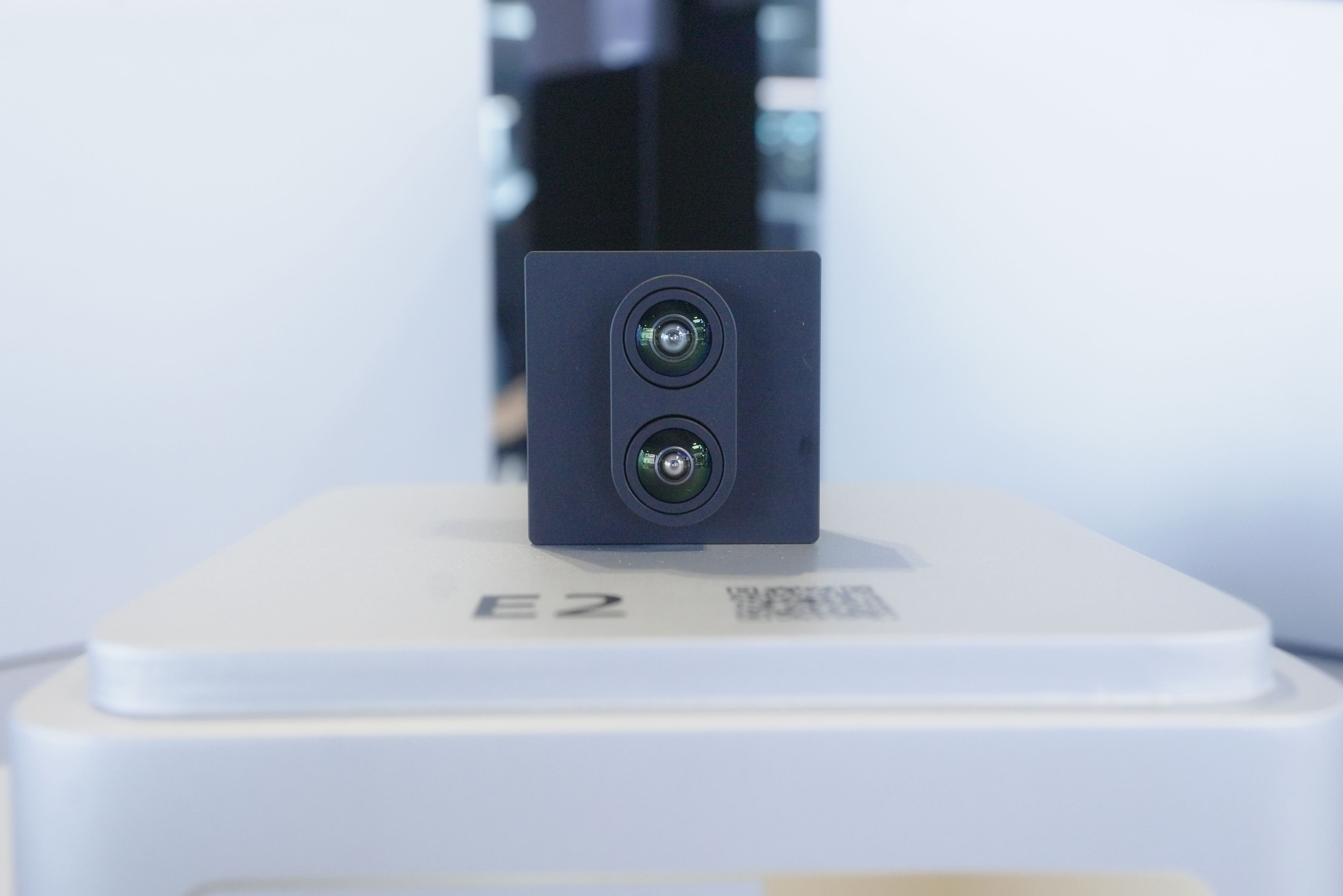
RoboSense (速腾聚创) has unveiled its second-generation all-solid-state sensing platform, E2, at the World Artificial Intelligence Conference (WAIC 2026) in Shanghai. This new platform is built upon the company's self-developed "Peacock" SPAD-SoC chip and a 2D VCSEL chip, featuring an all-solid-state architecture where signal transmission and data processing occur at the chip level. The E2 platform offers a wider field of view and triple the precision of its predecessor, generating high-accuracy spatial perception data crucial for robots operating in complex environments. This advancement addresses a key challenge in the burgeoning embodied AI sector, where current models often rely on less precise 2D image and simulation data, hindering robots' ability to truly understand and interact with the physical world. RoboSense posits that high-precision 3D sensing hardware is not merely a visual aid but a fundamental data source for the continuous iteration of physical AI. The E2 platform is already being deployed in various robotic applications, including lawnmowers, humanoid robots, quadruped robots, and drones, and has secured orders from companies in the庭院机器人 (courtyard robot), smart hardware, and consumer electronics sectors. The company is positioning itself as a data gateway for physical AI, moving beyond being just a hardware provider to an infrastructure service provider. By developing its own chips and focusing on AI data loops and automotive-grade mass production, RoboSense aims to build a robot technology platform for the physical AI era. They are collaborating with several companies to establish the foundational infrastructure for physical AI sensing, covering data acquisition, processing, and model training.
The transition of embodied AI from demonstration to real-world application highlights a critical dependency on high-fidelity spatial data. While traditional sensors and simulations have limitations in capturing the nuances of the physical world, RoboSense's focus on integrated SPAD-SoC chips and all-solid-state architecture represents a strategic move to provide this foundational data layer. By controlling the entire data generation pipeline from the chip level, the company aims to mitigate performance losses inherent in component-based systems and ensure the quality of data fed into physical AI models. This approach positions RoboSense to potentially capture a foundational role in the emerging physical AI ecosystem, where the reliable supply of accurate spatial data is becoming a key competitive differentiator. The long-term success will depend on the scalability of their technology and its ability to integrate seamlessly with diverse AI models and robotic platforms.
AI-generated to prompt reflection — not editorial opinion, not advice, not a statement of fact. How this works.