Robots Dominate RoboCup 2026, Future World Cup Aspirations
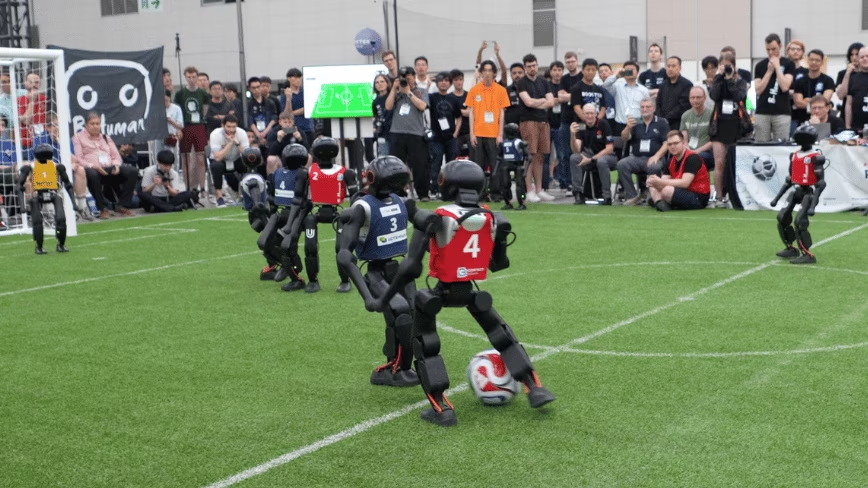
While the human World Cup captivated global attention, a robotic football tournament, RoboCup 2026, took place in Incheon, South Korea, from June 30 to July 6. Teams from numerous countries participated in the event held in Songdo. Notably, all three humanoid football divisions were won by teams utilizing robots manufactured by Beijing's Booster Robotics. This success highlights the rapid advancements in robotic technology within the competitive field of RoboCup. The organization has previously set ambitious goals, including a long-term vision for robots to compete against human professional footballers in a World Cup match by 2050. The results from RoboCup 2026 suggest significant progress towards achieving such futuristic objectives.
The dominance of Booster Robotics' machines in RoboCup 2026 underscores the accelerating pace of AI and robotics development. While the 2050 target for robots to challenge human professional footballers in a World Cup setting remains ambitious, these consistent victories indicate a trajectory of rapid improvement in areas like locomotion, perception, and team coordination. Future challenges will likely involve not just technical prowess but also the complex strategic and adaptive elements inherent in human team sports. Examining the incentive structures driving such intensive research and development within organizations like Booster Robotics offers insight into the broader technological race and its potential societal impacts over the next decade.
AI-generated to prompt reflection — not editorial opinion, not advice, not a statement of fact. How this works.