Rock in Rio 2026: City of Rock to Feature 5,000 sqm of LED, Hosting 100,000 Daily
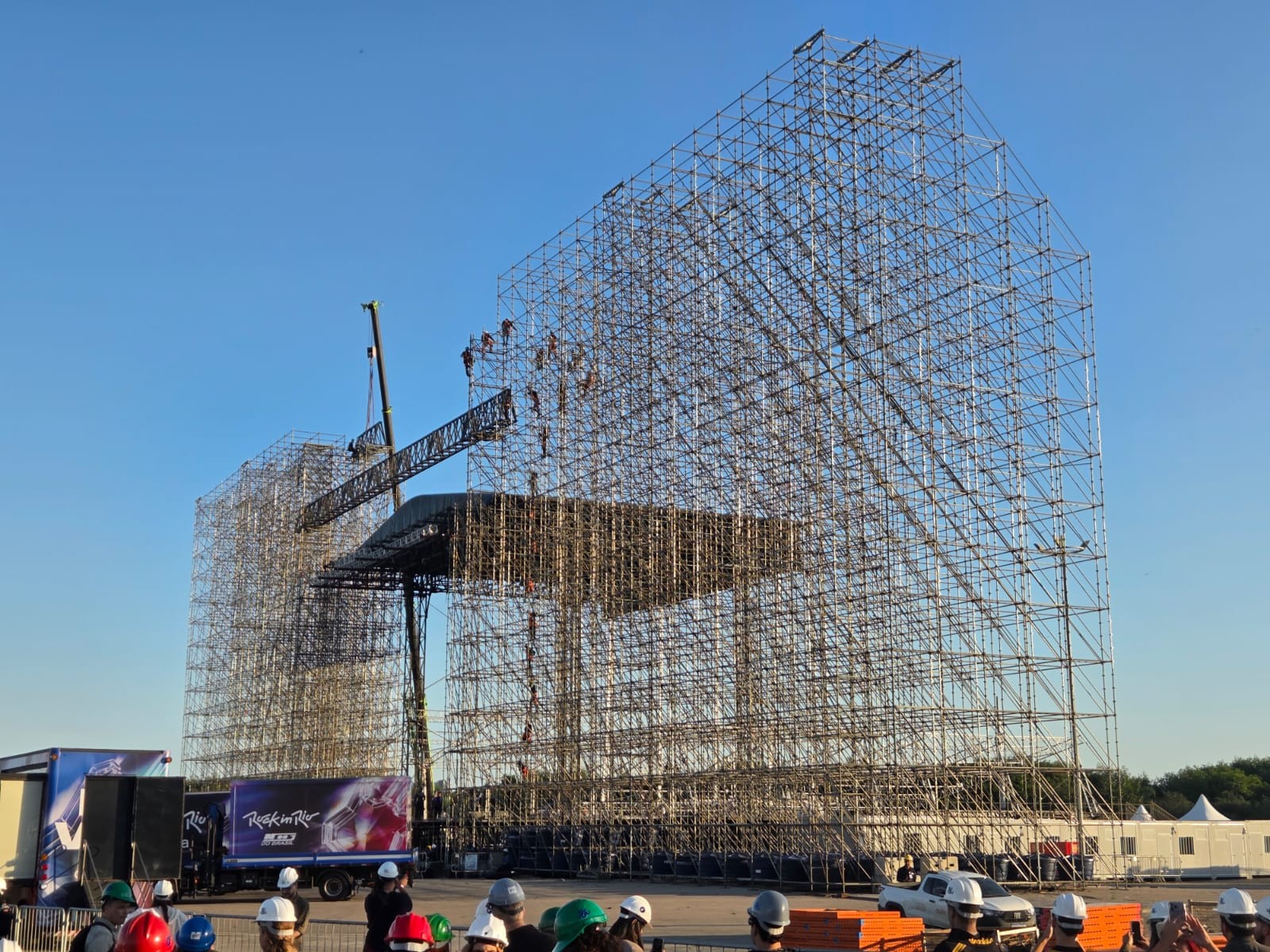
With 49 days remaining until its start, Rock in Rio 2026 is unveiling the extensive infrastructure for its 'Cidade do Rock' (City of Rock) in Rio de Janeiro's Barra da Tijuca. The venue will span 385,000 square meters and is designed to accommodate over 100,000 attendees daily. This year's festival is expected to feature approximately 1,300 artists performing in 190 shows, including 45 international acts, across September 4-7 and 11-13. The setup involves a massive scale of materials, including 120 kilometers of electrical cables, 65.8 tons of infrastructure, 90,000 square meters of synthetic grass, and 168 drinking fountains. The marketing director described the operation as akin to a temporary city, managing a daily population of 130,000 people, including fans and staff, which exceeds the population of most Brazilian municipalities. Economically, a study by FGV projects Rock in Rio 2026 will inject R$3.3 billion into Rio de Janeiro's economy and create around 34,000 jobs.
The festival's main stage, Palco Mundo, has been significantly upgraded, boasting a width of 107 meters and 2,400 square meters of LED screens, nearly matching the entire festival's LED capacity from the previous edition. Other stages also feature substantial enhancements: Palco Sunset will be 93 meters wide, New Dance Order will have 502 square meters of LED, Espaço Favela will include 60 houses in its scenography, and Global Village will cover 6,000 square meters inspired by global cities. Sustainability remains a key focus, with the organization committed to neutralizing 100% of carbon emissions generated at the venue, in partnership with Axia Emergia. Rock in Rio has maintained its ISO 20121 certification for sustainable event management since 2013, continuously seeking new environmental practices.
The extensive logistical and technological investments for Rock in Rio 2026 highlight the festival's ambition to operate as a self-contained, large-scale urban environment. The emphasis on LED technology and infrastructure suggests a strategic focus on enhancing attendee experience and visual spectacle, potentially driving future demand and sponsorship opportunities. While the economic impact projections are significant, they underscore the complex interplay between cultural events and regional economies. The commitment to carbon neutrality and sustainable practices, evidenced by ISO 20121 certification, reflects a growing industry trend toward environmental responsibility, though the long-term efficacy and scalability of such initiatives in large-scale entertainment will be a critical area to monitor in the coming decade. The festival's model of creating a temporary city also raises questions about resource management and community integration in urban settings.
AI-generated to prompt reflection — not editorial opinion, not advice, not a statement of fact. How this works.