Rock in Rio's temporary city to host more people daily than 94% of Brazilian municipalities
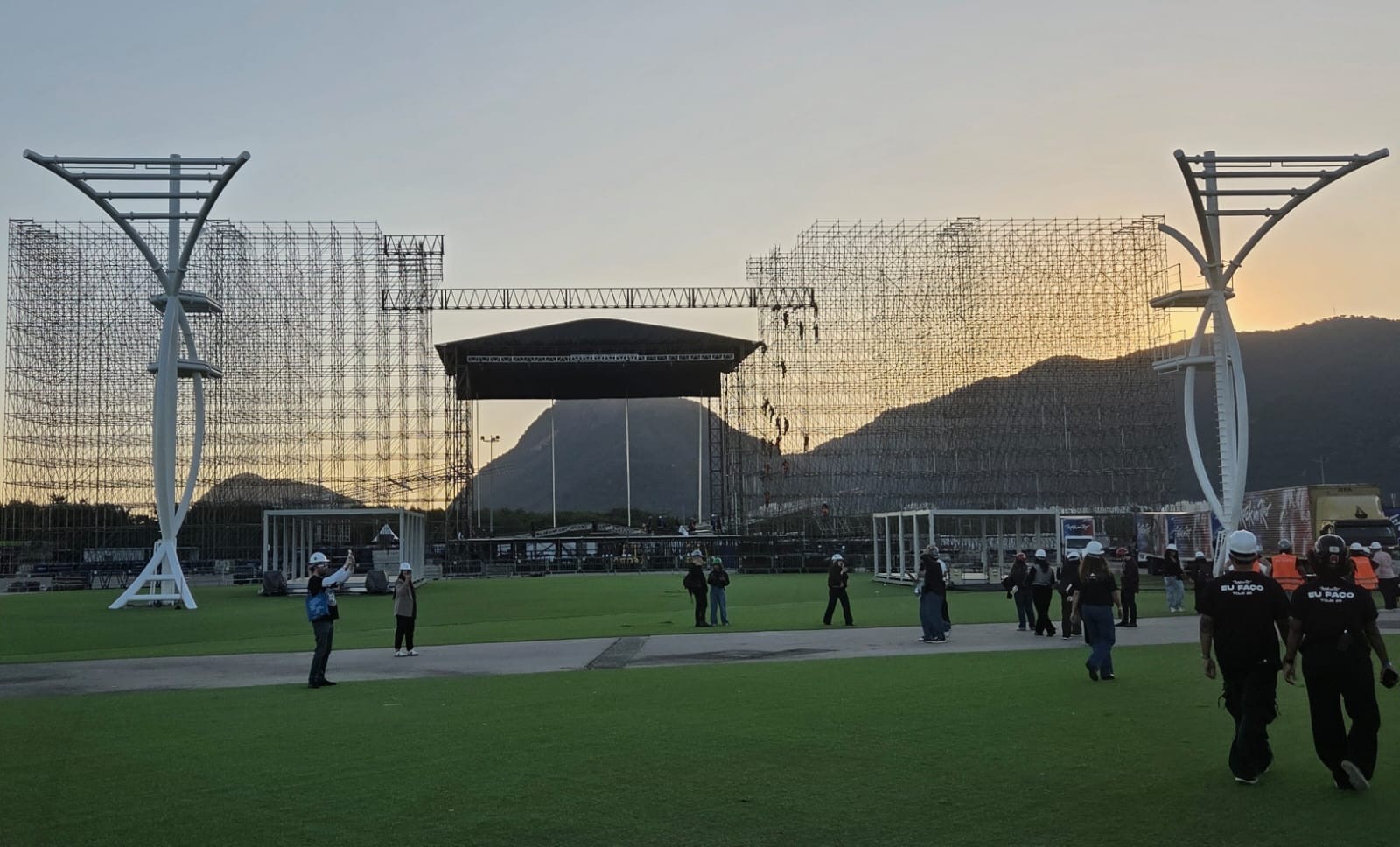
With 48 days until its first performance, the Cidade do Rock (City of Rock) in Rio de Janeiro's Barra da Tijuca is taking shape. The venue is designed to accommodate approximately 130,000 people daily, including attendees and staff, a population size exceeding that of roughly 94% of all municipalities in Brazil. Spanning 385,000 square meters, equivalent to 54 football fields, the City of Rock will host over 1,300 artists performing in 190 shows, including 45 international acts, across September 4-7 and 11-13. Headliners include Foo Fighters, Elton John, Maroon 5, Stray Kids, Calvin Harris, Gilberto Gil, Twenty One Pilots, and Ivete Sangalo. Currently, around 600 workers are focused on constructing the festival's infrastructure, which will transform the site into a temporary hub for music. The event is projected to generate R$ 3.3 billion in economic impact for Rio and create approximately 34,000 jobs, according to a study by Fundação Getúlio Vargas (FGV). Technological advancements are a key feature, with over 5,136 square meters of LED panels—more than double the previous edition—and 90,000 square meters of synthetic turf. The festival is also expanding its sustainability policy to offset carbon emissions from public, supplier, and employee travel, in addition to emissions within the City of Rock, aiming to neutralize around 50,000 tons of CO₂ through carbon credits, renewable energy certificates, tree planting, and seed donation for reforestation programs. Various stages, including Palco Mundo and Palco Sunset, are under construction, alongside themed areas like Espaço Favela and Global Village, which will showcase cultural and architectural references from around the world.
The Rock in Rio festival's immense scale, measured by daily attendance rivaling small cities and its significant economic projections, highlights the powerful symbiotic relationship between large-scale cultural events and urban economies. The organizational capacity required to construct and manage such a temporary metropolis underscores advancements in event logistics and temporary infrastructure. Furthermore, the festival's commitment to expanding its carbon offset program to include attendee travel reflects a growing awareness of the environmental footprint associated with mass gatherings and the evolving corporate responsibility landscape. This initiative, while laudable, also presents a complex challenge in accurately measuring and mitigating emissions from dispersed individual travel patterns, pointing to future opportunities for technological solutions in environmental accounting and sustainable mobility.
AI-generated to prompt reflection — not editorial opinion, not advice, not a statement of fact. How this works.