Rocket launch costs plummet 96% since 1960, further drops anticipated
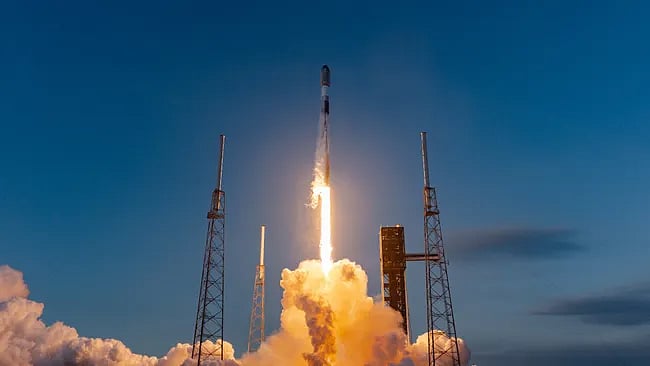
The cost of sending rockets into space has dramatically decreased by approximately 96% since 1960, according to new research. A study by researchers at the Polytechnic University of Turin, led by Francesco Nicolì, analyzed data from 4,405 rocket launches between 1960 and 2025, encompassing over 330 different rocket types from at least 12 countries including the US, Russia, China, and India. Previous research often overlooked the total payload carried over a rocket's lifecycle, leading to an incomplete understanding of actual costs. This new study, using 2024 US dollar equivalents, found that sending one kilogram into space cost about $87,023 in 1960, compared to just $3,868 by 2025. Researchers, including Alessio Terzi from the University of Cambridge, highlight that this cost reduction rate in the space industry is unprecedented, surpassing even that of solar panels. For every doubling of the total mass sent to space, the average cost per kilogram decreased by 21.2%.
The dramatic reduction in space launch costs, driven by factors like the end of the Cold War, commercialization, and reusable rocket technology pioneered by companies like SpaceX, signals a fundamental shift in accessibility to space. This trend, if sustained, could democratize space exploration and utilization beyond traditional state actors. However, significant challenges loom. The escalating problem of space debris poses a critical risk to future launches and orbital infrastructure, potentially creating a Kessler Syndrome scenario. Furthermore, market concentration, with SpaceX currently dominating the launch market, presents a risk of future price increases. Geopolitical shifts could also lead nations to invest heavily in independent, potentially less cost-efficient, launch capabilities, impacting the overall downward cost trajectory. These systemic factors highlight the complex interplay of technological innovation, market dynamics, and international relations in shaping the future of space access.
AI-generated to prompt reflection — not editorial opinion, not advice, not a statement of fact. How this works.