Rodovia dos Imigrantes Celebrates 50 Years, Plans Major Expansion
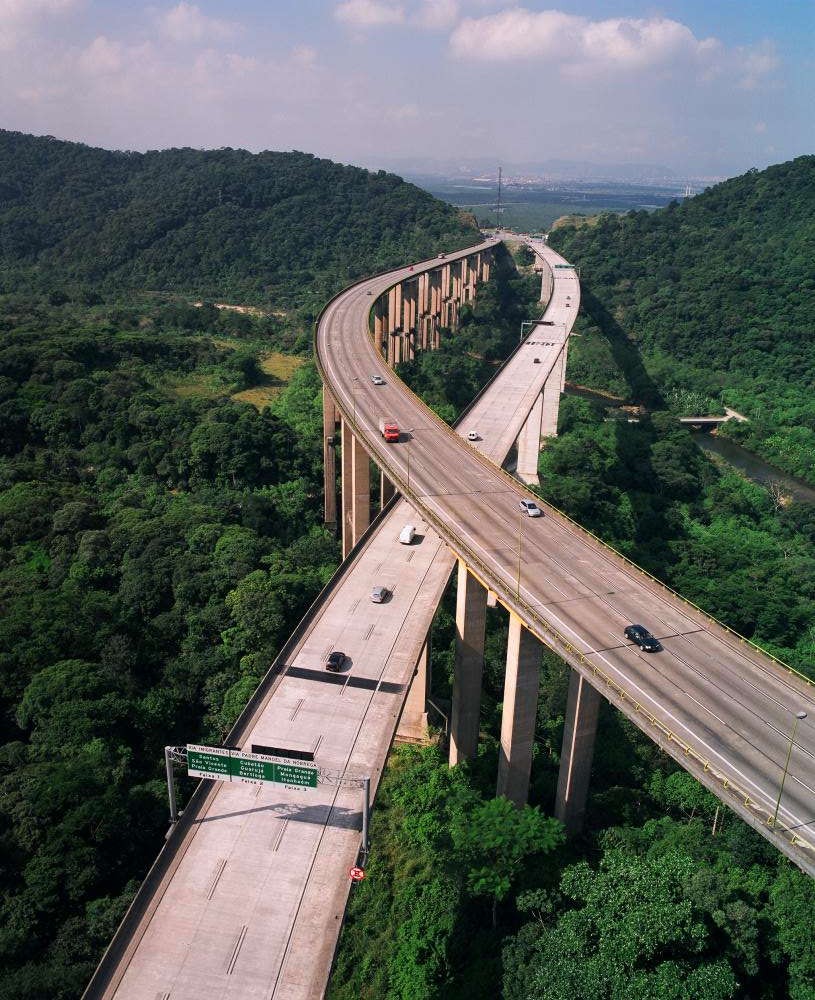
The Rodovia dos Imigrantes, a significant Brazilian engineering achievement, is celebrating its 50th anniversary. Inaugurated on June 28, 1976, the north lane of this highway has been crucial in connecting São Paulo and the Paulista coast, overcoming the complex terrain of the Serra do Mar with tunnels, viaducts, and special structures. Originally built by Dersa, it complemented the Via Anchieta, fostering economic, tourist, and logistical development. Since 1998, Ecovias Imigrantes has managed the Anchieta-Imigrantes System, investing over R$ 11 billion in infrastructure, technology, and safety. A key development under Ecovias was the construction of the Imigrantes' second lane in 2002, enhancing operational capacity and reducing environmental impact. The original 17.8 km north lane featured 11 tunnels and 20 viaducts, totaling over 12 km of special works, designed for speeds up to 110 km/h. The second lane, built with fewer pillars and construction sites, significantly reduced deforestation compared to the first. Daily vehicle volume on the system has grown by approximately 25% between 2010 and 2025, now exceeding 123,000 vehicles per day. The system is equipped with 300 monitoring cameras, variable message signs, and a fleet of operational vehicles. Looking ahead, a third lane is planned, with preliminary environmental approval obtained in March 2026. This new 21.6 km lane will feature 80% tunnels, including Brazil's longest road tunnel at over six kilometers, aiming to increase the mountain stretch's capacity by 25% and heavy vehicle descent capacity by up to 145%.
The Rodovia dos Imigrantes' 50-year milestone highlights the evolution of Brazilian infrastructure development, from ambitious early engineering feats to modern, environmentally conscious expansion. The planned third lane, with its extensive tunneling and focus on capacity increases, reflects a continued reliance on large-scale civil engineering to address growing mobility demands. This approach, while effective in expanding throughput, necessitates careful consideration of long-term environmental stewardship and the potential for induced demand, which could offset capacity gains over time. The project's emphasis on technological integration and environmental mitigation, such as reduced deforestation and native seedling production, signals a growing awareness of sustainability imperatives in major infrastructure. Future planning should balance immediate capacity needs with resilient, adaptable designs that account for climate change impacts and promote diverse transportation solutions beyond road-based logistics.
AI-generated to prompt reflection — not editorial opinion, not advice, not a statement of fact. How this works.