Rohingya Camp Landslide Kills 8 Children After Heavy Rains
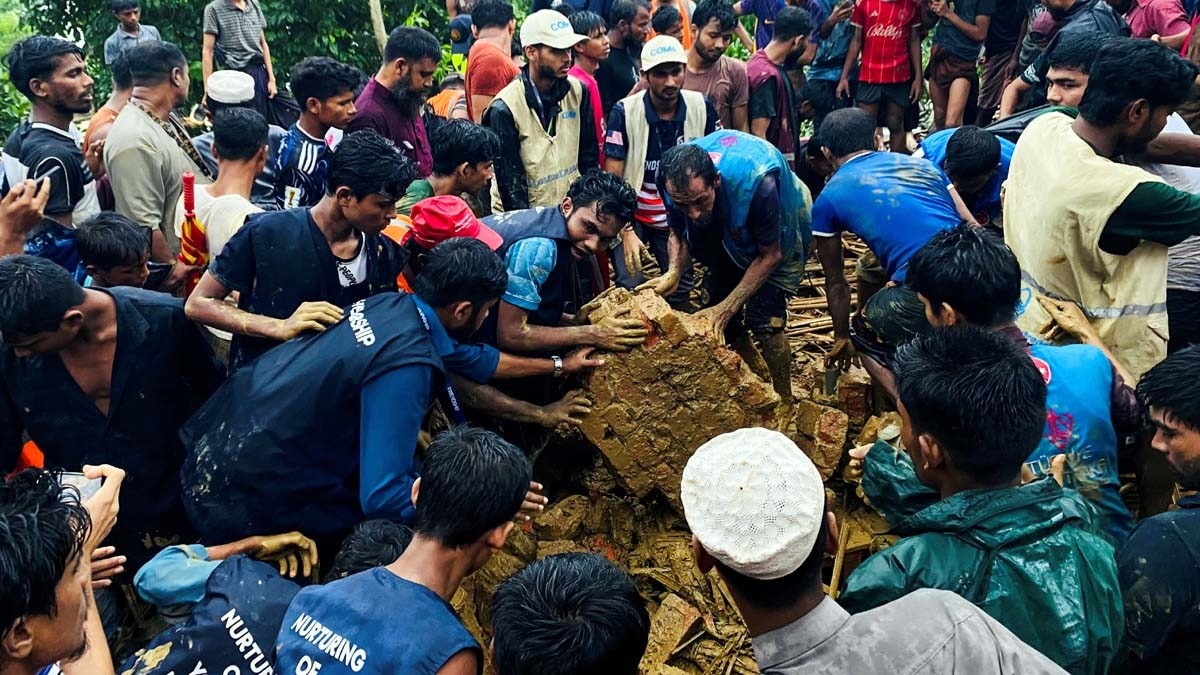
Heavy and continuous rainfall has increased the risk of landslides in Rohingya refugee camps. In a recent tragic incident, a madrasa built on a hillside collapsed due to mud and debris. The disaster resulted in the deaths of eight children who were inside the educational facility at the time of the collapse. The extreme weather conditions have exacerbated the precarious living situations for the Rohingya refugees, who often reside in densely populated camps with structures built on unstable terrain. This event highlights the vulnerability of the camps to natural disasters, particularly during monsoon seasons. Authorities are likely assessing the structural integrity of other buildings within the camps and considering measures to mitigate future risks. The incident underscores the ongoing challenges faced by the Rohingya population in ensuring safe living conditions amidst environmental hazards.
The recent landslide tragedy in the Rohingya camp, triggered by heavy rainfall, underscores the critical vulnerability of refugee settlements to environmental factors. The incident highlights a systemic challenge in providing safe and stable housing for displaced populations, particularly in geographically precarious locations. Future planning must integrate robust disaster risk reduction strategies, including improved infrastructure and early warning systems, to protect residents from the intensifying impacts of climate change and extreme weather events. This situation necessitates a comprehensive approach that considers both immediate safety concerns and long-term sustainable settlement solutions, ensuring that the basic human right to shelter is not compromised by environmental hazards or inadequate planning.
AI-generated to prompt reflection — not editorial opinion, not advice, not a statement of fact. How this works.