Rohingya refugee dies in camp landslide; child injured
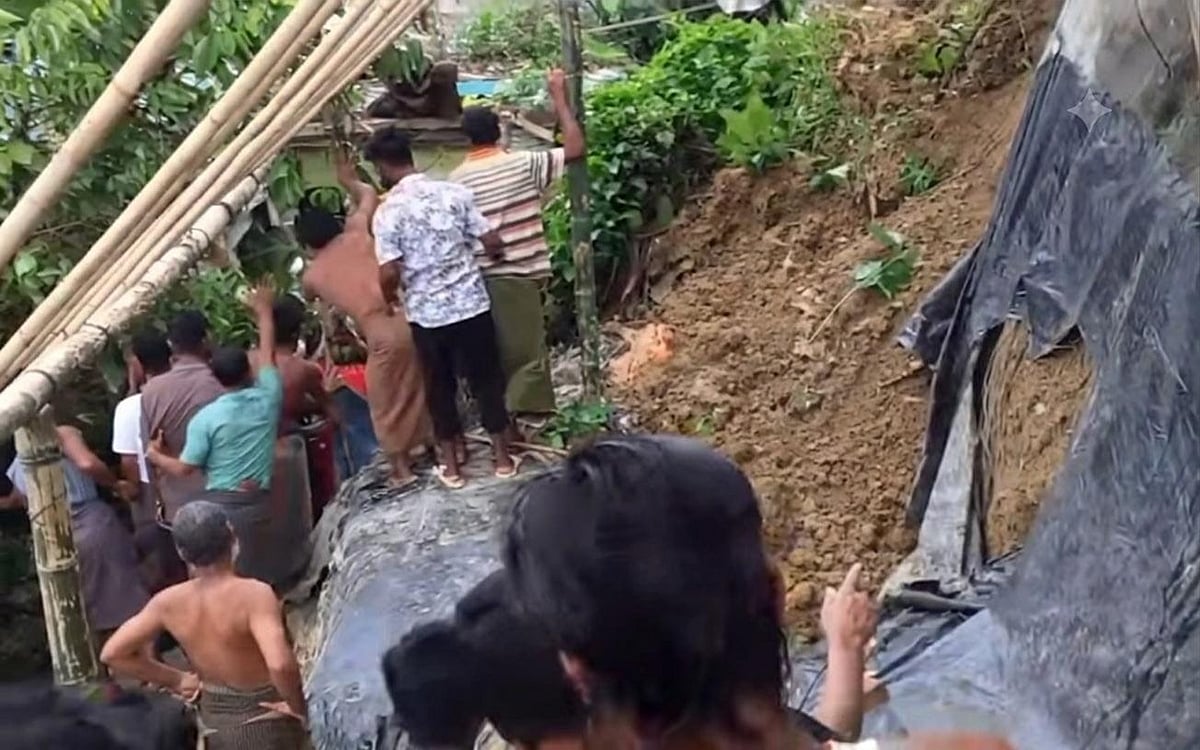
A 19-year-old Rohingya refugee woman, Bibi Hafsa, died when a landslide buried her shelter in the Balukhali Rohingya refugee camp in Ukhia, Cox's Bazar. A three-year-old child, Abdul Majid, was injured in the incident and has been admitted to the hospital. The landslide occurred around 5:30 PM on Monday in the hilly area adjacent to block D-5 of Camp-8 East. Bibi Hafsa was the daughter of Chomi Ullah, a resident of the same block, while Abdul Majid is the son of Nur Islam. The incident was confirmed by the commander of the 8th Armed Police Battalion (APBN), Riyaz Uddin Ahmed, who is responsible for security at the camp. Ahmed stated that soil collapsed onto a shelter situated on a hillside during heavy rain, leading to Bibi Hafsa's death at the scene and injuring Abdul Majid, who was subsequently taken to the hospital by other refugees. According to police and refugee leaders, continuous heavy rainfall has increased the risk of landslides in the hilly areas of the camps. Recent landslides in various Ukhia camps have resulted in the deaths of at least 14 Rohingya individuals, including five madrassa students. Camp sources indicate that relevant organizations are working to relocate refugees from hazardous hillside dwellings to safer areas and discourage settlement on steep slopes.
This event highlights the persistent vulnerability of refugee settlements located in geologically unstable terrains, exacerbated by environmental factors like heavy rainfall. The incident underscores a systemic challenge in ensuring adequate housing and safety for displaced populations, particularly when established in areas prone to natural disasters. Future planning for refugee camps must integrate robust environmental risk assessments and sustainable infrastructure development, moving beyond temporary solutions to address long-term safety and resilience. The ongoing efforts by organizations to relocate residents from high-risk zones are crucial, but their effectiveness will depend on comprehensive resource allocation and community engagement to mitigate future tragedies.
AI-generated to prompt reflection — not editorial opinion, not advice, not a statement of fact. How this works.