Rohingya Refugees Rescued After Boat Capsizes Off Bangladesh Coast
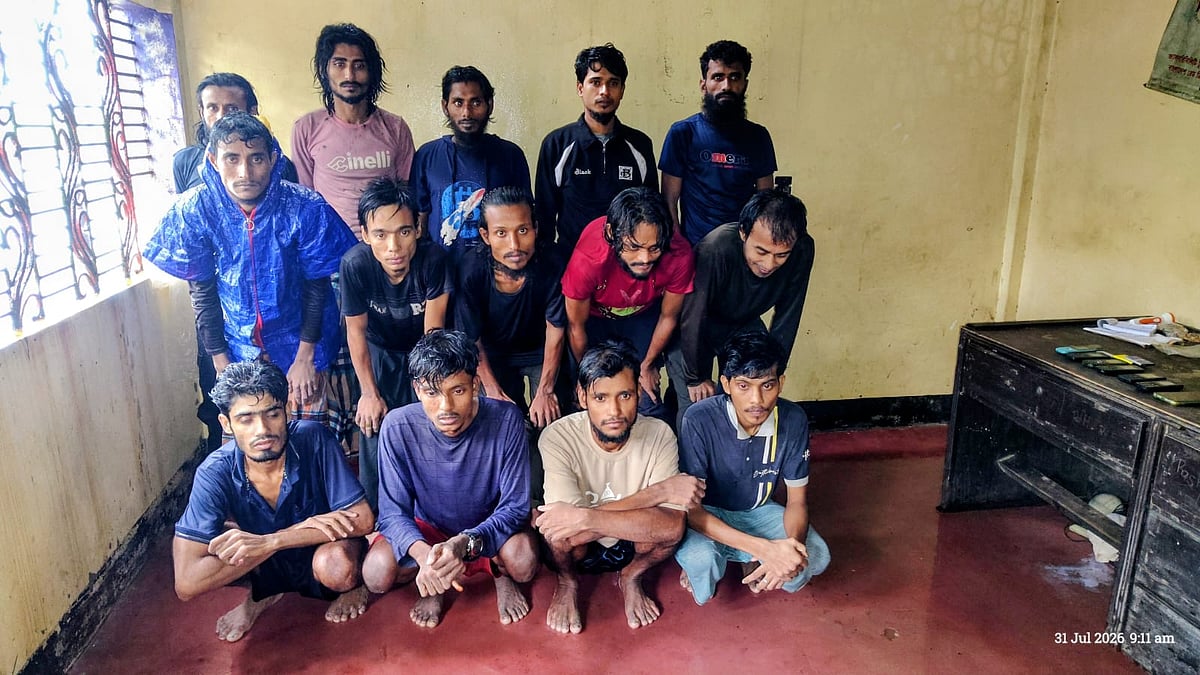
A boat carrying Rohingya refugees from Myanmar capsized near the coast of Teknaf in Cox's Bazar, Bangladesh, resulting in the rescue of 18 individuals by the Border Guard Bangladesh (BGB) with the assistance of local fishermen. The rescued individuals claim that between 27 and 31 passengers were on board the vessel when it sank. The incident occurred around 6 AM on Friday, approximately 1.5 kilometers off the coast of Shah Porir Dwip in the Sabrang Union. The survivors have been taken to the Shah Porir Dwip BGB camp. Local fisherman Sultan Ahmed reported that rough seas had prevented fishermen from going out for several days, and the strong waves caused the boat to sink. Local fishermen used two engine-powered boats to rescue the 18 survivors, while many others remain missing. Among the rescued, four individuals are residents of Rohingya camps in Ukhia and Teknaf, identified as Nur Alam (37), Zahed Hossain (42), Syed Nur (27), and Nur Kamal (40). The remaining 14 rescued individuals are Kashem Ali (25), Ayat Ullah (36), Md. Jaber (25), Neer Ahmed (24), Rahim Ullah (38), Rozi Ullah (24), Abul Hashem (35), Md. Hossain (30), Md. Ayas (23), Shafiullah (25), Enamul Hasan (22), Md. Yunus (26), Nabi Hossain (20), and Kamal Hossain (23). Law enforcement agencies have received information that one of the rescued individuals may be a member of the Arakan Rohingya Salvation Army (ARSA), an armed group from Myanmar. The Officer-in-Charge of Teknaf Model Police Station, Saiful Islam, stated that the boat was traveling from Myanmar towards Teknaf and capsized upon reaching the coast. Investigations are underway to determine the exact number of passengers and their intended destination. Further details are expected once the rescued individuals are handed over to the police.
This incident highlights the perilous journeys undertaken by Rohingya refugees seeking safety and the inherent risks associated with irregular migration. The capsizing underscores the vulnerabilities of individuals compelled to use unsafe vessels in challenging maritime conditions, driven by circumstances in their place of origin. The involvement of local fishermen in the rescue efforts demonstrates community resilience and humanitarian response. Law enforcement's attention to potential security affiliations among survivors points to the complex geopolitical context surrounding the Rohingya crisis. Future policy considerations may involve enhancing safe and legal pathways for asylum seekers, improving maritime safety surveillance, and addressing the root causes of displacement to reduce the incentive for such dangerous crossings.
AI-generated to prompt reflection — not editorial opinion, not advice, not a statement of fact. How this works.