Roman-era mosaic hall unearthed in Turkey
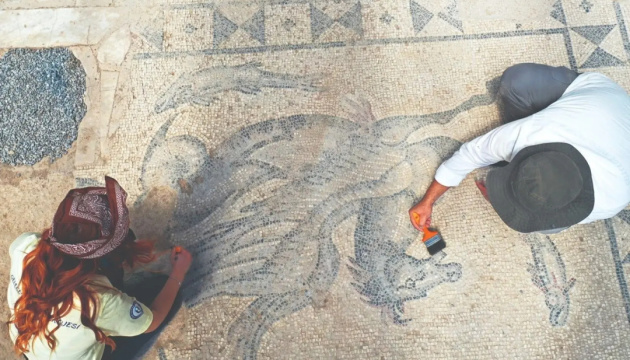
Archaeologists in the city of Aydın, eastern Turkey, have uncovered a hall featuring a mosaic floor dating back nearly 2,000 years to the Roman Empire period. The discovery offers a glimpse into the architectural and artistic achievements of the Roman era in the region. The mosaic, preserved for millennia, likely served as a significant decorative element within a larger structure. Further excavation and study are expected to reveal more about the hall's purpose and the context of its creation. This find contributes to the growing understanding of Roman presence and influence in Anatolia. The site's historical significance is underscored by the rarity of such well-preserved ancient artifacts. Researchers are working to conserve the mosaic and protect it for future generations. The discovery highlights Turkey's rich archaeological heritage.
The unearthing of this Roman-era mosaic hall in Aydın, Turkey, underscores the enduring legacy of ancient civilizations and the continuous potential for new historical discoveries. Such finds offer valuable data for understanding past societal structures, economic activities, and cultural exchanges. From a long-term perspective, the preservation and study of these artifacts are crucial for maintaining cultural memory and informing future urban planning and heritage tourism strategies. The ongoing exploration of historical sites like this also highlights the importance of international archaeological collaboration and the need for robust conservation efforts to protect these irreplaceable links to our past from environmental degradation and potential looting.
AI-generated to prompt reflection — not editorial opinion, not advice, not a statement of fact. How this works.